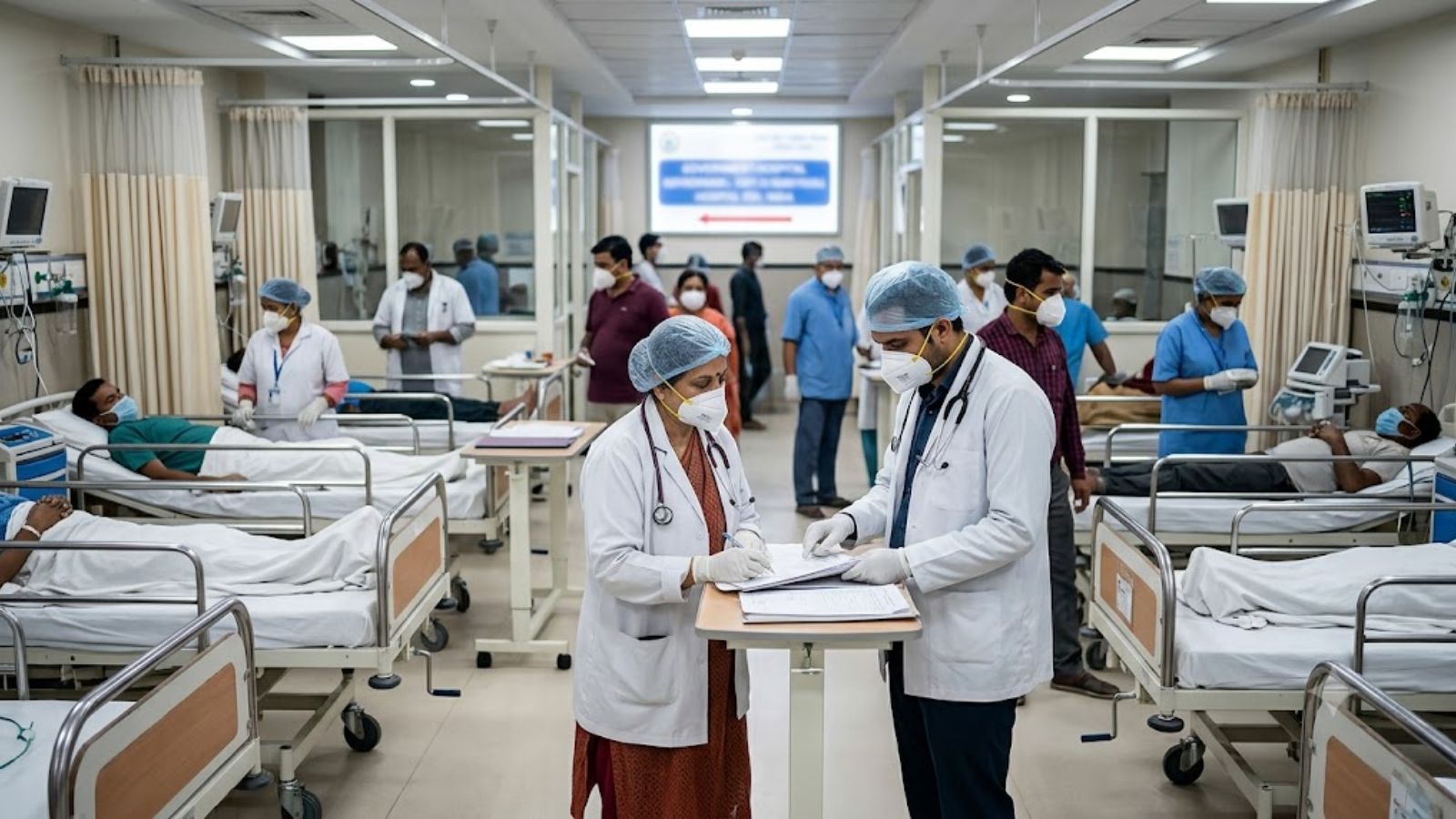
Swine flu cases continue to climb in Delhi, with 1,777 confirmed cases logged till August 20, shows data from the Delhi Health Department. Several hospitals in the city have reported a surge in cases over the past two weeks, with doctors seeing patients across Swine flu cases continue to climb in Delhi, with 1,777 confirmed cases logged till August 20, shows data from the Delhi Health Department. Several hospitals in the city have reported a surge in...
Swine flu cases continue to climb in Delhi, with 1,777 confirmed cases logged till August 20, shows data from the Delhi Health Department. Several hospitals in the city have reported a surge in cases over the past two weeks, with doctors seeing patients across age groups.
While most have responded well to treatment, some have developed pneumonia and, in severe cases, acute respiratory distress syndrome (ARDS), said a source at Apollo Hospital in Jasola. “But equally, a large number of patients have responded well to treatment and recovered without needing intensive care,” the hospital source said.
According to Dr Rakesh Gupta, internal medicine specialist at Apollo Hospital, swine flu has become rampant and is suspected in almost every patient walking into his OPD this season.
“Everyone coming to my cabin is suspected to have swine flu,” he said. “Out of 20 patients I see every day, 15 test positive. It’s very common,” he told The Indian Express.
Among those who walked into the OPD on the hospital’s second floor was a 32-year-old businessman from Gujarat on a work trip to Delhi. A heaviness had settled into his body over the past couple of days, and his cough and fever had worsened rapidly, leaving him unable to ignore it any longer.
He spoke through a blue disposable mask: “I am going back to Surat tomorrow. I could have gone to a doctor there, but even getting up in the morning was becoming difficult for me.”
He paused as a coughing fit took hold of him. “My wife also urged me to visit a doctor. I came here directly from my hotel.”
Dr Gupta said people with co-morbidities are more compromised. Those with diabetes, heart disease, or weakened immunity from other conditions face a higher risk of severe illness.
At Max Hospital, Saket, Dr Rommel Tickoo, internal medicine specialist, told The Indian Express that there has been a surge.
“We are seeing a lot of swine flu cases. The elderly people and those with co-morbidities have complications and develop pneumonia, bronchitis. But few have needed ICU admission.”
Diagnosis, Dr Gupta explained, relies on a nasal or throat swab tested through RT-PCR — considered the gold standard for confirming influenza — though rapid antigen tests are also used for quicker, if less definitive, results.
Treatment options remain limited to a single antiviral, Oseltamivir, which works best when started early in the course of the illness.
“People can get an annual shot of the vaccine — it’s advisable especially for the elderly, pregnant women, and those with chronic illnesses,” he said. “The immunity kicks in two to three weeks after the shot. And even if you’ve had the infection from a different strain before, that exposure can offer the body some cross-protection.”
Giving a note of reassurance, he said, “This is a season of viral infections, but there’s no need to panic.”
Dr Tickoo’s advice is: don’t take antibiotics. “Within the first 48 hours, start with an antiviral. Just have paracetamol and see a doctor at the earliest, if you are developing symptoms.”
“Take a flu vaccine shot once a year,” he added. “The best time to take it is October.”
The H1N1 virus, commonly known as swine flu, is a type of influenza virus that causes a viral infection of the nose, throat and lungs.
Influenza viruses are classified into four types – A, B, C and D. Among these, Influenza A is the most common type that spreads from pigs to people. Common symptoms include fever, cough, headache, muscle aches, tiredness, sweating and chills.
Tabshir Shams covers health for The Indian Express. He holds a Master's degree in International Relations from South Asian University. Before joining The Indian Express, he interned at The Hindu from December 2025 to June 2026, where he assisted in the research and editing of a book on delimitation published by The Hindu Group Publications. During this time, he also wrote for The Hindu's Text & Context section, on subjects ranging from Pakistan's military establishment to Bangladesh's elections, and reported a Spotlight feature on a jute mill in Samastipur and its ripple effects on labour migration and the local economy. In July 2025, he interned at The Indian Express, where he wrote several explainers on international relations alongside a health report. His Master's thesis examines civil-military relations in Pakistan, with a focus on the post-2019 period. ... Read More