Sedated Wedding Husband Cant Challenge Marriage Delhi High Court
I
Indian ExpressVerified Publisher
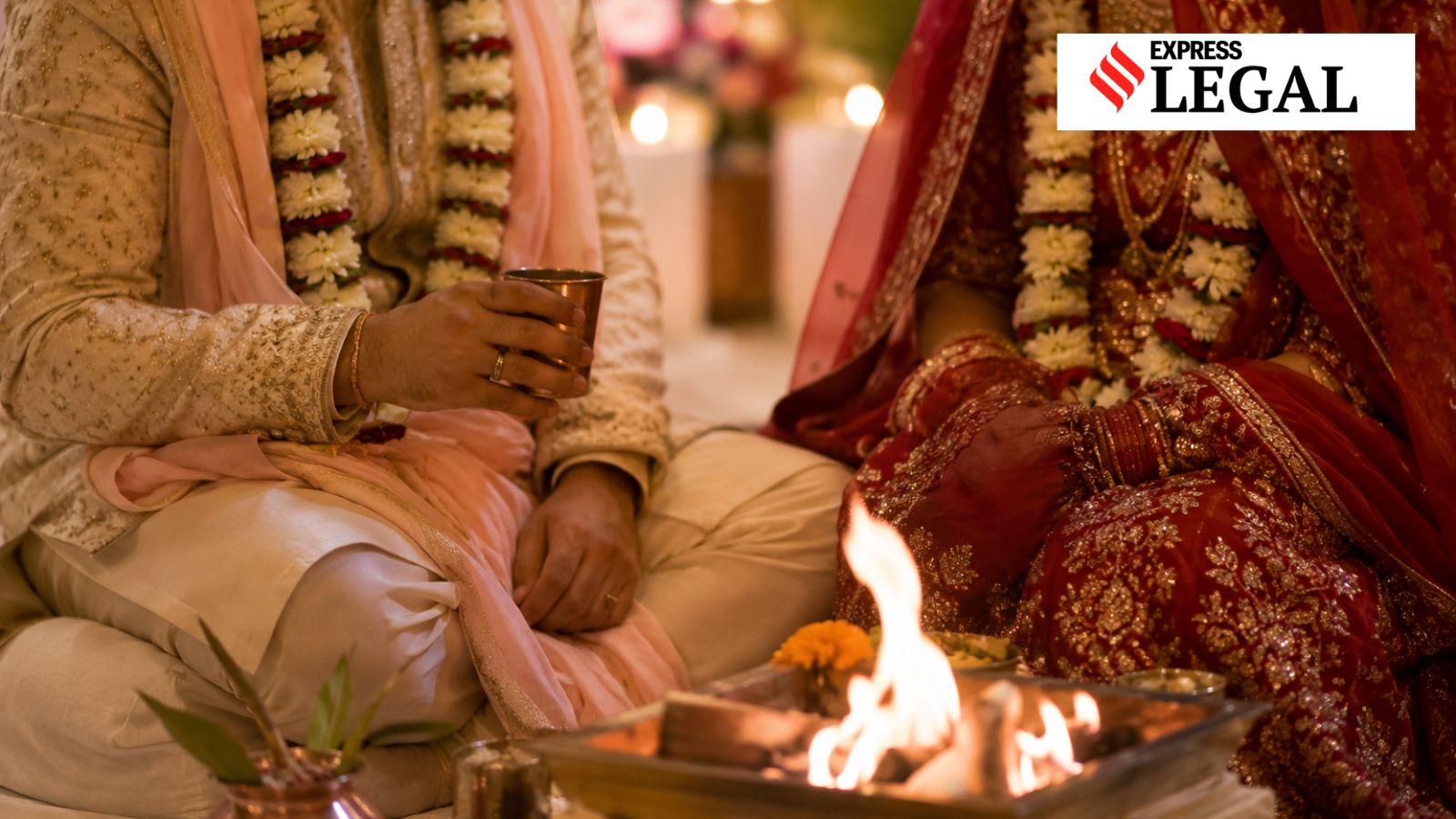
The Delhi High Court rejected a husband s attempt to dissolve his marriage nearly 18 years after the wedding, claiming that he was under the influence of a sedative substance when the marriage ceremonies were performed. The court held that such an allegation c The Delhi High Court rejected a husband s attempt to dissolve his marriage nearly 18 years after the wedding, claiming that he was under the influence of a sedative substance when the marriage...
The Delhi High Court rejected a husband’s attempt to dissolve his marriage nearly 18 years after the wedding, claiming that he was under the influence of a sedative substance when the marriage ceremonies were performed. The court held that such an allegation could, at most, make the marriage voidable (legally challengeable) and could not be used to challenge its validity at this stage.
Justices Vivek Chaudhary and Renu Bhatnagar further noted that the husband was paying Rs 10,000 per month as maintenance to his wife, but held that payment of maintenance is a legal obligation and simply complying with a court’s direction to pay maintenance does not entitle a husband to a decree of divorce.
“The allegations of the appellant (husband) that the marriage was performed when he was under the influence of sedative substance, can at the most attract the provision of Section 12(1)(c) of Hindu Marriage Act which declares the marriage being voidable if the consent was obtained by force or fraud, etc, for which a petition for annulment was to be presented in court within one year of discovery of fraud,” the August 18 order read.
The couple claimed that they got married in 2008 at Arya Samaj Mandir as per Hindu rites and customs and had no children. It was claimed that due to marital discord, the wife filed a complaint of cruelty in June 2008 against her husband and his family.
Later that year, the woman allegedly filed a petition to save her marriage and resume their marital life and by an order of September 2013, the plea was allowed in her favour.
However, it was claimed that despite this order, the couple failed to resume their joint life and a period of two years passed. In April 2016, the husband filed a petition seeking dissolution of their marriage, which was dismissed by a family court. Aggrieved, he moved the Delhi High Court with this appeal.
The man was represented by advocate Girish Chander, who argued that there is no valid marriage between the said couple. It was further argued that although the marriage ceremonies were performed, the husband was under the influence of a sedative substance at the time, which makes the marriage voidable.
It was submitted that the wife has been living separately from him since September 2013 without any just cause or reason and has not made any efforts to even resume the marital life despite orders from the previous court.
The lawyer also argued that his client is regularly complying with the order of maintenance by paying a monthly sum of Rs 10,000 to his wife and he cannot, in any way, be said to have committed any wrong under the Hindu Marriage Act.
On the contrary, advocate Paritosh Singh Rajput, for the wife, opposed the appeal by submitting that the wife has always been willing to rejoin the company of her husband. It was argued that the husband deserted her without any sufficient cause or reason, as a result of which she was constrained to file a petition to resume her married life.
It was further argued that the family court rightly arrived at its findings and the present appeal must be dismissed.
The Delhi High Court found that it was the husband who had made no efforts to resume his married life before filing the divorce petition or even after getting the orders to resume the marriage, whereas the wife was always willing to do so and withdraw all the pending litigation between them.
The court further noted that the conduct of the husband in pursuing the petition to end the marriage, without making any sincere effort towards resuming their martial life, clearly showed that his sole objective was to secure a decree of dissolution of marriage under the Hindu Marriage Act and nothing beyond it.
It was further noted by the court that on one hand, the man has disputed the validity of the marriage itself and on the other hand, he sought dissolution of the very same marriage under the garb of desertion. “A party cannot approbate and reprobate simultaneously, i.e., disputing the factum of marriage while simultaneously praying for its dissolution under the Hindu Marriage Act,” it added.
The court, dismissing the husband’s appeal, held that it cannot substitute sentiments for legal compliance, as irretrievable breakdown of the marriage is not a ground by itself to dissolve it and, further, that the wife till date is ready and willing to live with the husband.
Richa Sahay is a Legal Correspondent for The Indian Express (Digital), where she focuses on simplifying the complexities of the Indian judicial system. A law postgraduate, she leverages her advanced legal education to bridge the gap between technical court rulings and public understanding, ensuring that readers stay informed about the rapidly evolving legal landscape. Expertise Advanced Legal Education: As a law postgraduate, Richa possesses the academic depth required to interpret intricate statutes and constitutional nuances. Her background allows her to provide more than just summaries; she offers context-driven analysis of how legal changes impact the average citizen. Specialized Beat: She operates at the intersection of law and public policy, focusing on: Judicial Updates: Providing timely reports on orders from the Supreme Court of India and various High Courts. Legal Simplification: Translating dense "legalese" into accessible, engaging narratives without sacrificing factual accuracy. Legislative Changes: Monitoring new bills, amendments, and regulatory shifts that shape Indian society. ... Read More