
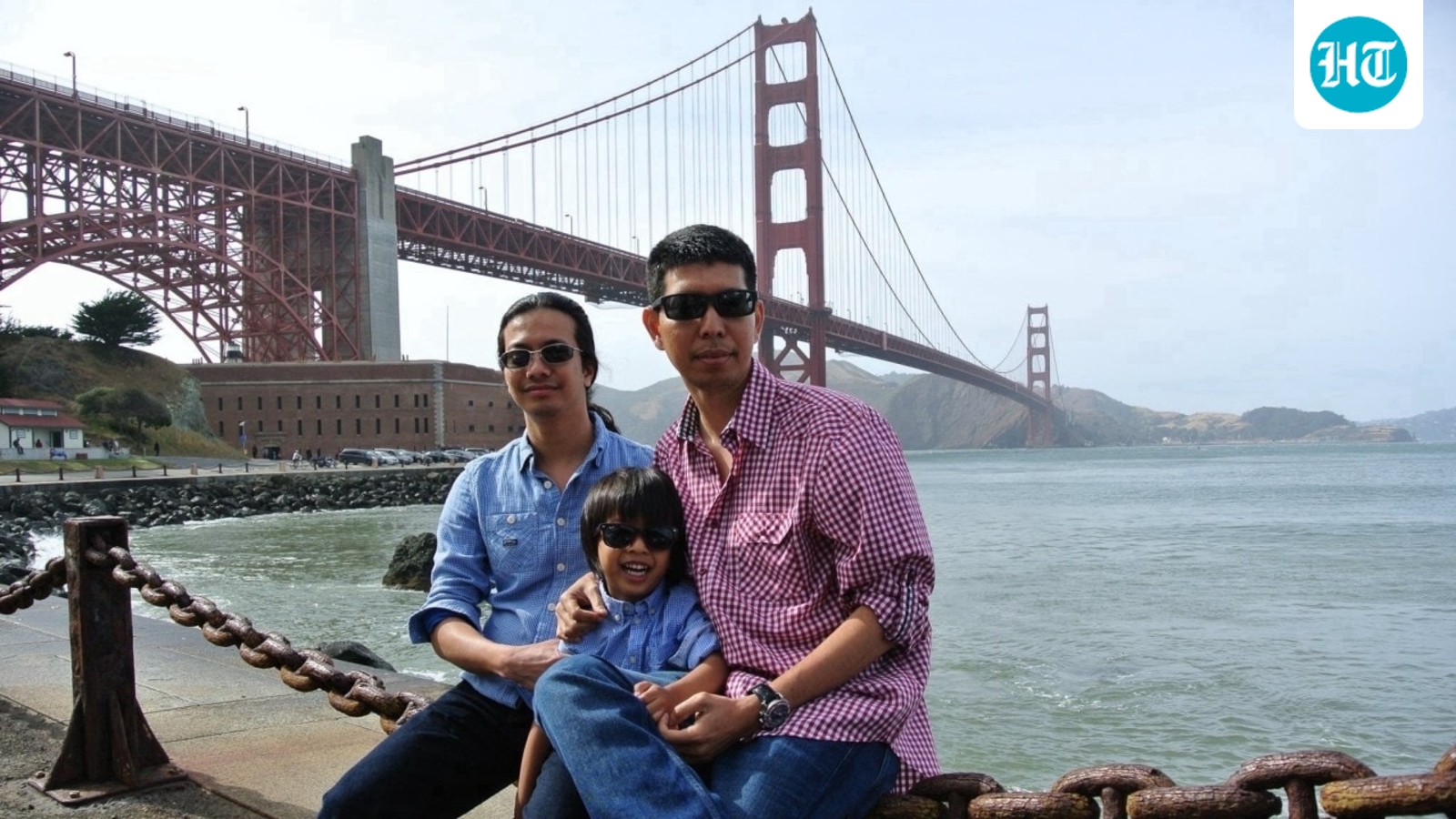
Min Zin stepped off his China Eastern Airlines flight on the afternoon of June 3 and sent his family a text: “Just landed in Kunming.” The U.S. citizen and Myanmar scholar was on a three-day trip in western China to take part in a workshop on economic cooperation, according to a family spokeswoman.
His family hasn’t heard from him since.
When Min Zin landed, he was swiftly detained at The Airport. The Chinese government says he engaged in espionage, allegations that both his family and U.S. government deny.
In the months since, the University of California, Berkeley, graduate has been cloistered in a small, windowless room estimated to be only 16 paces long with lights that never turn off and two guards who keep constant watch over him, the spokeswoman said. The Trump administration declared him wrongfully detained and has called on Beijing to release him. Min Zin has yet to be formally arrested or charged.
Now, Min Zin and other detainees in China are expected to be on the shortlist of issues President Trump will raise with Chinese leader Xi Jinping this month when the two meet for a summit in Washington, officials said.
His case highlights how China’s all-powerful state security system enforces opaque laws in unpredictable ways that raise risks for U.S. passport holders, all while Beijing works to court foreign investors, academics and tourists .
It also underscores how U.S. ties with China are fraying over detentions, trade clashes and geopolitical tensions even as Trump works to curry favor with Xi as a fellow superpower leader.
“Min Zin was lured to China by official government organizations and entrapped by Chinese security services. The accusations against him are completely unfounded,” a State Department spokesperson said.
Liu Chang, a spokesman at the Chinese Embassy in the U.S., said that Min Zin has been subject to “criminal coercive measures,” which means he is under investigation. Min Zin’s “legitimate rights have been fully guaranteed,” he said.
U.S. officials still aren’t certain exactly why Min Zin was detained, but they believe his background as a former student activist in Myanmar and U.S.-funded academic work may have drawn the attention of Chinese security services.
Min Zin, who was Born in Myanmar before moving to the U.S. and becoming a naturalized citizen, has studied Myanmar’s democratization and ethnic conflicts—topics that could be sensitive in China given the two countries’ close ties. He also was a political activist who took part in protests against Myanmar’s military in 1988. Over the years, his research has been funded by U.S. government grants at various points, the family’s spokeswoman said.
Yet he previously traveled to China for academic work with no issues, including a conference supported by the Chinese government in October 2025, she added. So when Min Zin was invited by a Chinese professor to attend a workshop on economic cooperation in June in southwestern China, his family wasn’t concerned.
“We will have many things to Talk [about] and you will see some very important persons,” the Chinese professor who invited Min Zin said, according to a screenshot viewed by The Wall Street Journal. “[P]lease come with big smiles and happiness!”
On the morning of June 3, Min Zin took China Eastern Airlines Flight 9640 from Chiang Mai to Kunming, a two-hour flight. It was supposed to be a three-day trip.
Upon arrival, Min Zin sent messages to his family, colleagues and the professor. “Landed, Bro,” his text to the professor at 12:32 p.m. said, according to a screenshot viewed by the Journal.