Railways E Coli Drinking Water Cag Changes 20000 Locations
I
Indian ExpressVerified Publisher
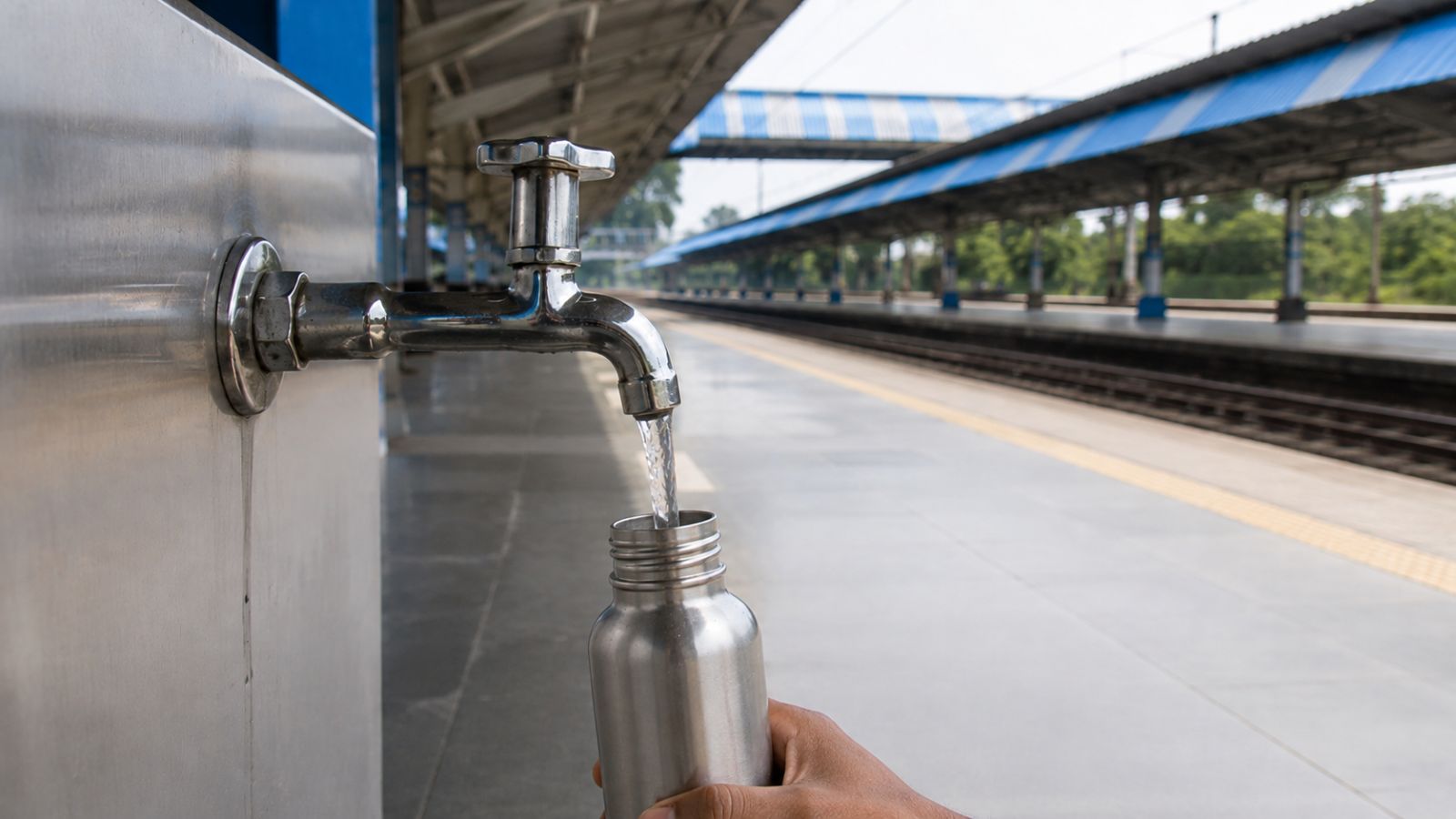
CAG flags E. Coli in drinking water at railway stations: Following the Comptroller and Auditor General (CAG) report on drinking water quality, the Ministry of Railways on Sunday announced a series of measures to ensure safe drinking water for passengers, inclu CAG flags E. Coli in drinking water at railway stations: Following the Comptroller and Auditor General (CAG) report on drinking water quality, the Ministry of Railways on Sunday announced a series...
CAG flags E. Coli in drinking water at railway stations: Following the Comptroller and Auditor General (CAG) report on drinking water quality, the Ministry of Railways on Sunday announced a series of measures to ensure safe drinking water for passengers, including the installation of new water filtration systems at around 20,000 locations across the railway network.
Chairing a high-level meeting at Rail Bhavan, Railway Minister Ashwini Vaishnaw reviewed the drinking water quality situation across the railway network and directed officials to take immediate corrective measures to ensure safe drinking water for passengers.
According to the national transporter, the “Tank to Tap” water filtration and monitoring system will be installed at around 20,000 locations, including water coolers, across the railway network. It will also replace old water tanks and ensure regular water quality testing at source and outlet points.
Apart from these measures, Railways will also introduce centralised monitoring to track water quality and ensure accountability. Water storage tanks will also be cleaned and maintained at regular intervals.
The Railway Board will directly oversee the implementation, while water quality and progress reports will be published periodically to ensure transparency.
In a recent report titled ‘Passenger Amenities and Sanitation at Non-Suburban Railway Stations in Indian Railways’, the CAG said E. coli bacteria was detected in drinking water samples collected from eight out of 49 railway stations. The affected stations included several in Mumbai, while other cases were reported in Kerala, Tamil Nadu and Jharkhand.
“Inspection of the water supply systems was not carried out as per prescribed periodicity. There was shortfall in testing of drinking water for residual chlorine, bacteriological analysis and chemical analysis. Low/high level of chlorine in drinking water, presence of total coliforms bacteria (including E-coli bacteria) as well as deficiencies in parameters tested indicated unsatisfactory quality of drinking water at stations. Tests prescribed in the ‘Uniform Drinking Water Quality protocol’ were not carried out for several parameters,” the report said.
Anish Mondal is a journalist with over nine years of experience covering the railways and roadways. Currently a member of the Indianexpress.com editorial team, Anish specializes in high-impact sectors. Professional Journey Anish began his career at the public broadcaster Rajya Sabha Television (now Sansad TV), where he developed a foundational understanding of legislative processes and national governance. In 2018, he transitioned to digital financial journalism at FinancialExpress.com, spending nearly six years refining his expertise in market trends and corporate reporting. Before joining The Indian Express in 2025, he served as a key contributor at ETNowNews.com. Education & Expertise Anish’s reporting is backed by a rigorous academic background in communication and the humanities: Master of Journalism and Mass Communication (MJMC) – Apeejay Stya University Post Graduate Diploma in Journalism and Production (PGTVRJP) – Apeejay Institute of Mass Communication Bachelor of Arts (English Honours) – University of Calcutta Areas of Coverage Connectivity: Detailed reporting on the expansion of Indian Railways and National Highway networks. ... Read More