Neera Chandhoke Pyaasa Dharamputra Freedom Protest Sahir Ludhianvi
I
Indian ExpressVerified Publisher
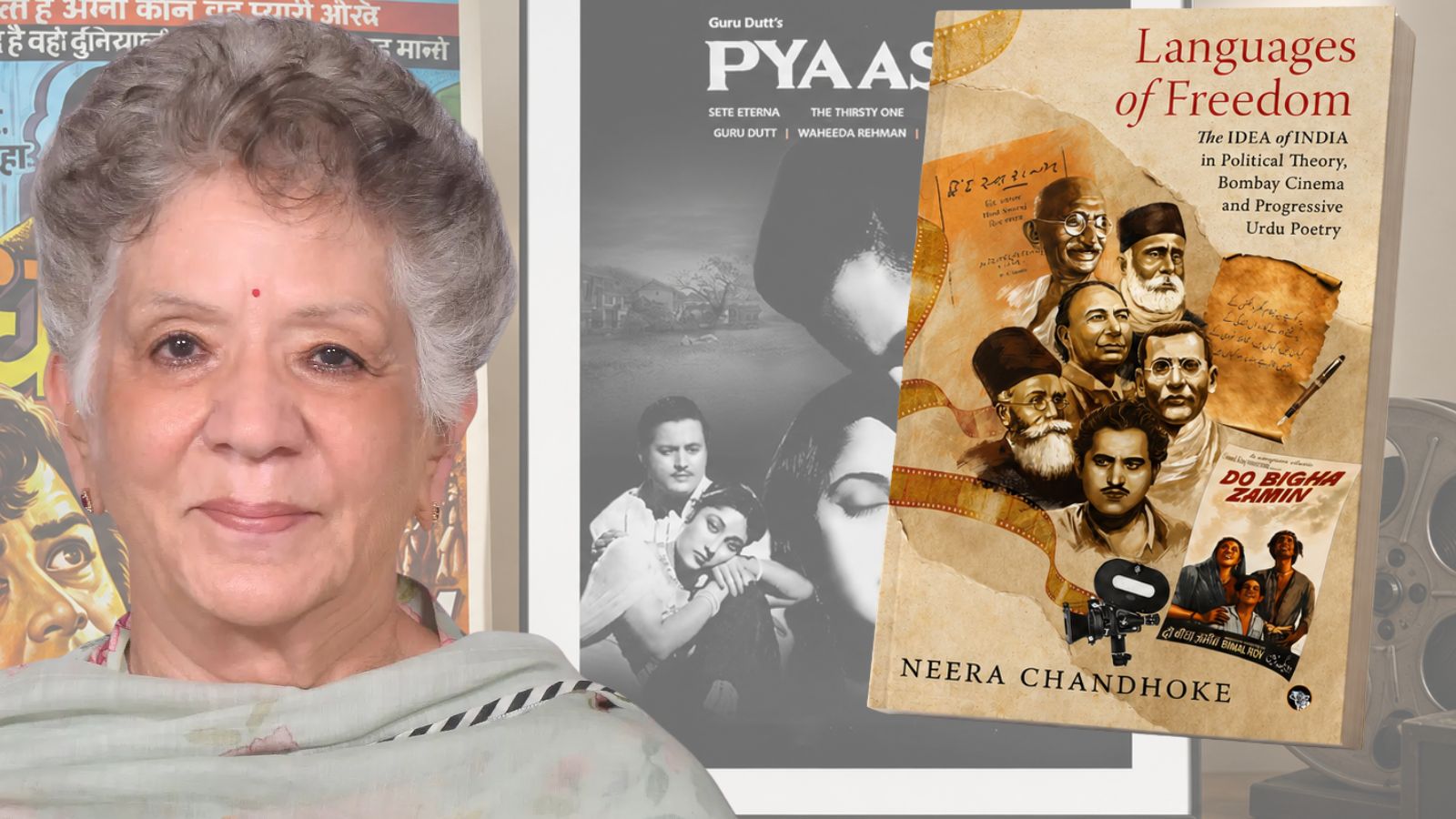
In the 1957 classic Pyaasa, Guru Dutt plays an impoverished poet who, on visiting a red-light area, is confronted with the indignity of women forced into sex work in post-Independence India. Moved, he sings: Kahaan hain kahaan hain Muhafiz khudi ke Jinhe naaz In the 1957 classic Pyaasa, Guru Dutt plays an impoverished poet who, on visiting a red-light area, is confronted with the indignity of women forced into sex work in post-Independence India. Moved,...
In the 1957 classic Pyaasa, Guru Dutt plays an impoverished poet who, on visiting a red-light area, is confronted with the indignity of women forced into sex work in post-Independence India. Moved, he sings:
Kahaan hain kahaan hain Muhafiz khudi ke Jinhe naaz hai Hind Par wo kahaan hai Kahaan hain kahaan
(Where, oh where Are the protectors of dignity Those who once took pride in Hind But where are they now? Where are they, where?)
Political theorist Neera Chandhoke holds up this film as an example of how popular cinema used the medium to criticise those in power. Speaking to indianexpress.com over video call, Chandhoke, currently a visiting professor at Indraprastha Institute of Information Technology, expanded on the arguments in her new book, Languages of Freedom: The Idea of India in Political Theory, Bombay Cinema and Progressive Urdu Poetry (Speaking Tiger, 2026).
She traces how the Bombay film industry became entangled with the nationalist movement. Early films like Achhut Kanya (1936) tackled untouchability. After Independence, Partition and disillusionment pushed filmmakers toward open critique of the government and even PM Jawaharlal Nehru. Chandhoke cites Yash and B R Chopra’s Dharamputra (1961), in which a young man discovers he was born Muslim, not Hindu, as stills of Partition’s violence rush back to him.
“If only we can ask this question when we have these periodic bouts of violence in India,” Chandhoke said, “maybe we will develop the concept of humanity and fraternity towards our fellow citizens.”
Freedom, she says, is “a performative exercise where one has to constantly struggle for it.”
The concept cannot be understood by reading political theory alone; it must be supplanted by the cultural sphere, including cinema, poetry, and the songs that ordinary people sing in moments of collective anger and hope.
This idea of freedom as performance was visible most recently during the Gen Z student protests against paper leaks, where the slogan ‘azadi’ once again rent the air.
The protesters, most of whom were born after 1997, incidentally also drew on the poetry of the Progressive Writers’ Movement, founded in 1936. Sahir Ludhianvi, who wrote the above mentioned lyrics, was among them. Chandhoke says the Progressive Writers brought patriarchy and social justice into Urdu poetry, sometimes to the point of scandal. The 1932 anthology Angare caused such an uproar for its treatment of women’s bodies that its authors were nearly excommunicated.
“They greatly enlarged the concept of freedom in the national movement,” Chandhoke said. “You’re more radical, really, than the national leaders.”
She also found it interesting that the protesters took up a poem by the contemporary Urdu poet Manzar Bhopali:
Mujhko apne bank ki kitaab dijiye, Desh ki tabaahi ka hisaab dijiye.
(Give me the books of your bank, Give me the account of the nation’s ruin.)
“The notion of accountability came up very strongly in this movement,” she said. “That you are accountable to us. You must tell us what you will do.”
Chandhoke drew a distinction between the concept of azadi and Swaraj.
“Swaraj is very Sanskritic,” she said. “Gandhi took personal virtues from a philosophical text — ahimsa, non-violence — and created them into weapons of mobilisation.”
“Azadi,” by contrast, was “a secular concept brought in by Bhagat Singh.”
Singh, an atheist hanged by the British in 1931, had rejected religious slogans and opposed the use of religion in the independence movement.
Azadi in these movements, she says, “not only means azadi from patriarchy and from economic impoverishment, it also means the concept of agency, that one should be able to do what one wants to do.”
She warned that India’s cultural inheritance had been progressively narrowed, distorted into a monolithic identity. “We think in the context of a culture, mythology. We don’t think in abstraction. The question comes: Whose culture? Must it be the Brahmanical upper caste culture?”
She traced the damage to the erasure of what she calls sanjhi virasat shared traditions that once bound communities together.
“If that goes away, we take away a considerable part of our culture and the resources with which we think. Freedom cannot flourish when plurality itself has been diminished.”
Asked to define freedom, Chandhoke says: “The freedom to think. Freedom to pursue freedom. And freedom to protest against violations of freedom.”
She recalled how the Emergency of 1975-77 transformed even hardened Marxists, convincing them that civil liberties were essential. “They were now convinced that without civil liberties, you cannot have anything.”
She expressed concern about the current state of civil liberties in India. “Why is it that civil liberties are not of consequence to other Indians? We should be fighting for our fellow citizens. Why are we indifferent to them?”