Mumbai Monorail Reopening Delayed Evacuation Plan Mmrda Iit Bombay
I
Indian ExpressVerified Publisher
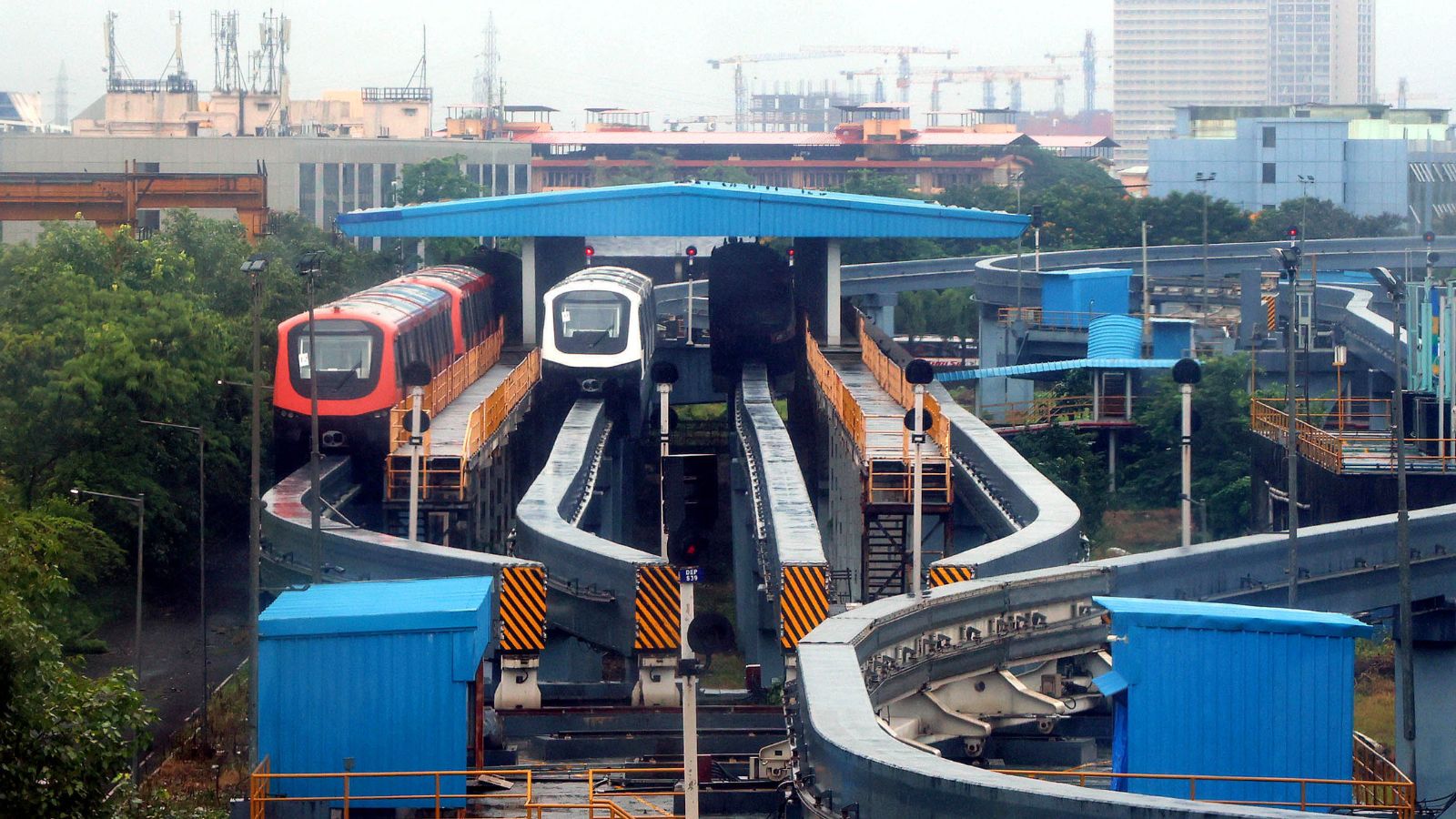
The reopening of Mumbai s monorail will be delayed further as the Mumbai Metropolitan Region Development Authority (MMRDA) is still working on a comprehensive plan to evacuate passengers if a train gets stranded. The delay comes months after nearly 600 passeng The reopening of Mumbai s monorail will be delayed further as the Mumbai Metropolitan Region Development Authority (MMRDA) is still working on a comprehensive plan to evacuate passengers if a train...
The reopening of Mumbai’s monorail will be delayed further as the Mumbai Metropolitan Region Development Authority (MMRDA) is still working on a comprehensive plan to evacuate passengers if a train gets stranded.
The delay comes months after nearly 600 passengers had to be rescued from an overcrowded monorail train that lost power and was stranded between stations in Chembur. The Mumbai Fire Brigade had to carry out a two-hour rescue operation and break open the train’s glass doors to evacuate passengers.
Although the monorail has since undergone upgrades, including the induction of new rakes, and obtained the required safety certifications, officials said the evacuation mechanism remains unresolved. The authority is also examining measures to improve safety along the elevated guideways before allowing the service to resume.
“A foolproof evacuation plan is still being studied, and we are yet to arrive at a complete solution,” a senior official of the Mumbai Monorail Operations and Maintenance Pvt Ltd, an MMRDA arm responsible for operating the service, said.
The operating agency has sought assistance from IIT Bombay and Megha Engineering and Infrastructure Ltd (MEIL) to examine evacuation options.
One proposal involves constructing walkways along the guideways to allow passengers to leave a stranded train. However, IIT Bombay has raised concerns about the feasibility of additional construction along the existing elevated structure.
The MMRDA also has man lifts for emergencies, similar to the turntable ladders used by the fire brigade. Officials, however, said deploying them could be difficult along congested stretches, particularly in Chembur, Wadala and Mahalaxmi, where the elevated corridor passes over slums and nullahs.
Another option is to use a second rake on the opposite line. A rescue rake could be positioned alongside a stranded train, and passengers transferred across through a temporary bridge between the two rakes. The method has been used during previous monorail emergencies.
Officials said a backup mechanism would still be required if a rescue rake cannot be deployed.
The authorities are also examining what could happen if a rake tilts on sharp curves because of overcrowding. Since the monorail receives power through the guideways, a tilt or overloading could disrupt the electrical connection, potentially preventing emergency doors from opening and affecting air-conditioning inside the train.
The agency is studying mechanical rescue options from both sides of the guideway, while MEIL is yet to submit its recommendations.
Separately, the MMRDA is examining ways to cover gaps between sections of the elevated guideways to prevent objects from falling onto roads below. A senior MMRDA official said the authority was studying the issue from a safety perspective, as even small objects falling from the elevated structure could pose a risk to pedestrians and vehicles.
Meanwhile, finishing work at monorail stations is continuing. Officials have not announced a fresh date for the resumption of services.
Sabah Virani is a journalist with The Indian Express’ Mumbai bureau, covering infrastructure, housing and urban issues. In the realms of technical fields, she brings out human stories and the pace of change ongoing in the city. Expertise Specialised Role: Tracking infrastructure in Mumbai and the wider Mumbai Metropolitan Region (MMR), Sabah’s reporting tracks progress on various projects. From bridges to metros, she mixes technical details with resourceful information. Core coverage areas: Sabah keeps a close eye on the activities of the Mumbai Metropolitan Region Development Authority (MMRDA) and its projects across the MMR, including the metros, road projects, bridges, the bullet train, pod taxi, its role as a planning authority, and more. She also watches for developments from the Maharashtra State Road Development Corporation (MSRDC), City and Industrial Development Corporation of Maharashtra (CIDCO) and the GoM’s Urban Development department. Housing: Sabah also tracks developments in housing, particularly the workings of the Slum Rehabilitation Authority (SRA). She also keeps a keen watch on the big redevelopment projects ongoing in Mumbai, including the Dharavi Redevelopment Project, Motilal Nagar, Kamathipura, BDD Chawl redevelopment, among others. Occasionally, she reports on the environment, biodiversity, waste, arts and culture. Experience: Prior to working for the Indian Express, Sabah covered the municipality, civic issues and miscellaneous for Hindustan Times. Before that, she covered all things Mumbai for the online publication Citizen Matters. She has also worked as an editorial assistant at FiftyTwo.in. ... Read More