Mumbai Mankhurd Illegal Building Collapse Six Dead Sra Land
I
Indian ExpressVerified Publisher
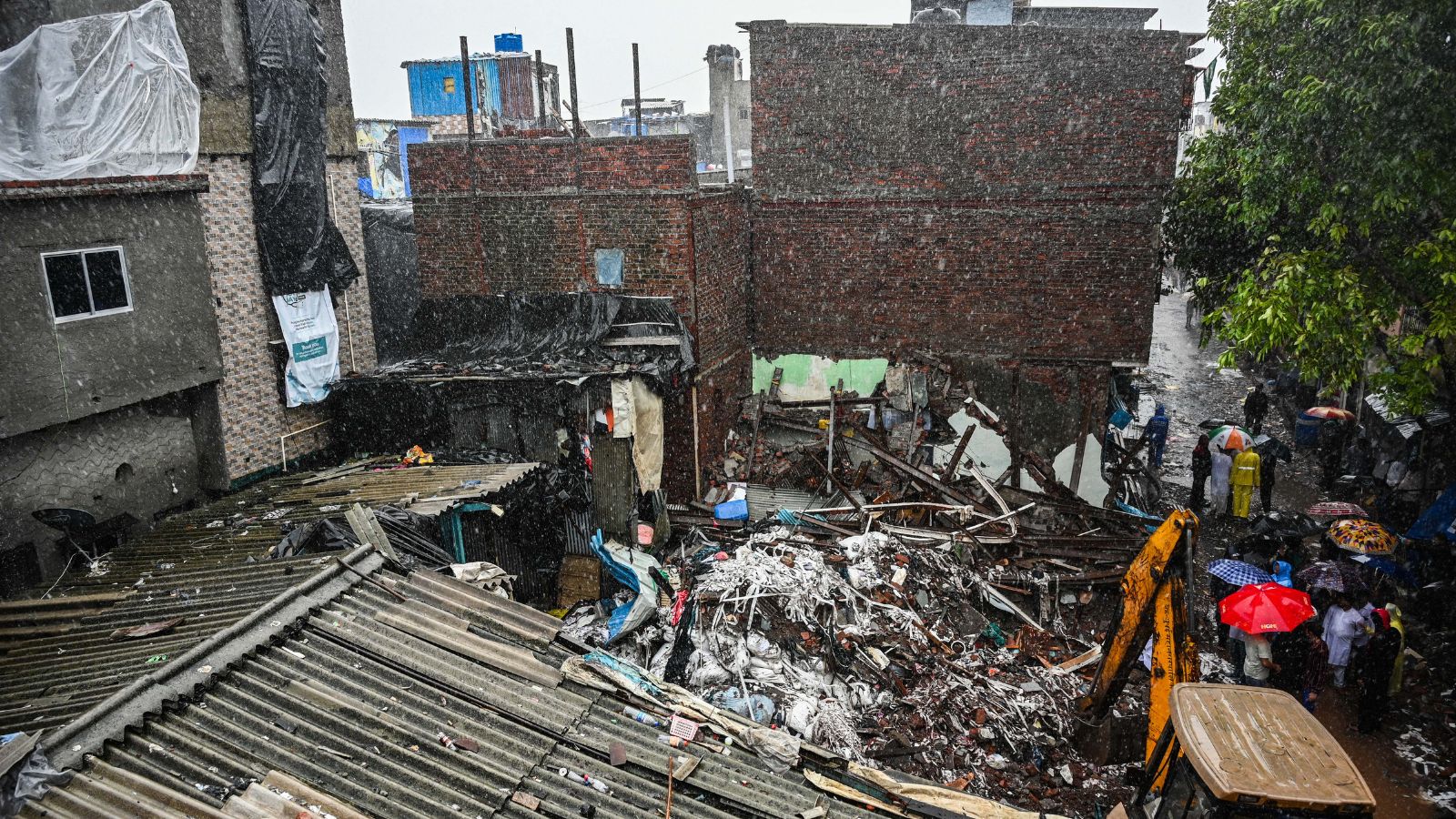
Hours before the illegal four-storey structure collapsed onto adjoining shanties in Mumbai s Mankhurd on Sunday night, killing six people, including a woman and her four children, it had begun tilting, prompting the three families living inside to evacuate. Re Hours before the illegal four-storey structure collapsed onto adjoining shanties in Mumbai s Mankhurd on Sunday night, killing six people, including a woman and her four children, it had begun...
Hours before the illegal four-storey structure collapsed onto adjoining shanties in Mumbai’s Mankhurd on Sunday night, killing six people, including a woman and her four children, it had begun tilting, prompting the three families living inside to evacuate. Residents said the evacuation averted an even bigger tragedy.
The building, which also housed a furniture godown, had started tilting and its tiles had begun crumbling on Sunday morning, according to local residents. While the godown had been shut weeks earlier, the three families living in the building vacated it the same day after neighbours noticed signs of distress.
“As the building started collapsing on Sunday morning, we asked the families to vacate the building,” said Ishtiyaq Ahmed, a close family friend and neighbour.
Akhtar Jahan’s husband, Moinuddin Wajid Ali Shah (39), who had stepped out to purchase household items, escaped the mishap by minutes.
Mumbai Mayor Ritu Tawde, who inspected the site on Monday, said the collapsed structure was “completely illegal”.
“The structure had three storeys constructed one upon another and was completely illegal. It functioned as a godown which was completely stacked with goods. When the building collapsed, the entire goods from the godown came crashing on the neighbouring building where a woman, her children and some kids from the neighbourhood were staying,” said Tawde.
The Shah family had been residing in the shanty, made of tin sheets and a patra roof, for the past two years.
The collapsed structure stands on suburban collector’s land. However, officials from the Mumbai Collector’s office maintained that no notices had been issued to the structure and that it had been surveyed by the Slum Rehabilitation Authority (SRA).
“The structure was illegal and constructed before 2011. However, the government notification states that structures occupied before 2011 cannot be razed without rehabilitation. Accordingly, the encroachment had been surveyed by the SRA while no notices had been served from the collector’s office,” said a source.
Recalling the incident, locals and family friends said the collapse triggered panic in the neighbourhood.
After being pulled out from the rubble, Akhtar Jahan, her four children and Aliya were taken to Shatabdi and Rajawadi hospitals, where they were declared dead. A passerby, Rehan Ali (24), who was trapped under the debris when the shanties collapsed, sustained grievous injuries. Hospital officials said his condition is now stable.
Ahmed, who taught the children verses from the Quran, remembered them as “bright and vivacious”.
“Kaisar was the topper of her class at Shivaji Municipal School and all the other children were very bright. All the children were very friendly, never troubled anyone and would always be playing in the area,” said Ahmed.
“The children were also very active at the JVS Sanstha, where they would go for tuition,” recalled another resident.
Following the collapse, the rickety buildings next to the collapsed structure were evacuated as a precautionary measure.
In the aftermath of the incident, Chief Minister Devendra Fadnavis announced a financial assistance of Rs 5 lakh for the kin of the deceased. Meanwhile, the Mumbai Police arrested two persons and named four people, including government officials and private persons, in an FIR registered on Monday.
Nayonika Bose is a Senior Correspondent with The Indian Express’ Mumbai bureau. While in the early stages of her career, her focused reporting on local governance and community welfare already demonstrates clear Expertise and Trustworthiness in covering essential civic issues impacting Mumbai's residents. Expertise & Authority (E-E-A-T) Specialized Focus: Nayonika's reporting is dedicated to civic and community issues, providing readers with highly relevant, ground-level information about the functionality and administration of India's largest metropolitan area. Core Coverage Areas: Her articles highlight a strong focus on the fundamental quality of life and public safety in Mumbai, including: Civic Infrastructure: Reports on critical failures and initiatives related to public works, such as the recurring problem of unauthorized building collapses in Navi Mumbai, the construction of new infrastructure projects (like the Dahisar-Bhayandar Link Road and the Mahalaxmi cable-stayed bridge), and the maintenance of essential city services (e.g., manhole cover theft). Urban Governance & Crisis Management: Provides detailed coverage of the Brihanmumbai Municipal Corporation's (BMC) response to major crises, particularly during the monsoon (e.g., heavy rainfall, water cuts, and public health concerns like dengue and malaria) and large-scale public safety incidents (e.g., the hoarding collapse fallout). Community Welfare & Rights: Reports on key social issues, including the financial aid scheme for persons with disabilities, the struggles of Mumbai's hawkers protesting eviction drives, and the dangers faced by workers due to the continuation of manual scavenging in water tanks. Cultural & Heritage Reporting: Covers significant community stories, including the restoration of British-era fountains and the history of institutions like the 126-year-old Chinchpokli cemetery, showing a breadth of interest beyond pure administration. Tweets @nayonikakb ... Read More