Mumbai Mankhurd Building Collapse Tragedy
I
Indian ExpressVerified Publisher
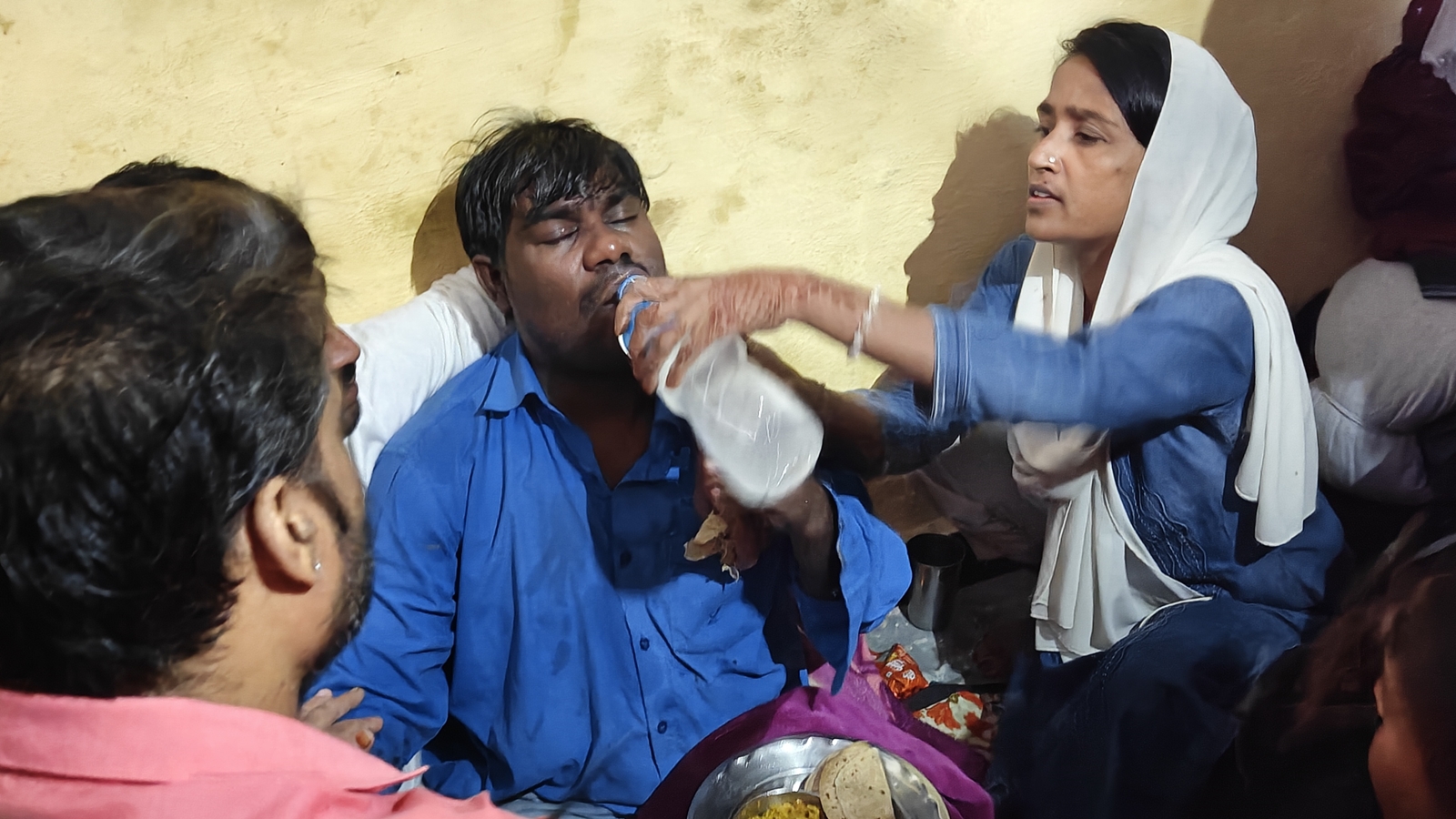
Minutes after Moinuddin stepped out to buy food and household items, the illegal four-storey structure came crashing onto his shanty in Janta Nagar in Mankhurd s Mandala area, killing his wife, four children and a six-year-old girl from the neighbourhood who h Minutes after Moinuddin stepped out to buy food and household items, the illegal four-storey structure came crashing onto his shanty in Janta Nagar in Mankhurd s Mandala area, killing his wife, four...
Minutes after Moinuddin stepped out to buy food and household items, the illegal four-storey structure came crashing onto his shanty in Janta Nagar in Mankhurd’s Mandala area, killing his wife, four children and a six-year-old girl from the neighbourhood who had come over to play.
The collapse claimed the lives of his wife, Akhtar Jahan (38), daughters Kaisar Jaha Moinuddin (14) and Anabiya Moinuddin Shah (3), sons Jalaluddin Moinuddin (9) and Serajuddin Moinuddin Shah (6), and Aliya Allauddin Shaikh (6), a child from the neighbourhood who had come over to play with the children.
The Mankhurd collapse accounted for six of the 10 rain-related deaths reported in Mumbai over the past two weeks, during which the city has received nearly 60 per cent of its annual rainfall.
Residents said the four-storey building had started tilting and its tiles had begun crumbling on Sunday morning. The building, which housed three families and a furniture godown, was vacated by its occupants after neighbours noticed signs of distress. Mumbai Mayor Ritu Tawde later described the structure as “completely illegal”.
A native of Uttar Pradesh’s Basti district, Moinuddin was born and brought up in Mankhurd. His family had moved into the Janta Nagar shanty nearly two years ago and lived there on rent.
The sole breadwinner of the family, Moinuddin worked as a contractual labourer who often worked on Brihanmumbai Municipal Corporation (BMC) projects.
“My children were very bright and they studied in the Shivaji Nagar Municipal School,” said Moinuddin.
Unable to recover from the shock of losing his entire family, Moinuddin was in no condition to participate in the post-mortem formalities at Rajawadi Hospital in Ghatkopar. Around 15 relatives, including his uncles, cousins and members of his wife’s family, gathered outside the hospital’s post-mortem department to complete the necessary formalities.
“Since the incident, Moinuddin has been in shock. He has barely spoken,” Akhtar’s nephew, Nisaar Ahmad Shah (37), told The Indian Express.
Meanwhile, relatives recalled that Aliya Allauddin Shaikh (6) had come over to play with the children shortly before the collapse.
Six-year-old Aaliya Allauddin Shaikh’s grandfather and father sat outside the post-mortem department of the hospital, unable to stop crying.
Her grandfather, Aftar Shaikh, said, “I work as a tailor. A month ago, my daughter, Noorjahan, moved here with her husband and children in search of better work. My son-in-law recently got a job as a supervisor in a transport company, so the plan was to get them settled here so that the children could have a better education and a better future.
“They were staying with me temporarily. Earlier, they all lived in Uttar Pradesh’s Jaunpur district, and we were planning to get them a house here. Back in the village, my son-in-law practised farming. Aaliya had also recently been admitted to a school. When this incident happened, around the same time, her younger brother, Jayan Shaikh (1.5), was undergoing an operation at Wadia Hospital after developing an infection in his arm.”
Unable to speak further, he said, “I feel so horrible. How do I manage this grief? My son-in-law is not in a condition to speak. Look at him, he is sitting here in shock. I don’t know how to handle my daughter; she is devastated in the Wadia Hospital managing the son alone there. I have to stay strong to hold them all together. I feel this would not have happened if they hadn’t moved to my house.”
In Rajawadi Hospital’s trauma ward, 23-year-old Rehan Ali, a crane operator, is being treated for injuries, including a fracture to his right hand.
Recounting the incident, Rehan said, “The building that collapsed had become dilapidated. I lived on the ground floor, while around 20 people lived on the first, second and third floors. At the time of the incident, six of us were on the ground floor. We noticed that the walls were shaking and immediately called the landlord. We had started vacating the house. I went back inside to collect a few belongings, and that’s when the building collapsed. I was trapped and suffered these injuries.”
Nayonika Bose is a Senior Correspondent with The Indian Express’ Mumbai bureau. While in the early stages of her career, her focused reporting on local governance and community welfare already demonstrates clear Expertise and Trustworthiness in covering essential civic issues impacting Mumbai's residents. Expertise & Authority (E-E-A-T) Specialized Focus: Nayonika's reporting is dedicated to civic and community issues, providing readers with highly relevant, ground-level information about the functionality and administration of India's largest metropolitan area. Core Coverage Areas: Her articles highlight a strong focus on the fundamental quality of life and public safety in Mumbai, including: Civic Infrastructure: Reports on critical failures and initiatives related to public works, such as the recurring problem of unauthorized building collapses in Navi Mumbai, the construction of new infrastructure projects (like the Dahisar-Bhayandar Link Road and the Mahalaxmi cable-stayed bridge), and the maintenance of essential city services (e.g., manhole cover theft). Urban Governance & Crisis Management: Provides detailed coverage of the Brihanmumbai Municipal Corporation's (BMC) response to major crises, particularly during the monsoon (e.g., heavy rainfall, water cuts, and public health concerns like dengue and malaria) and large-scale public safety incidents (e.g., the hoarding collapse fallout). Community Welfare & Rights: Reports on key social issues, including the financial aid scheme for persons with disabilities, the struggles of Mumbai's hawkers protesting eviction drives, and the dangers faced by workers due to the continuation of manual scavenging in water tanks. Cultural & Heritage Reporting: Covers significant community stories, including the restoration of British-era fountains and the history of institutions like the 126-year-old Chinchpokli cemetery, showing a breadth of interest beyond pure administration. Tweets @nayonikakb ... Read More