Karnataka Qr Code Grievance System Food Drug Safety Complaints
I
Indian ExpressVerified Publisher
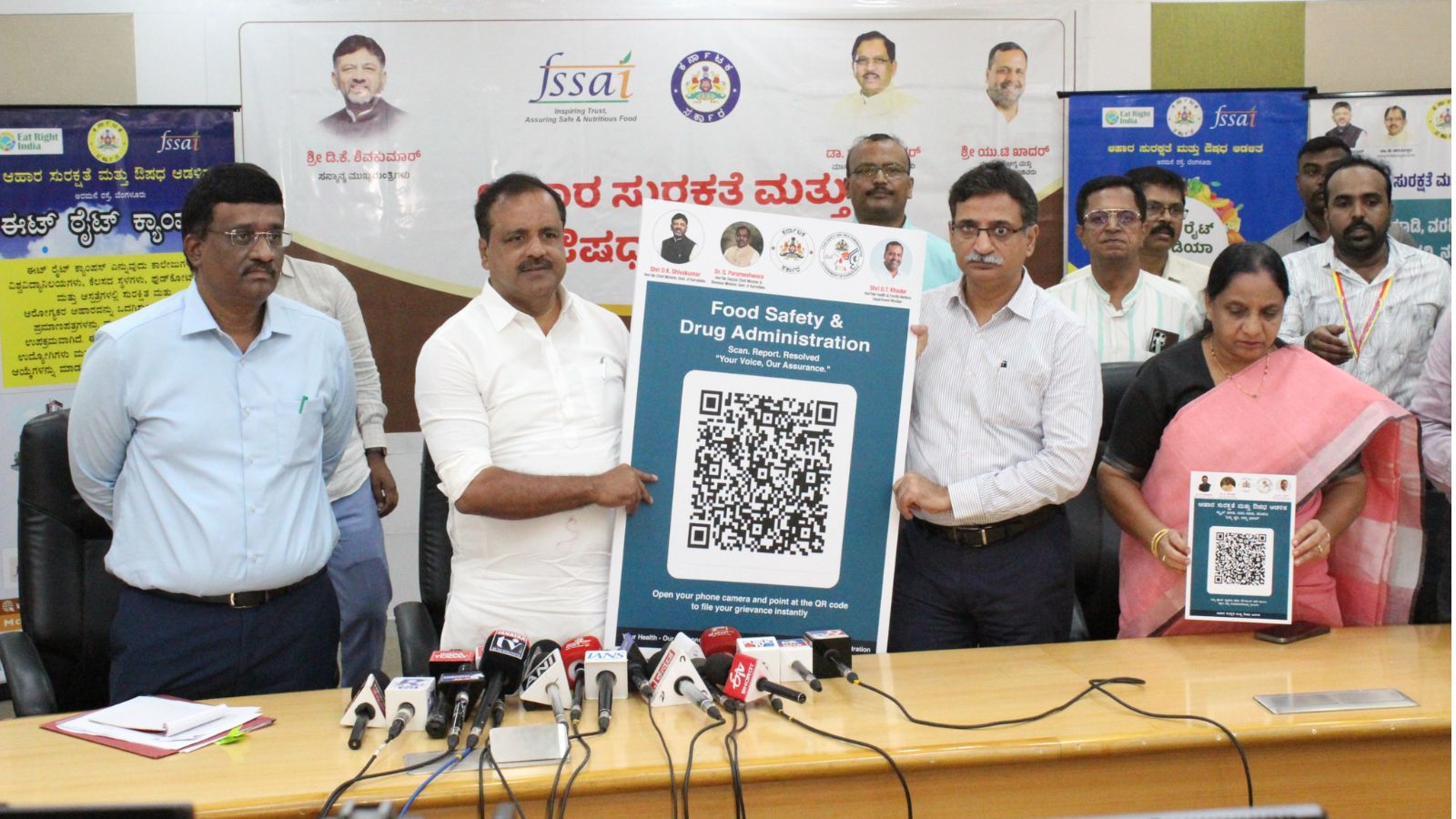
The Karnataka government launched a QR code-based Integrated Public Grievance Redressal System (IPGRS) on Monday for the public to register and track complaints about unhygienic food, expired or overpriced medicines, and other violations. Health Minister UT Kh The Karnataka government launched a QR code-based Integrated Public Grievance Redressal System (IPGRS) on Monday for the public to register and track complaints about unhygienic food, expired or...
The Karnataka government launched a QR code-based Integrated Public Grievance Redressal System (IPGRS) on Monday for the public to register and track complaints about unhygienic food, expired or overpriced medicines, and other violations.
Health Minister UT Khader, who unveiled the QR code, said the IPGRS was the first such initiative in India. He said it was integrated with the government’s Centre for E-governance.
“The QR code must be displayed at all the eateries and drug stores. Citizens can scan and register their complaints, if any. They can lodge complaints related to expired or overpriced medicines, adverse drug reactions, unhygienic food outlets and the use of artificial food colours,” the minister added.
Recent raids on food establishments and storage facilities across the state led to the seizure of expired and unhygienic food products. Khader said the Food Safety and Drug Administration (FSDA) would continue its inspections, and the public should support them to ensure hygienic food is served.
The government is also planning to involve experienced people and volunteers, particularly those aged above 60, in reporting food and drug safety violations.
Health department officials said the FSDA collected 1,860 food samples from 629 Backward Classes hostels and 556 samples from 331 Social Welfare Department hostels. The officials also inspected 889 food establishments across 186 bus stations, issuing notices to 206 establishments and imposing fines totalling Rs 55,000.
From 603 Anganwadi centres, 549 samples were collected for laboratory testing, while 1,257 centres received free registration, taking the total number of registered centres to 25,626. The department also said 11,370 food business operators have been trained under the Food Safety Training and Certification programme. Five teams inspected 99 dhabas along major highways, imposing fines totalling Rs 3.67 lakh for violations.
Complaints about unhygienic practices and artificial colours in shawarma and kebabs led officials to collect 61 samples; nine shawarma samples and one kebab sample were found unsafe, and legal action is being initiated.
The department also inspected 236 e-commerce food warehouses, initiating proceedings against 44 for violations. Eight warehouses were fined Rs 1.97 lakh for unhygienic conditions.
Meanwhile, 25 milk and milk-product samples entering Karnataka from Tamil Nadu were tested, with one found to be substandard. Officials also collected 53 suspicious food samples from establishments in and around 124 schools and colleges, along with 36 egg mayonnaise samples statewide.
In Bengaluru Urban, 30 inspection teams inspected more than 60 three- and five-star hotels, eight warehouses and four international restaurants. Notices were issued to 30 food business operators for violations of the Food Safety and Standards Act and Rules.
Officials seized several food products that were expired, mislabelled, or otherwise non-compliant. These included 429 kg of mutton and chicken, 203 kg of fish, 200 kg of vegetarian food stored with non-vegetarian food, 76 kg of rotten or mouldy vegetables, 45 litres of expired milk and curd, and 12 kg of expired bakery products.
They also seized 67 kg of mislabelled or expired cereals and other food products and 49 litres of used or non-compliant cooking oil.
Sara Raghav is an intern with The Indian Express, Bengaluru.