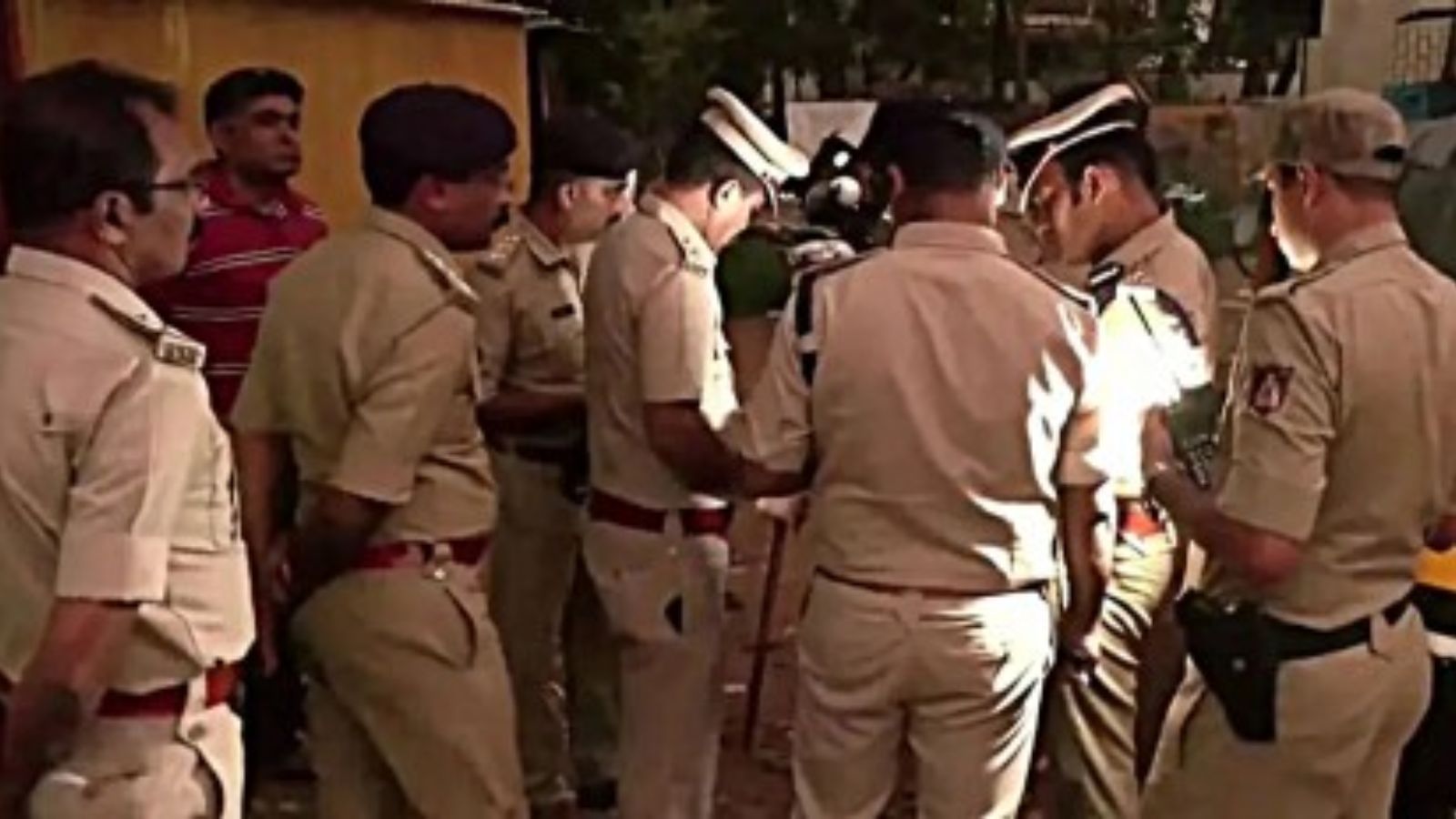
Karnataka Police are waiting for the findings of the magisterial inquiry to start their investigation into the shooting of three alleged poachers by forest officials since a 1991 state order grants temporary immunity from prosecution to forest officials involved in encounters in protected areas in the state.
During a search for suspected poachers on the intervening night of August 14 and 15, Karnataka forest officials shot Antony Swamy, 50, John Rose Peter, 43 and Sebastian David Kumar, 35 in Hanur region of Cauvery Wildlife Sanctuary. The government has ordered a magisterial inquiry into the incident to determine whether criminal proceedings can be initiated against the forest officials.
Based on a complaint by Lourde Mary, wife of Antony Swamy, the Hanur Police on August 15 had registered a murder case against unnamed forest officials but the investigation is yet to begin since the magisterial inquiry report is awaited as mandated by the 1991 order for immunity to forest officers in encounters, police sources said.
At the height of the poaching menace in the forests on the Karnataka-Tamil Nadu border involving the gang of forest brigand and sandalwood smuggler Veerappan — he is alleged to have poached over 500 elephants and killed over 180 people between 1980 and 2000 in forests across Karnataka, Tamil Nadu and Kerala — forest officers were granted an immunity via an order on September 20, 1991.
The forest department has not filed a complaint against the deceased on poaching charge but has filed cases against people from their villages who allegedly vandalised forest camps at Hanur after the deaths.
On Thursday, Chief Conservator of forest, Chamarajanagar district, Dr Malathi Priya, said the four men were poachers and that forest staff opened fire in self-defence after they opened fire. Two country-made weapons and animal meat were found near the spot and “based on the evidence it is certain that those who entered the forest were poachers,” she had said.
On August 17, Forest Minister Ramalinga Reddy informed the Assembly that the shootings were a consequence of the forest staff suddenly coming across the alleged poachers around 5 am on August 15 and opening fire from a single shotgun after reportedly seeing a flash of gunfire from the poachers’ side. “There was no malicious intent,” Reddy had said.
The one who survived and a witness to the incident, Joseph Mahima Das, 45, was found admitted to a hospital later, and is now “missing”.
“According to the 1991 order granting immunity to forest officers, a police case can be taken up in encounter cases only if a magisterial inquiry finds wrongdoing. At present, the magisterial inquiry report is awaited,” police sources said.
“The police registering an FIR against the forest staff in this incident is legally improper,” said a former forest officer from Hanur region.
According to the Preamble to the 1991 order for immunity to forest officials, “To prevent poaching and smuggling, the government has supplied guns to forest officials, as the smugglers more often than not come prepared with guns and other lethal weapons generally more powerful that what is provided to the forest personnel. On a number of occasions, the forest subordinates had to fire at the smugglers in self-defence and also to safeguard the government property.”
“In almost all cases of firing, the subordinates who are involved were arrested and in a few cases even charge of murder was brought on them and for this they had to undergo a lot of mental agony. This has affected the morale of the forest personnel to a great extent, leading to their not using the firearms even when an occasion demanded it,” it said.
According to the government notification issued under Section 197(3) of the CrPC, forest officers can use their firearms with minimal force to protect forest property and their own lives but not for dispersal of crowds.
“While in discharge of their duties, if any firing is resorted to, a Magisterial Enquiry by the Executive Magistrate of the concerned area should be ordered in all such cases, and as a consequence of such enquiry if it is held that there was unnecessary, unwarranted or excessive use of force, a criminal case could be instituted against the delinquent officers after examination of the Government,” says the September order.
“Till the recommendation of the magisterial enquiry is known, police should not arrest or proceed against the officers who had opened fire…” it said.
“There are no specific provisions of law in Indian Penal Code, 1860, Criminal Procedure Code, 1973, Karnataka Forest Act, 1963, Wildlife (Protection) Act, 1972, etc., giving them powers to use firearms. Like other citizens, the forest officials also can exercise their right of private defence under Sections 96 to 106 of the IPC,” the order said.
“The power to use firearms is only meant to stop the criminal and hence the purpose should be to injure, rather than kill. Firing should not be done indiscriminately and vindictively. In other words, firing should be stopped as soon as the objective is achieved. During enquiry, the onus will be on the forest officials, to justify the use of firearms,” it said.
“As far as possible, firing should be avoided during night time because it may not be possible to aim and fire and also innocent persons may be injured/killed,” it said.
The magisterial inquiry report will be scrutinised by the government to see if opening fire is justified and if it is not justified “criminal action will have to be taken against those forest officials who opened fire” including arrests and identification parade, the 1991 order says. Forest officials are also protected against legal action for actions in good faith in the line of duty under Section 114 of Karnataka Forest Act, 1963, a former Hanur forest official said.