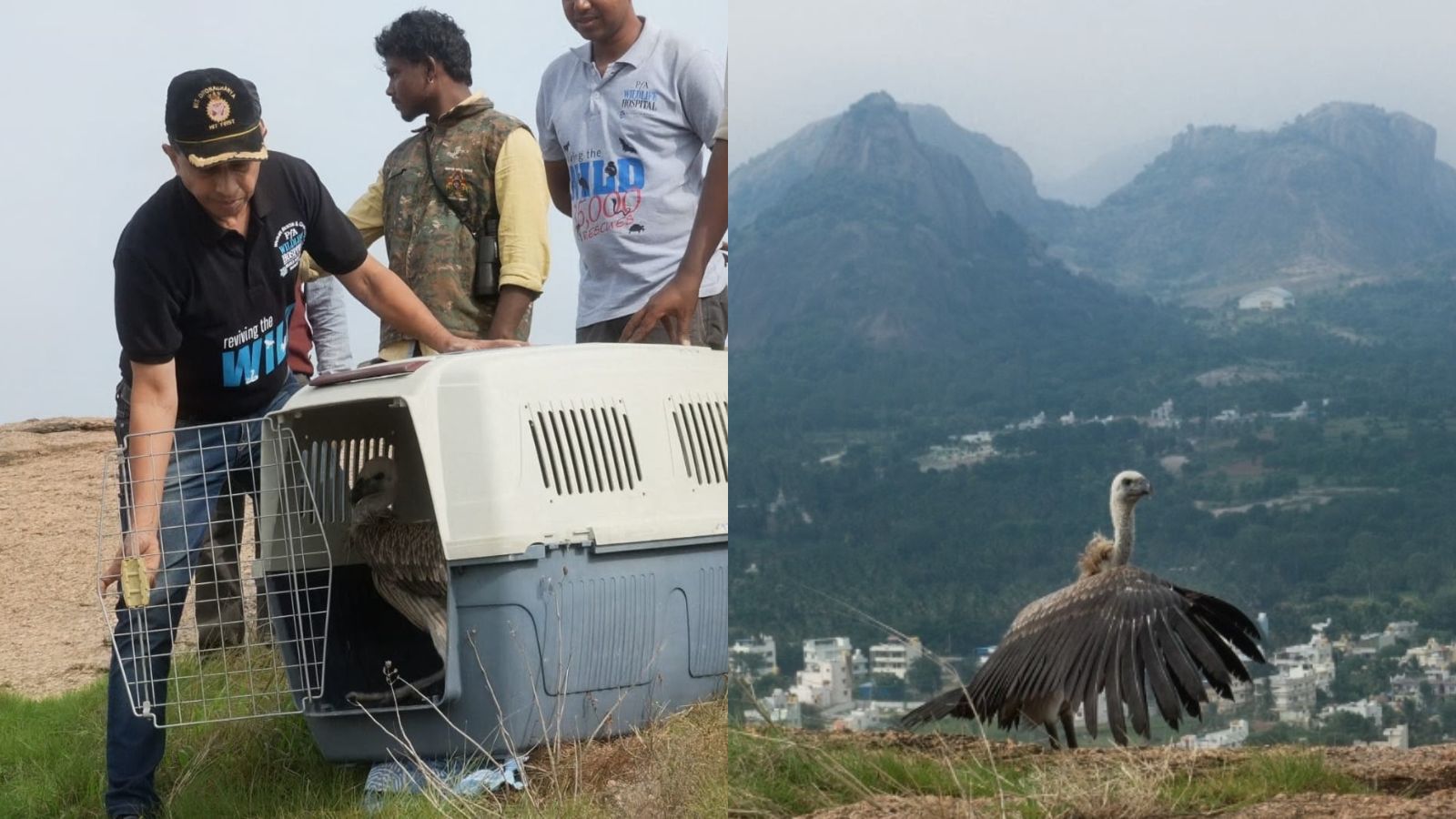
In a major win for wildlife conservation, a young critically endangered Indian vulture was released back into its native habitat at the Sri Ramadevarabetta Wildlife Sanctuary in Karnataka's Ramanagara after recovering from a leg fracture. The People for Animals (PfA) wildlife hospital in Bengaluru's Kengeri co-ordinated with the Karnataka Forest Department for the rescue and rehabilitation. Ecological importance of vulture's survival The Sri Ramadevarabetta Wildlife Sanctuary houses only a single breeding pair of Indian vultures (Gyps indicus). The rescued bird, hatched roughly six months ago, is one of just three vultures residing in the sanctuary. Over the last few decades, the Indian vulture population experienced a sharp decline due to diclofenac, a veterinary painkiller that causes fatal kidney failure in vultures feeding on cattle carcasses. Although banned for veterinary use, recovery remains slow as the vultures hatch only one egg per year. Rescue and natural healing The young bird sustained a hairline fracture to the head of its femur following a rough landing on rocky terrain while learning to fly. Forest officials spotted the motionless bird and alerted the hospital's rescue team. "We have a quick reaction and rescue team ready always, so we rushed there and brought it to the hospital in Kengeri. X-rays revealed a sizable hairline fracture at the head of the femur bone," said Col Dr Navaz Shariff, chief wildlife veterinarian and general manager, PfA wildlife hospital. To prevent the leg from shortening, a risk from surgery in this particular case, the veterinarians opted for natural healing since the fractured bone was still in the correct position. The vulture was housed in a compact kennel to prevent further physical injury. Rehabilitators worked in eight-hour shifts, using camera feeds to track the bird's eating habits, movement, and behaviour around the clock. After four weeks, follow-up X-rays confirmed the bone was mending naturally. The bird progressed from walking with a limp to flight trials in larger aviary enclosures. Once fully recovered, the team carried the vulture up a steep hill in the sanctuary for release. "He walked around, basked in the sun for ten minutes, and then took off beautifully in flight," said Col Shariff. This was not the first time the hospital has treated a vulture, having previously treated an Egyptian vulture.