In Photos Total Solar Eclipse Plunges Parts Of Europe Into Darkness
I
Indian ExpressVerified Publisher
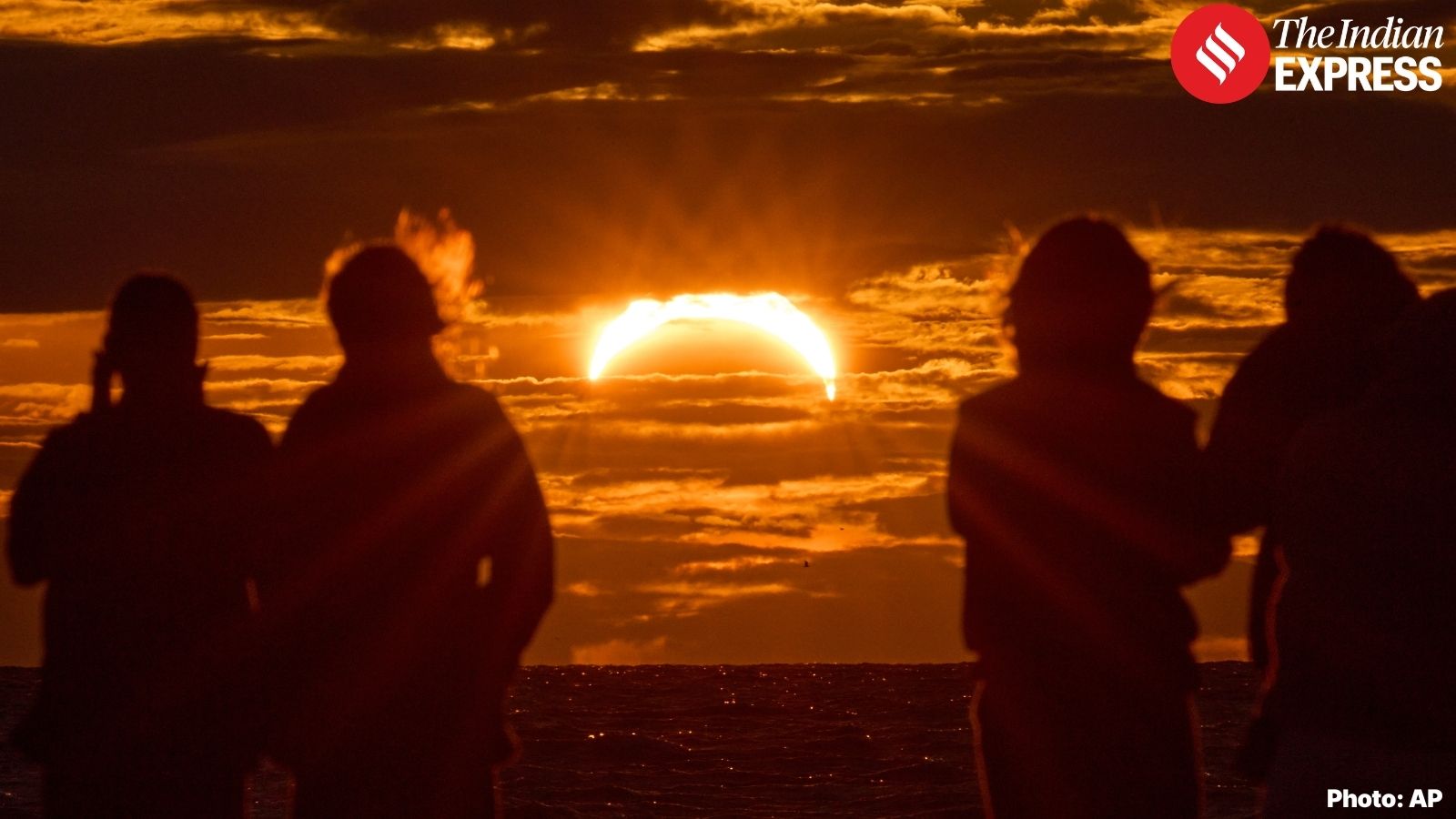
A total solar eclipse swept across parts of the Northern Hemisphere on Wednesday, briefly plunging the skies into darkness, offering millions a rare celestial spectacle ( by AP) The event marked the first total solar eclipse visible from mainland Europe since A total solar eclipse swept across parts of the Northern Hemisphere on Wednesday, briefly plunging the skies into darkness, offering millions a rare celestial spectacle ( by AP) The event marked the...
A total solar eclipse swept across parts of the Northern Hemisphere on Wednesday, briefly plunging the skies into darkness, offering millions a rare celestial spectacle ( by AP)
The event marked the first total solar eclipse visible from mainland Europe since 1999—a gap of 27 years ( by AP)
The eclipse unfolded over several hours as the Moon aligned between Earth and the Sun, casting its narrow shadow over Greenland, Iceland, northern Russia, Spain, and a small part of Portugal ( by AP)
During totality, the sky can become almost completely dark, with temperatures dropping and stars becoming visible as the sun is briefly blocked by the moon ( by AP)
While observers along the path of totality saw the Sun completely obscured, people across much of Europe, northwestern Africa, and parts of northeastern North America witnessed a partial eclipse ( by AP)
Social media feeds lit up with videos and photos of the total solar eclipse ( by AP)
A solar eclipse is a celestial event that occurs when the Moon comes between the Earth and the Sun, blocking the Sun either fully or partially ( by AP)
The movement casts a huge shadow on parts of the Earth. There are four types of solar eclipses: total, annular, hybrid, and partial ( by AP)