Ignou Degrees Conduct Bombay High Court Free Kidnap Murder Convict
I
Indian ExpressVerified Publisher
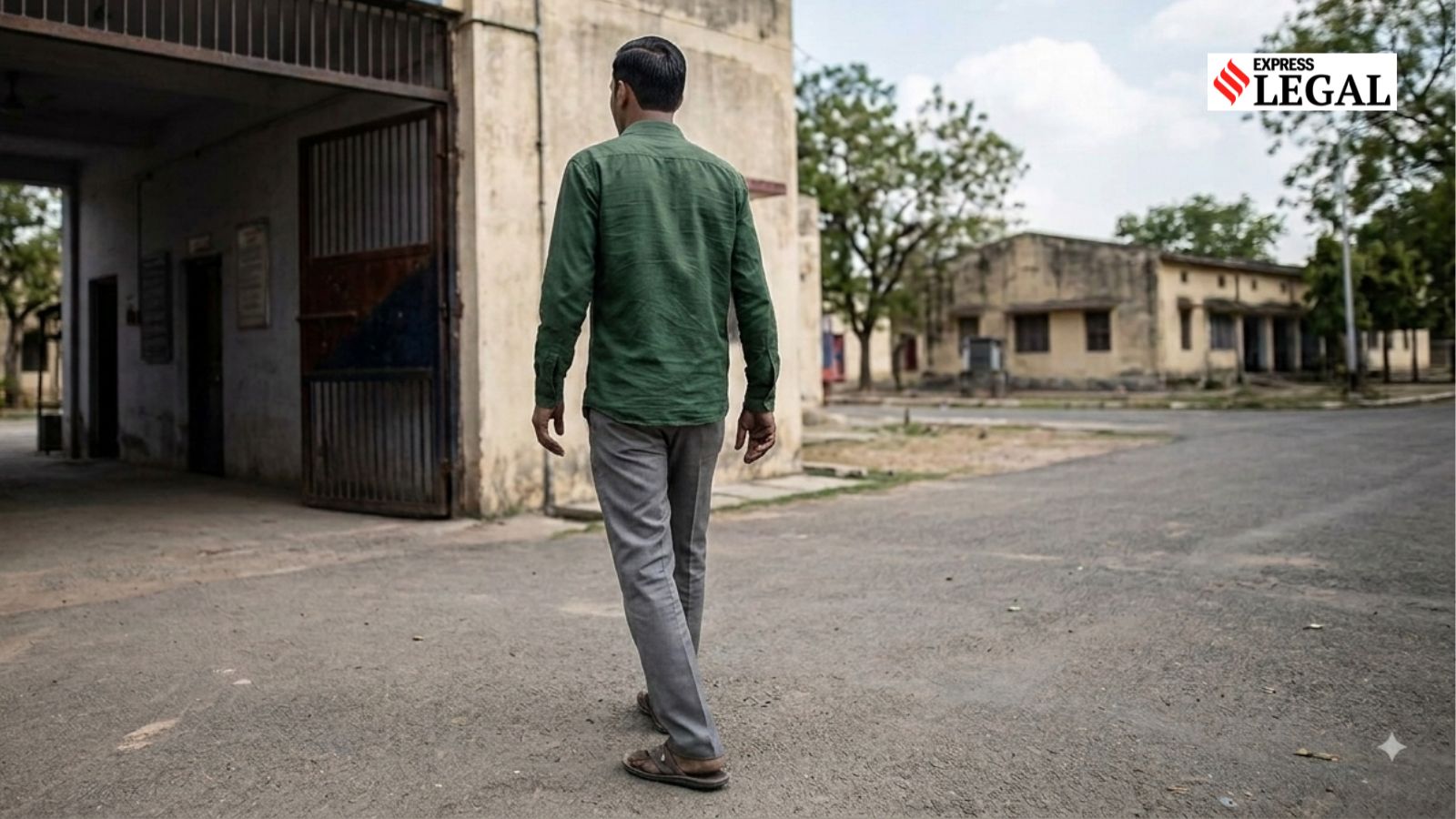
Ordering the early release of a man serving life imprisonment for a 2006 kidnapping-murder, the Bombay High Court has underlined that punishment must serve a reformative purpose, while noting the convict s efforts to rebuild his life through education and work Ordering the early release of a man serving life imprisonment for a 2006 kidnapping-murder, the Bombay High Court has underlined that punishment must serve a reformative purpose, while noting the...
Ordering the early release of a man serving life imprisonment for a 2006 kidnapping-murder, the Bombay High Court has underlined that punishment must serve a reformative purpose, while noting the convict’s efforts to rebuild his life through education and work in prison.
A bench of Justices Neela Gokhale and Amit S Jamsandekar was dealing with a man’s plea challenging the Goa government’s decision to reject the State Sentence Review Board’s (SSRB) recommendation for his early release. The man, who completed three courses through IGNOU and took up several responsibilities during his prison stint, sought quashing of the rejection and release from jail.
“The petitioner’s case deserves to be considered in light of the reformative theory underpinning the modern criminal justice system. The purpose of punishment is not merely retribution but also the reformation and rehabilitation of the offender, enabling his eventual reintegration into society,” the August 6 order stated.
The court highlighted that the prison laws in India embody a strong underlying reformative purpose. It added that requiring the SSRB to be absolutely certain that a convict would not repeat the offence would virtually bar all eligible convicts from seeking premature release.
“This would altogether rule out the possibility of any prisoner being considered for and prematurely released. This would mean that a convicted person would never see freedom and would die within the prison walls. It is nigh impossible for any authority to opine with ‘absolute certainty’ that the convicted person will not reoffend,” it said.
The man, now 41, was convicted along with three others for kidnapping and murdering law student Mandar Surlakar in Goa in 2006. The accused abducted Surlakar and demanded a ransom of Rs 50 lakh from his father. Mandar was later found dead, with the post-mortem report indicating strangulation and head injuries. The said convict was held guilty in 2014 and sentenced to life imprisonment.
However, the Goa government rejected the recommendation on January 1, 2026, citing the nature of the crime and public-safety concerns. The man challenged the latest rejection before the high court, leading to the present proceedings.
Appearing for the petitioner, advocate Nigel Fernandes submitted that the state’s rejection of his premature-release plea was arbitrary and based mainly on the heinous nature of the offence. It was also stated that he had completed the required 14 years of actual imprisonment, adding up to almost 20 years in total.
The state argued that premature release was not a fundamental right but an executive discretion. It submitted that the offence was heinous and pre-planned and had devastated the victim’s family. It also relied on the superintendent of police’s objection that releasing the man early was not in the interest of justice or public safety.
The court held that the heinousness or gravity of the original offence cannot, by itself, be a ground to deny remission. The remission process must focus on the prisoner’s present and future conduct, reformation and prospects of reintegration into society.
The high court held that continuing his incarceration after more than 20 years in prison, despite evidence of reformation and a low likelihood of reoffending, would not serve a fruitful purpose and would run contrary to the reformative objective of remission.
“Since his incarceration, he has completed a Bachelor’s Degree in Tourism Studies, a Post Graduation Degree in Tourism and Travel Management, and a Diploma in Finance and Accounting, all through IGNOU. He participated in the Aspiring Entrepreneurs Workshop organised by the Goa Chamber of Commerce and Industry,” the court noted.
“As a prisoner, he has worked as canteen in-charge, in paper bag making, as a Para Legal Volunteer appointed by the District Legal Services Authority, managing the canteen since 2015, assisting the functioning of the IGNOU centre at the Central Jail, Colvale since 2015, and managing the bakery section since 2023,” it observed.
The district magistrate also reported that the petitioner’s conduct was satisfactory when he was released on parole earlier, order underlined, adding, “The Inspector General of Prisons also informed the Board that no adverse reports were made during the Petitioner’s parole.”
The court thus found the state’s decision rejecting the SSRB recommendation to be arbitrary and legally unsustainable, quashed it and directed the man’s release.
Jagriti Rai works with The Indian Express (Digital), where she writes from the vital intersection of law, gender, and society. Working on a dedicated legal desk, she focuses on translating complex legal frameworks into relatable narratives, exploring how the judiciary and legislative shifts empower and shape the consciousness of citizens in their daily lives. Expertise Socio-Legal Specialization: Jagriti brings a critical, human-centric perspective to modern social debates. Her work focuses on how legal developments impact gender rights, marginalized communities, and individual liberties. Diverse Editorial Background: With over 4 years of experience in digital and mainstream media, she has developed a versatile reporting style. Her previous tenures at high-traffic platforms like The Lallantop and Dainik Bhaskar provided her with deep insights into the information needs of a diverse Indian audience. Academic Foundations: Post-Graduate in Journalism from the Indian Institute of Mass Communication (IIMC), India’s premier media training institute. Master of Arts in Ancient History from Banaras Hindu University (BHU), providing her with the historical and cultural context necessary to analyze long-standing social structures and legal evolutions. ... Read More