How A Protest Over School Roof Collapse Helped Alwar Students Get Other Issues Addressed Too
I
Indian ExpressVerified Publisher
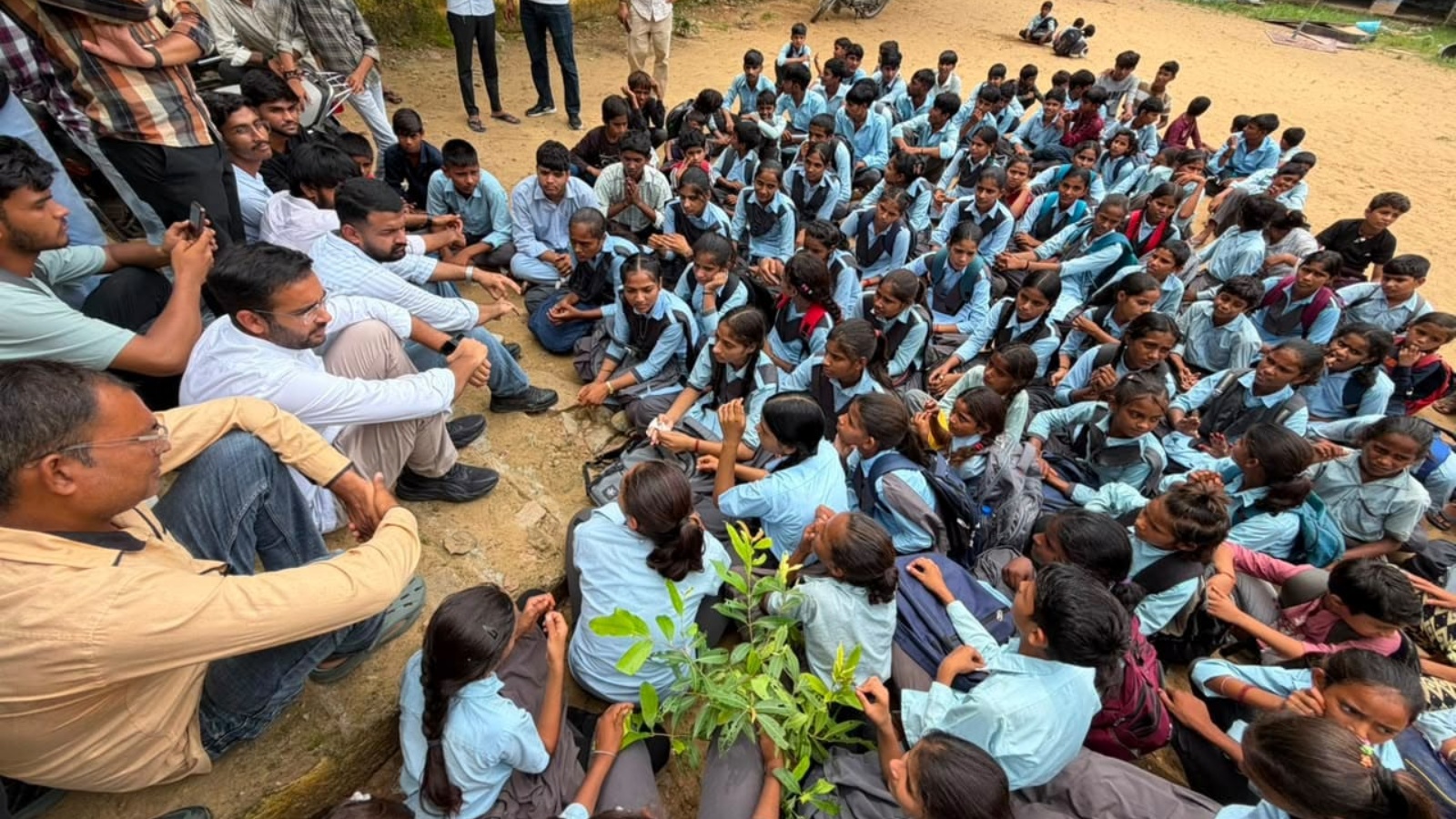
It started with a section of a roof at a government school in Jodhawas village in Rajasthan s Alwar collapsing on Thursday, August 13. Though no one was injured the room in question has been closed for over a year it triggered something in the students who hav It started with a section of a roof at a government school in Jodhawas village in Rajasthan s Alwar collapsing on Thursday, August 13. Though no one was injured the room in question has been closed...
It started with a section of a roof at a government school in Jodhawas village in Rajasthan’s Alwar collapsing on Thursday, August 13.
Though no one was injured – the room in question has been closed for over a year – it triggered something in the students who have been seeking improvement in the school’s infrastructure for a while now. Within hours, scores of students at the school in Thanagazi town gathered in the school compound and began a protest, footage of which was widely circulated, finally catching the attention of the Cockroach Janta Party (CJP).
The next day, CJP spokesperson Ashutosh Ranka and others reached the school, sat with the students, and demanded immediate action to repair the school buildings and improve road connectivity.
In the evening, Ranka posted a video on social media, announcing that the demands of the students have been accepted. He praised the students for their efforts.
District Education Officer Manoj Sharma told The Indian Express that the school had six functioning rooms and as many which were declared as unsafe following a survey.
“The roof, a part of which collapsed, was in a room that had already been declared unsafe. No one used to sit in that room. Students got scared due to the incident and started protesting. We accepted their demands. The sub-divisional magistrate (SDM) has promised that under the VB-G Ram G Mission, three new rooms will be constructed. We have also sent a proposal to the state government for four new rooms.”
In his X post, Ranka wrote, “All classrooms will be repaired within one week and used exclusively for children. And seven rooms will be prepared in the next three months… a playground will be built for the children.”
The school was upgraded to senior secondary level four years ago but, the villagers told the media, several teaching posts remained vacant. “There is no principal, while five Grade II teacher posts are reportedly vacant. Only one Grade II teacher is currently posted at the school, with Grade III teachers teaching students up to Class 12,” said a villager.
The school currently has six teachers while seven more teachers have been transferred, said Sharma.
The villagers also rued that despite the school building being declared unsafe, it had not been demolished or repaired.
The students and CJP leaders also demanded that the toilets should be repaired. The administration has assured them that things will improve within 15 days.
In his post on X, Ranka wrote: “After a five-hour sit-in protest, the Rajasthan government has accepted all demands…”
Road connectivity is another major problem faced by the students. The school is situated near the Ruparel river. As water level rises in the river during monsoon, the students often have to come to school wading through ankle-deep water. In a hand-written note submitted to the students, the authorities have assured to make the culvert on the river motorable within 48 hours, and build a bridge in four months.
The students have also been promised installation of RO-filtered drinking water facility on the premises.
According to a survey conducted by the Rajasthan government, more than 85,000 schools in the state are reeling under poor infrastructure. After the Jhalawar tragedy, in which seven students were killed after the roof of a government primary school in Piplodi village collapsed on July 25, 2025, the state’s Bhajan Lal Sharma government ordered a probe and five government teachers were suspended. The state government demolished many school buildings that were deemed unsafe while locking up several rooms in others. However, due to lack of budget, the schools were yet to see any substantial infrastructure development work.
Parul Kulshrestha is a Principal Correspondent for The Indian Express, based in Rajasthan. A lawyer turned journalist, she brings a unique cross-disciplinary perspective to her reporting, blending legal precision with deep social inquiry to cover one of India's most culturally and politically vibrant regions. Expertise and Experience Legal-Journalistic Synergy: Parul’s transition from a legal background to mainstream journalism provides her with a distinct advantage in interpreting policy, legislation, and judicial impacts. This expertise allows her to "read between the lines" of government orders and court rulings affecting the public. Diverse Beat: With years of experience across both mainstream newsrooms and independent journalism, she has built high-level authority in several critical areas: Nomadic Tribes & Marginalized Communities: She is recognized for her sensitive and in-depth reporting on the struggles and rights of Rajasthan's nomadic populations, often giving a voice to those outside the traditional political spotlight. Gender & Social Justice: Parul focuses on the intersection of law and gender, covering issues ranging from women’s safety and reproductive rights to the socio-economic empowerment of rural women. Environmental & Political Reporting: She tracks Rajasthan’s complex political landscape—including electoral shifts and bureaucratic changes—alongside critical environmental concerns like water scarcity and land use. Academic & Professional Pedigree: Her background as a lawyer, combined with her rise to the rank of Principal Correspondent at a national broadsheet, establishes her as a senior voice in the media landscape. ... Read More