Hindu College Admission Row No Confidence Motion Principal Du
I
Indian ExpressVerified Publisher
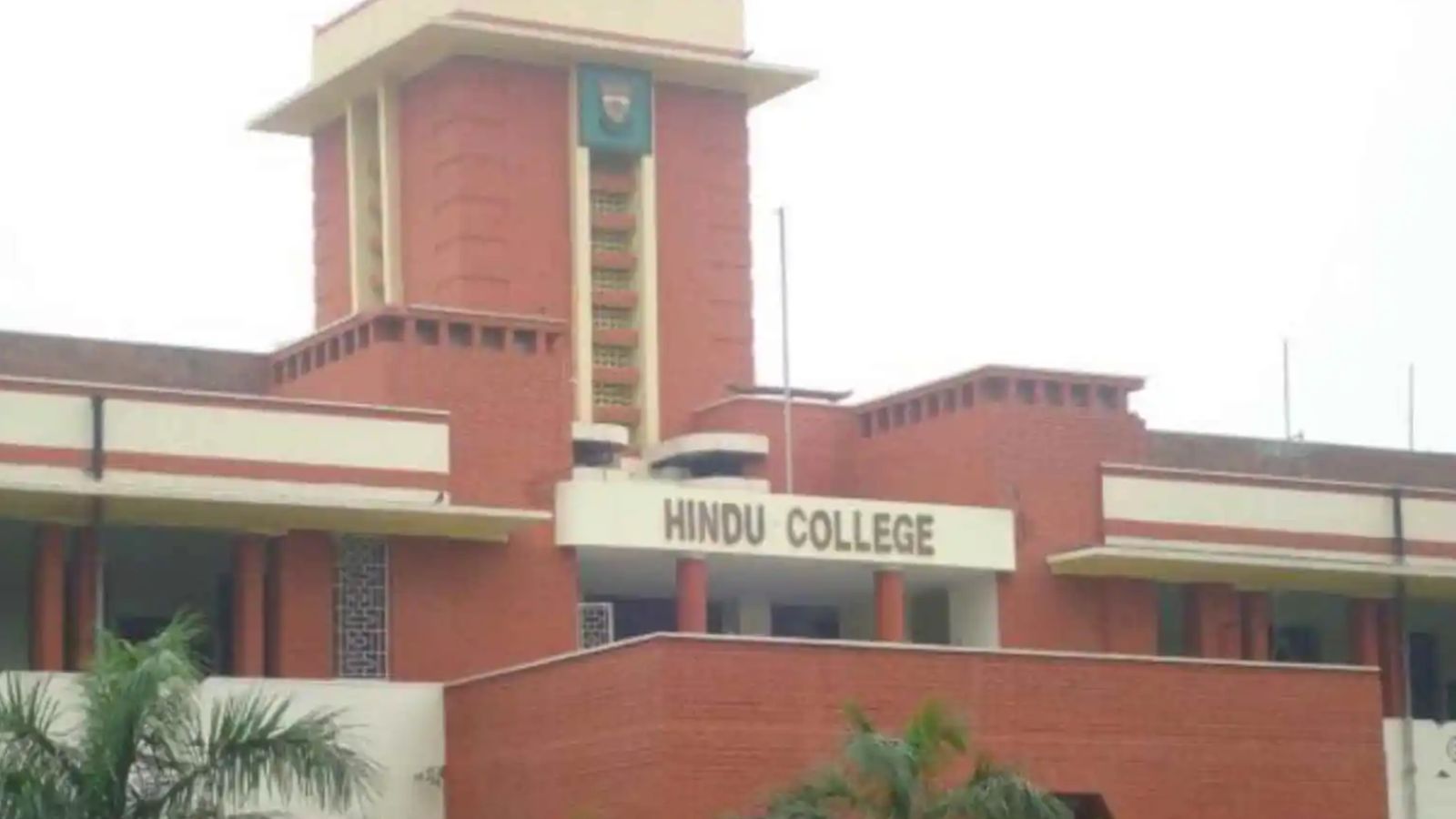
The Hindu College staff association passed a no confidence motion Tuesday against principal Anju Srivastava after a row erupted over alleged irregularities in admissions under the Sports and Extra Curricular Activities (ECA) quota in select courses. Claiming t The Hindu College staff association passed a no confidence motion Tuesday against principal Anju Srivastava after a row erupted over alleged irregularities in admissions under the Sports and Extra...
The Hindu College staff association passed a ‘no confidence’ motion Tuesday against principal Anju Srivastava after a row erupted over alleged irregularities in admissions under the Sports and Extra Curricular Activities (ECA) quota in select courses.
Claiming that “procedural violations” took place in the admissions process of the Delhi University college, the association alleged that the principal facilitated over-admissions. It has also sought an enquiry over the alleged violations.
The resolution was passed following an emergency meeting convened by the Staff Association on August 18 (Tuesday).
The university, however, attributed the over-allocation to an error in its admission algorithm.
Denying the claims, Srivastava told The Indian Express, “Admissions are done by the central admission committee, which is a duly constituted body under the staff council. The entire admission process is delegated to the admission committee headed by its convenor.”
“All admissions are allocated by the university which are then executed by the college. While the principal is undoubtedly the ultimate signing authority, she has no direct role in the admission process,” she added.
The dispute centres on the first round of admissions for the 2026-27 academic session, in which the Delhi University admission branch allocated 32 of 48 ECA and sports quota seats at Hindu College to just two courses — Commerce (17) and Political Science (15).
Under the university’s admission rules, no more than 20% of the total supernumerary seats under the ECA and sports quotas can be allocated to a single undergraduate programme. Based on the 48 seats available at Hindu College, this meant that a maximum of 10 seats could be allocated to any one course.
This, the Staff Council members pointed out, resulted in a skewed distribution.
Chandrachur Singh, Secretary of the Staff Council and a teacher at the college, alleged that there’s been “over-allocation and admissions” under the ECA and sports quotas in the Commerce and Political Science departments. Both are among the college’s most sought-after programmes.
“If we analyse past admission data, sports seats mainly used to be allocated to BA programme courses. This year, hardly 3% seats have been allocated to BA programme and other suitable courses for sports students,” he said.
“But Commerce has been allocated 35% of its seats under the ECA and sports quotas, resulting in 53% more admissions than the sanctioned 79 seats,” Singh alleged.
He claimed this “prima facie” indicates that the DU admission branch wrongly allocated supernumerary seats, allegedly favouring certain cases in popular courses such as Commerce and Political Science at top DU colleges.
DU Registrar Vikas Gupta said that “overallocation” in these two sought-after programmes had been caused by an “algorithmic error”, but that there “has been no merit violation” since the candidates had qualified for allocation on the basis of their ECA and sports points.
“We have an automated system to which we have to apply the algorithm. However, there was an error in the programming which made the calculation. By the time we got to know about it, it was already late and many students had already taken admissions based on the allocation. It happened in another programme, but there we caught it earlier and were able to correct it,” he said.
Professor Haneet Gandhi, Dean of the Admission Branch, said in a formal communication to the Principal earlier this week that Round 1 allocations under the ECA and sports quotas were made “strictly on the basis of merit scores”.
“… while executing the allocation algorithm, the 20% cap was inadvertently applied at the programme level rather than separately to the Sports/ECA quota. This has caused overallocation in few programmes,” she said.
The university also issued a statement on the issue earlier this week, saying, “There were over allocations under the Sports and ECA quota in two courses of Hindu College in the list sent across by the university. The issue was immediately flagged to the University of Delhi.” The statement was undersigned by Dr Twinkle Pal, Central Admission Committee convenor.
It added, “The university subsequently acknowledged that the allocation had occurred due to an inadvertent error and directed the college to proceed with the admissions in the stipulated schedule.”
The statement underlined that the decision to process the admissions was “neither unilateral nor taken without consultation”. The varsity’s Staff Council had given its nod “to proceed with the processing of the application in accordance with the University’s direction”, it said.
Under the university’s admission rules, every college must reserve at least 1% of its total intake for ECA and sports admissions combined. The combined quota cannot exceed 5% of a college’s total intake.
Within the supernumerary seats, the 20% cap determines how the seats are distributed among individual undergraduate programmes.