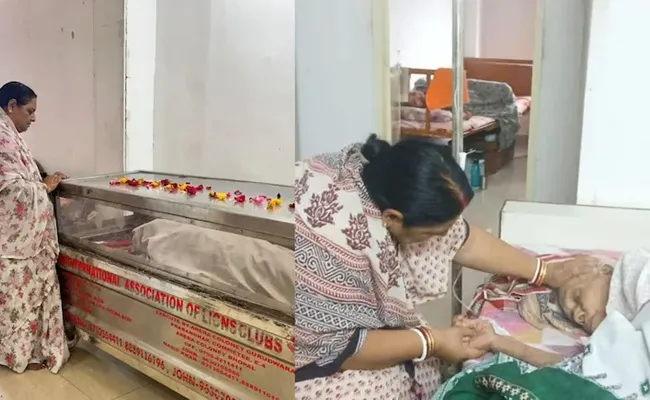
Ghanshyam did not leave behind a huge fortune. He ran a small bicycle tyre-and-tube business in Indore, owned a modest house and raised four children — two sons and two daughters. His wife died when the children were still young. From then on, Ghanshyam took care of them alone. But the final years of his own life were very different. Mishra said Ghanshyam’s story reflects a painful change in family relationships. She recalled that his youngest daughter was only around two years old when his wife died. Ghanshyam had managed
Ghanshyam did not leave behind a huge fortune. He ran a small bicycle tyre-and-tube business in Indore, owned a modest house and raised four children — two sons and two daughters.
His wife died when the children were still young. From then on, Ghanshyam took care of them alone.
But the final years of his own life were very different.
Mishra said Ghanshyam’s story reflects a painful change in family relationships.
She recalled that his youngest daughter was only around two years old when his wife died. Ghanshyam had managed to raise four children by himself, but in his final years, none of them was reportedly willing to take responsibility for him.
Ghanshyam had earned his living through a small tyre-and-tube shop and also owned a small house in Indore. According to Mishra, the house was later sold and the money was distributed among his children.
According to Mishra, the person who answered reportedly said they had no relationship with him and did not want to be involved.
By then, Ghanshyam was partially paralysed. He had difficulty speaking and could barely walk.
Mishra said that when he first arrived at Apna Ghar, he was already in poor health.
According to Mishra, he had reached Bhopal’s ISBT, where buses from Indore arrive. Some young social workers found him there in a helpless condition and took him to Apna Ghar.
A man who had once held the hands of his four children while they learned to walk had reached a bus terminal in his old age, partially paralysed and almost alone.
According to Mishra, one of Ghanshyam’s daughters reportedly said she was unhappy because she had not received a share of his property, while his sons allegedly questioned what their father had done for them.
His funeral is now over, but the painful story has not ended.
The family reportedly wants his death certificate.
Mishra, however, said she does not want to hand it over easily.
Her argument is emotional but simple: if the family did not come when Ghanshyam was alive, and did not come even after his death, why should they now come only for his death certificate?
Ghanshyam’s story has once again raised an uncomfortable question about ageing parents, family responsibility and how quickly relationships can change once money and property enter the picture.
The US Department of Homeland Security has expanded a $4,000 fee on H-1B petitions and a $4,500 levy on L-1 petitions to cover visa extensions…
This is about the changing priorities of Telugu associations in the United States. Organizations that were initially created to support expatriates, preserve Telugu culture and…
Months after a 30-year-old Indian woman was found murdered in Canada’s Toronto, the police have arrested her partner, 32-year-old Abdul Ghafoori, local media reported, citing…