Duplicate Entries Relocation Why 1 3rd Of Electors May Get Deleted In Sir Rolls
I
Indian ExpressVerified Publisher
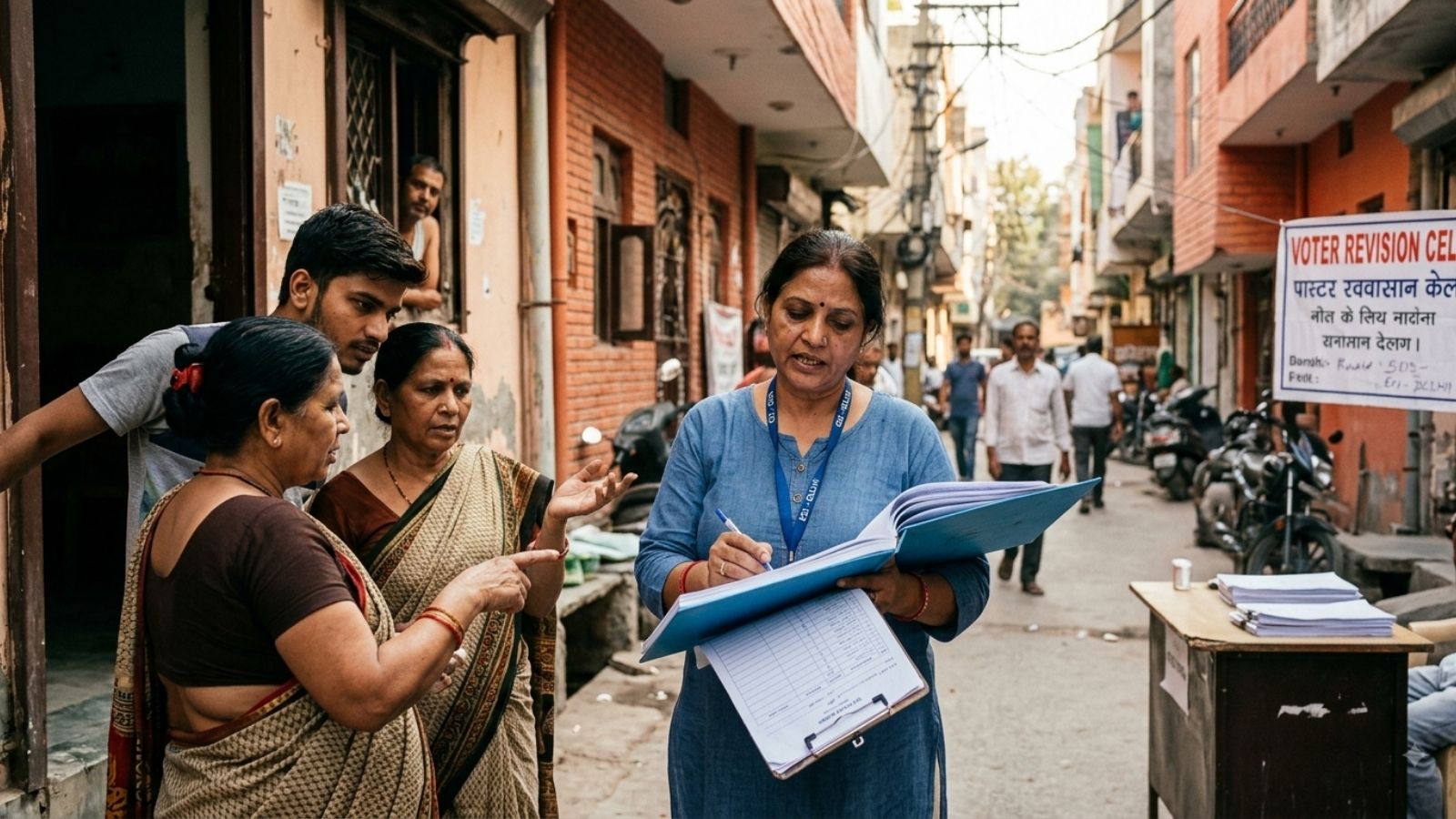
Duplicate entries in other states, relocation, and lack of awareness are among the factors that the booth level officers (BLOs) have attributed to the expected deletion of 32.82% of names of electors in the Special Intensive Revision (SIR) draft rolls in Delhi Duplicate entries in other states, relocation, and lack of awareness are among the factors that the booth level officers (BLOs) have attributed to the expected deletion of 32.82% of names of...
Duplicate entries in other states, relocation, and lack of awareness are among the factors that the booth level officers (BLOs) have attributed to the expected deletion of 32.82% of names of electors in the Special Intensive Revision (SIR) draft rolls in Delhi.
On Monday, the SIR enumeration phase — in which booth level officers (BLOs) conduct door-to-door visits to distribute enumeration forms, electors fill out their details and BLOs upload the details on the EC portal — ended in the Capital.
When the exercise started in June, the city had 1.45 crore names on its electoral rolls. Enumeration forms of around 67.18% of the electorate, or 97.47 lakh electors, have been collected and uploaded onto the portal, as per the officials.
Forms of around 47.62 lakh electors are set to be marked uncollectible — a category that includes people who are absent, have shifted, have died, have duplicate entries, or fall under ‘Other’ reasons.
“Most of my deletions will be of labourers who had Voter ID here as well as in Bihar and Uttar Pradesh. Some have even completed the SIR of those states because they want at least one address proof of their villages,” said a BLO in East Delhi, who did not want to be named. The BLO was assigned an urban village. He said he had to mark them absent after a discussion with their neighbours. “Others had found cheaper rental accomodations in nearby villages, or found work at another construction site, so they shifted,” he added.
Out of around 1,500 electors assigned to him, he said he had only been able to collect forms and digitise enumeration forms of around 800. He also estimates that out of the 700 forms he had submitted, around 200 will be sent notices due to a mismatch in names or due to missing documents.
BLO Amit Kumar, 31, who was assigned upscale Kailash Colony, said that he was able to digitise 60% of his enumeration forms. Out of the 40% that he marked uncollectible, he estimates that roughly 30% are marked shifted. “Many people in my area have shifted abroad. Others have shifted to Noida, Gurgaon or some other areas,” he said.
Roughly one-fourth of the enumeration forms he has submitted are set to get notices, he pointed out, due to no linkage being found or name changes or mismatch in spellings. “It was difficult to get many people to participate at all. They were just not interested at all. I went to their houses 6-7 times when we are only supposed to go just thrice. When I told them that their name can be struck off the electoral list, some even said they have no problem,” Kumar said.
Another BLO in West Delhi agreed with Kumar, saying that many people were not aware of the ongoing exercise and therefore, were reluctant to participate. “They just did not care enough. Even many educated people did not fill their forms and return them to us,” the BLO said.
Officials in the Chief Electoral Officer’s office previously told The Indian Express that they expected around 30% to 40% of names across Delhi to be deleted from the electoral rolls. “Delhi has a large population of migrant labourers, government employees and private-sector professionals, all of whom move frequently and often do not update their addresses,” an official had said.