Digital Rupee Dbt Pmgkay Food Subsidy Chandigarh Dadra Nagar Haveli
I
Indian ExpressVerified Publisher
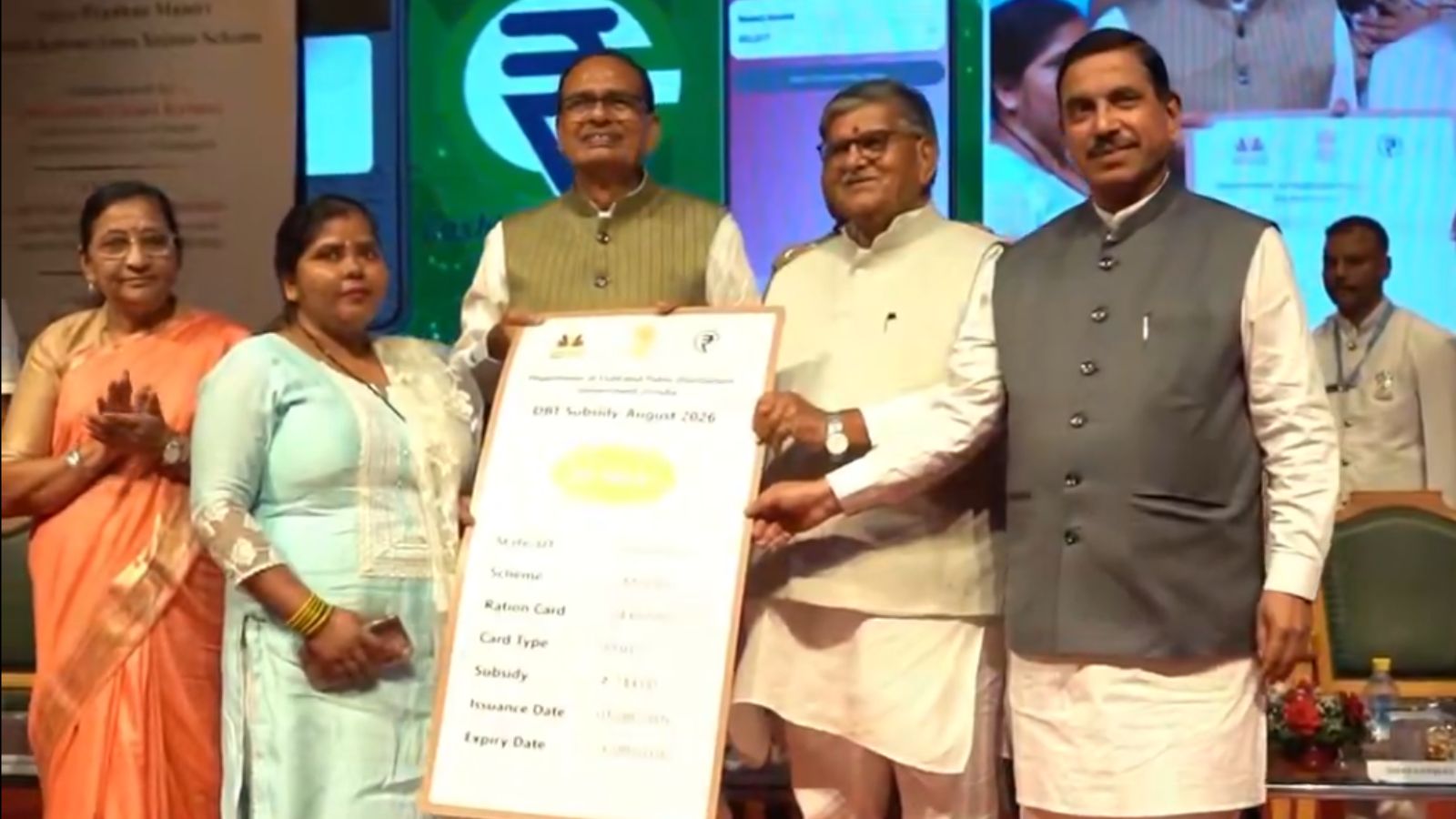
Union Agriculture Minister Shivraj Singh Chouhan on Friday launched the digital rupee-based direct benefit transfer (DBT) of food subsidy into the wallets of the beneficiaries under the Pradhan Mantri Garib Kalyan Anna Yojana (PMGKAY) in the Union Territories Union Agriculture Minister Shivraj Singh Chouhan on Friday launched the digital rupee-based direct benefit transfer (DBT) of food subsidy into the wallets of the beneficiaries under the Pradhan...
Union Agriculture Minister Shivraj Singh Chouhan on Friday launched the digital rupee-based direct benefit transfer (DBT) of food subsidy into the wallets of the beneficiaries under the Pradhan Mantri Garib Kalyan Anna Yojana (PMGKAY) in the Union Territories of Chandigarh and Dadra & Nagar Haveli. The two Union Territories are first in the country to operationalise food subsidy transfer as e-rupee tokens, directly into the beneficiaries Central Bank Digital Currency (CBDC)-based wallets. The beneficiaries can use the e-rupee to purchase foodgrains from empanelled merchants through a secure, traceable and real-time digital payment mechanism. Chouhan launched the initiative at an event chaired by Punjab Governor and Chandigarh Administrator Gulab Chand Kataria, Union Minister for Consumer Affairs, Food and Public Distribution Pralhad Joshi and Union Minister of State for Consumer Affairs, Food and Public Distribution Nimuben Jayantibhai Bambhaniya, among others. Chouhan said the initiative marks an important step towards bringing greater transparency, security and timeliness to the Public Distribution System (PDS). The pilot is intended to serve as a model for adoption across the country, according to the Union Minister. He said the CBDC-based DBT system will enable payments for ration and foodgrains to reach beneficiaries directly. Under the new system, technological safeguards have been incorporated to ensure that beneficiaries can use the funds only for purchasing foodgrains and other essential food items, preventing the money from being diverted for other purposes. Beneficiaries will have greater choice. In addition to wheat and rice, they will be able to opt for pulses or other essential food commodities. Chouhan also asserted that there would be no compromise on the interests of farmers while framing agricultural and food security policies. He said agreements entered into with other countries have been guided by national interest, farmers' interests and public interest. Referring to India's foodgrain stocks, he said the country was now in a position to meet its domestic requirements and export wheat and rice whenever necessary. He also highlighted the transparent delivery of PM-KISAN and other government benefits. On the Pradhan Mantri Garib Kalyan Anna Yojana, Chouhan said providing free foodgrains to more than 800 million people was among the country's major social security measures. He said the scheme not only ensures food security but also reduces household expenditure, allowing families to use their savings for children's education and other essential needs. The government's objective, he said, was to ensure that no poor person went hungry. Speaking on the occasion, Joshi said digitalisation is helping deliver benefits to the eligible beneficiaries in a transparent manner while also helping detect the ineligible ones. He said when Prime Minister Narendra Modi talked about digital transactions several years ago, many in the opposition criticised and raised several questions. But today, if any country does the most digital transactions, that is India, Joshi said. Under the CBDC-based DBT, Joshi assured that there is no question of excluding any eligible beneficiary. Chandigarh as a model city Highlighting Chandigarh's civic discipline, cleanliness and sense of responsibility, Chouhan said the city was an appropriate place to launch the pilot. He urged officials to identify and address challenges during the implementation so that the system could eventually be scaled up. Chandigarh was among the pioneers in implementing the DBT model for food subsidy in September 2015, moving from physical distribution of subsidised foodgrains to direct transfer of subsidy into the Aadhaar-linked bank accounts of entitled households, officials said. The CBDC initiative builds on this existing DBT framework and seeks to make welfare delivery more transparent, traceable, efficient and purpose-bound, they said. Major milestone The launch of CBDC-based DBT under PMGKAY marks a significant milestone in India's journey towards building a modern, transparent and technology-driven welfare delivery ecosystem. The initiative will further strengthen accountability and real-time monitoring of subsidy utilisation and demonstrate the potential of the Digital Rupee for future payment systems. An official statement said the digital rupee, or e-rupee, is a tokenised digital version of the Indian rupee, issued by the Reserve Bank of India (RBI) as a Central Bank Digital Currency (CBDC). The introduction of CBDC 'Digital Rupee' offers an opportunity to enhance the DBT ecosystem by providing a secure, instant, traceable, and programmable digital cash mechanism for PMGKAY beneficiaries.