Delhi Home Bet Ddas Revamped Land Pooling Plan Work
I
Indian ExpressVerified Publisher
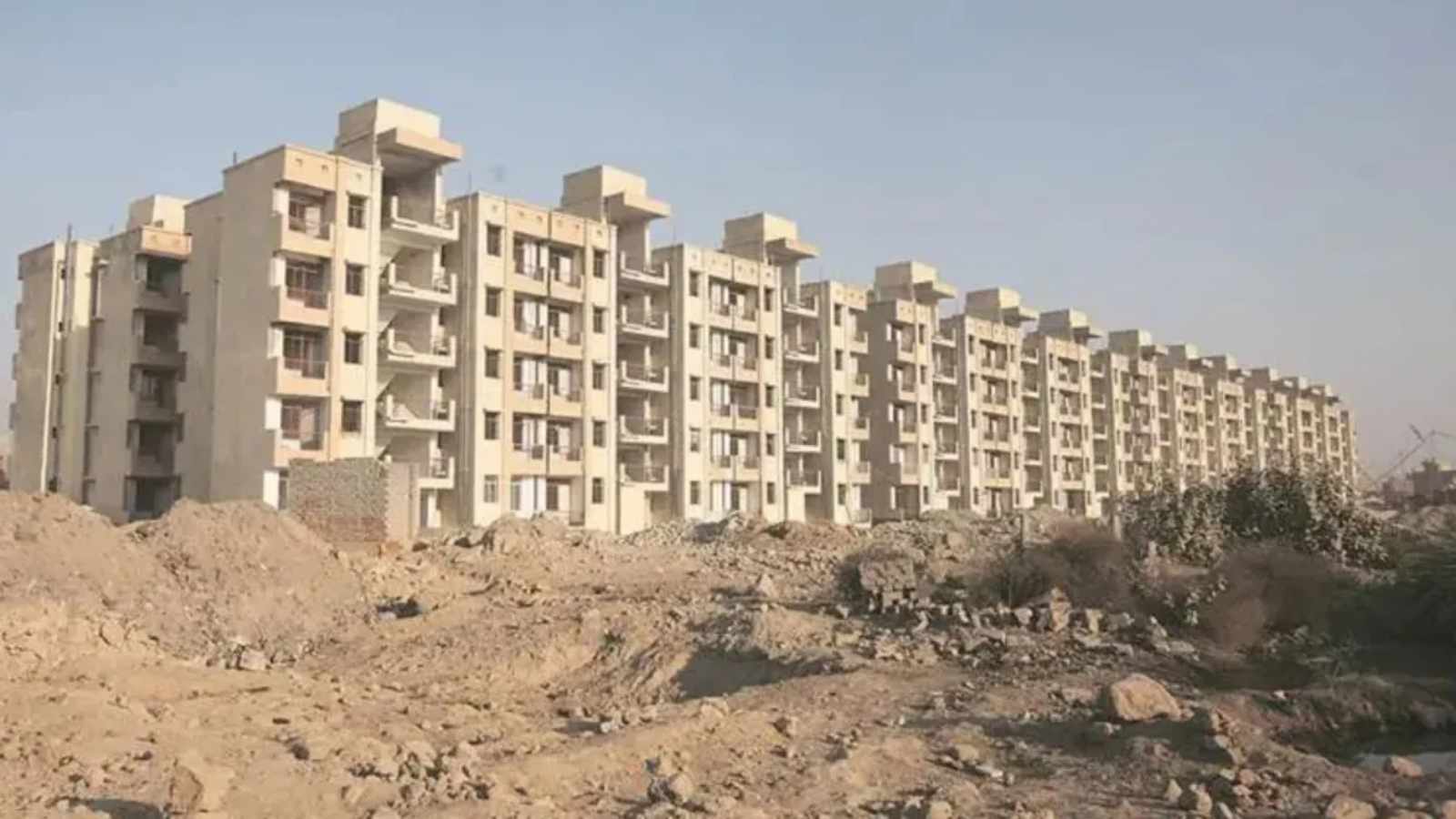
The Delhi Development Authority (DDA) has placed its biggest bet on land pooling to tackle the city s housing crunch, hoping it can unlock up to 20 lakh homes. This policy is central to the Master Plan for Delhi (MPD) 2047, which was approved on Wednesday The Delhi Development Authority (DDA) has placed its biggest bet on land pooling to tackle the city s housing crunch, hoping it can unlock up to 20 lakh homes. This policy is central to the Master...
The Delhi Development Authority (DDA) has placed its biggest bet on land pooling to tackle the city’s housing crunch, hoping it can unlock up to 20 lakh homes.
This policy is central to the Master Plan for Delhi (MPD) 2047, which was approved on Wednesday. It makes several changes to the way land pooling will work, addressing some of the hurdles that stalled the policy for years.
Until very recently, the DDA would acquire land directly, build flats and amenities such as parks and community centres, and then sell the units. But land acquisition, as per the agency, has become increasingly tedious due to high costs, litigation and procedural delays.
Land pooling is the agency’s attempt to do away with costly land acquisition and bring in the private sector to build homes. It is a framework under which private landowners take the lead role in assembling and developing land.
Under land pooling, landowners hand over 40% of the pooled parcel to the DDA for roads, parks and other public infrastructure, and can develop the remaining 60% into residential and commercial use.
The policy seeks to create world-class neighbourhoods with high-rise buildings in the rural belt of Outer Delhi areas such as Narela, Bawana and Najafgarh, where haphazard development is currently underway.
Delhi’s affordable housing supply has collapsed even as the population has grown exponentially.
The share of newly launched homes priced below Rs 40 lakh fell from 62% in 2020 to just 11% last year, while units priced above Rs 1.5 crore rose from 13% of new supply in 2019 to 70% in 2024, according to real estate consultancy Anarock.
Much of the region’s legal housing growth has moved outside Delhi to Gurgaon, Faridabad and Noida, since the city lacks regulations for high-density construction.
This has resulted in completely unauthorised and haphazard growth on the city’s fringes: internal DDA assessments show over 3,500 hectares — land the size of 4,900 football fields — has come under unauthorised construction in land pooling areas.
Therefore, the city needs to unlock more land for development.
The policy is not new. It was first introduced in 2007, in the Master Plan for Delhi 2021. Regulations were notified in 2013 and revised in 2018, and the scheme identified 138 sectors across six zones.
Eight years on, work has not begun in a single sector.
-Land assembly was a challenge: Landowners were expected to assemble land, persuade others, and draft layout plans themselves – tasks often fraught with disputes.
-Forming a consortium was another hurdle. Landowners of at least 70% of contiguous land in a sector first had to come together to form a consortium (a representative body to make development decisions) before a scheme could even be processed. But the sectors were huge, including two-three villages, and led to conflicts between landowners of different villages.
-No fixed timeline for development: Under the policy, rural landowners were expected to give up their land in exchange for an expected rise in the value of the property they get in return. However, there was no fixed timeline for when development work would begin.
-One, forming a consortium is not necessary anymore. Under the new policy, landowners with contiguous parcels above 20 hectares can approach the DDA directly.
“The DDA shall act as a main anchor for preparation of schemes and development of all roads, parks and playgrounds, utilities, services, social infrastructure, social housing etc. as per the approved scheme,” the plan states.
-Sources had told The Indian Express earlier that land use would need to be changed for individual parcels that diverged from a consortium’s sector plan; under the revised policy, this happens automatically.
-MPD-2047 also opens the door to Town Planning Schemes for areas the DDA identifies — a more structured method long used in Gujarat, where an entire notified area is pooled and reconstituted regardless of individual consent, and owners get back a smaller, serviced plot in return.
-The policy also leaves room for “any other model to be stipulated in the Regulations”, signalling that the DDA wants flexibility on implementation rather than locking itself into one mechanism.