Cow At Home No Ground End Marriage Jharkhand High Court
I
Indian ExpressVerified Publisher
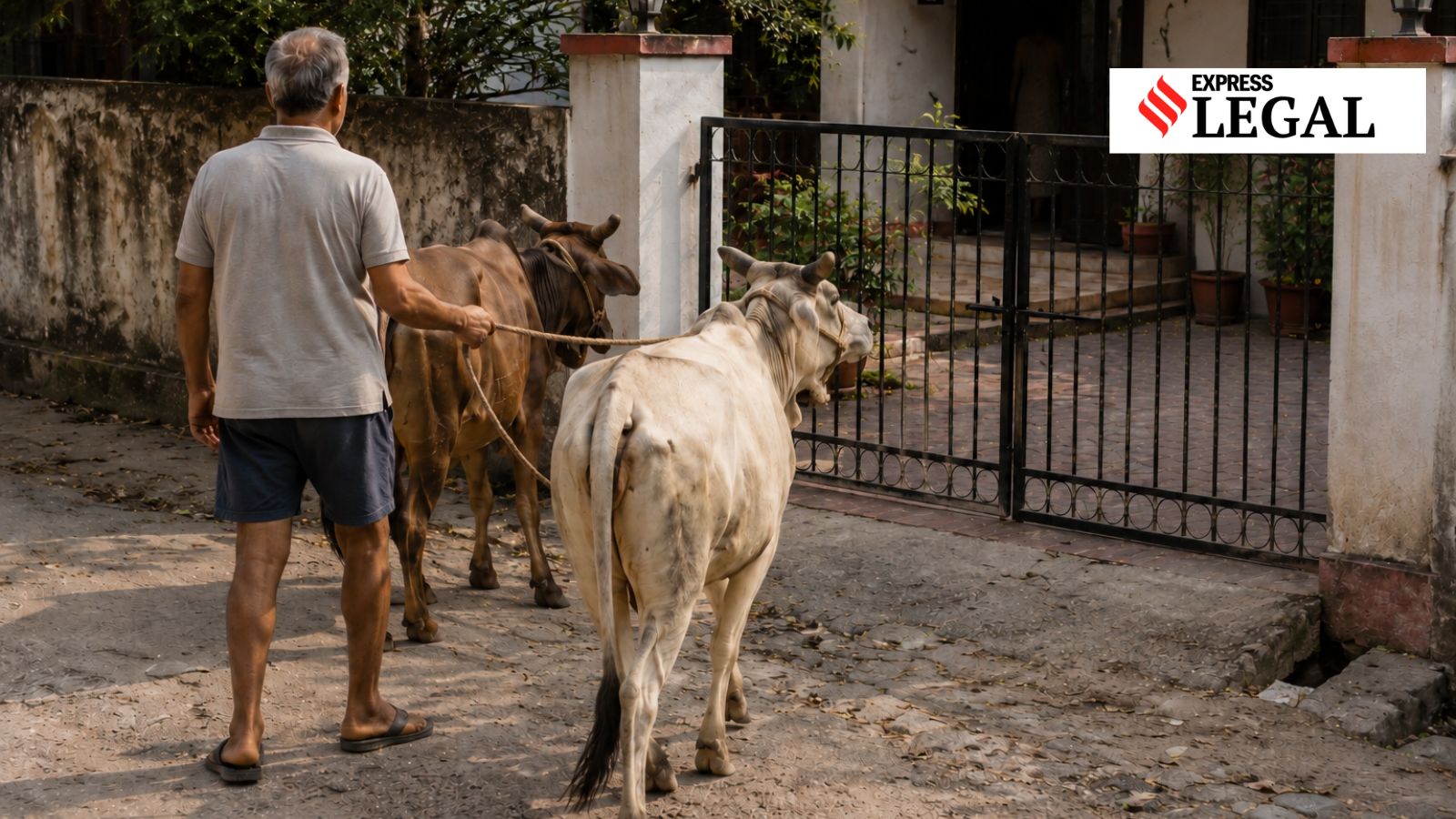
The Jharkhand High Court recently dismissed a husband s plea for divorce, pointing out that his allegations of cruelty, including claims that she locked the bathroom and disconnected its water supply, and did not allow him to keep a cow in the house, were not The Jharkhand High Court recently dismissed a husband s plea for divorce, pointing out that his allegations of cruelty, including claims that she locked the bathroom and disconnected its water...
The Jharkhand High Court recently dismissed a husband’s plea for divorce, pointing out that his allegations of cruelty, including claims that she locked the bathroom and disconnected its water supply, and did not allow him to keep a cow in the house, were not sufficient to dissolve a 35-year-old marriage.
Justices Sujit Narayan Prasad and Sanjay Prasad, while noting that the couple had lived together peacefully for 31 years and that in 2020 the wife allegedly threw the 58-year-old out of his house, stressed that what may amount to cruelty in one marriage may not necessarily amount to cruelty in another, and each case has to be considered on its own facts.
“Though the petitioner during his evidence on affidavit stated that his wife tortured him on several time by locking door of toilet (lavatory) and sometimes by disconnecting water connection of the bathroom and that she did not allow him to keep cow in the house, but it is considered view of this court that these alleged specific acts and conduct are not of such nature as to dissolve long marital relationship of almost 35 years,” the August 6 order read.
The man claimed that he got married to his wife in 1989 according to Hindu customs and ceremonies, and after the marriage, they lived together as husband and wife in his house continuously for 31 years in a very cordial environment and had three children. However, he added that, since June 2020, her behaviour suddenly changed, and she kicked him out of his own house, and since then he has been living in a rented house.
He also mentioned that the wife has filed a maintenance case and expressed her desire not to continue this marriage. He sought divorce from his wife on the grounds of cruelty and desertion.
The family court, in its August 2024 order, dismissed his plea seeking divorce. Aggrieved by this order, he moved the high court, which sent the couple to mediation, but it failed. The case was later admitted for hearing the matter on merit before the Jharkhand High Court.
During the proceedings, the man was represented by advocate Jitesh Kumar, who argued that the family court has passed the judgment totally against the facts and circumstances and the case law and is therefore unsustainable.
Kumar argued that the family court has failed to appreciate that the evidence was available on record to establish that the man has been subjected to cruelty by the wife in various ways and their marriage has broken down to the extent that it cannot be reconciled. There was no representation from the end of the wife.
The high court noted that the man claimed that his wife’s unjustified behaviour of locking bathroom doors and not allowing him to keep cows created apprehension in his mind that it would be dangerous and injurious for him to live with her.
The court explained that there is no fixed definition of “cruelty” in a marriage. Whether a particular act amounts to cruelty depends on the circumstances of each case, including the couple’s way of life, social background, relationship and individual temperaments, it observed.
It further observed that cruelty in a marriage can include a lack of mutual respect and understanding, which can gradually “embitter” the relationship. It may sometimes involve violence, but it can also take the form of a particular attitude or behaviour. “Harm or injury to health, reputation, the working career, or the like, would be important considerations in determining whether the conduct of the defending spouse amounts to cruelty,” the court added.
On the husband’s second ground for divorce, the court explained that desertion requires more than simply living separately. There must also be an intention to permanently end the marital relationship.
The high court observed that if a spouse leaves the other in a state of “temporary passion”, such as anger or disgust, without intending to permanently end the relationship, it would not amount to desertion.
Richa Sahay is a Legal Correspondent for The Indian Express (Digital), where she focuses on simplifying the complexities of the Indian judicial system. A law postgraduate, she leverages her advanced legal education to bridge the gap between technical court rulings and public understanding, ensuring that readers stay informed about the rapidly evolving legal landscape. Expertise Advanced Legal Education: As a law postgraduate, Richa possesses the academic depth required to interpret intricate statutes and constitutional nuances. Her background allows her to provide more than just summaries; she offers context-driven analysis of how legal changes impact the average citizen. Specialized Beat: She operates at the intersection of law and public policy, focusing on: Judicial Updates: Providing timely reports on orders from the Supreme Court of India and various High Courts. Legal Simplification: Translating dense "legalese" into accessible, engaging narratives without sacrificing factual accuracy. Legislative Changes: Monitoring new bills, amendments, and regulatory shifts that shape Indian society. ... Read More