Cheated Advances Mounting Debt The Bitter Reality For Sugarcane Transporters In Maharashtra
I
Indian ExpressVerified Publisher
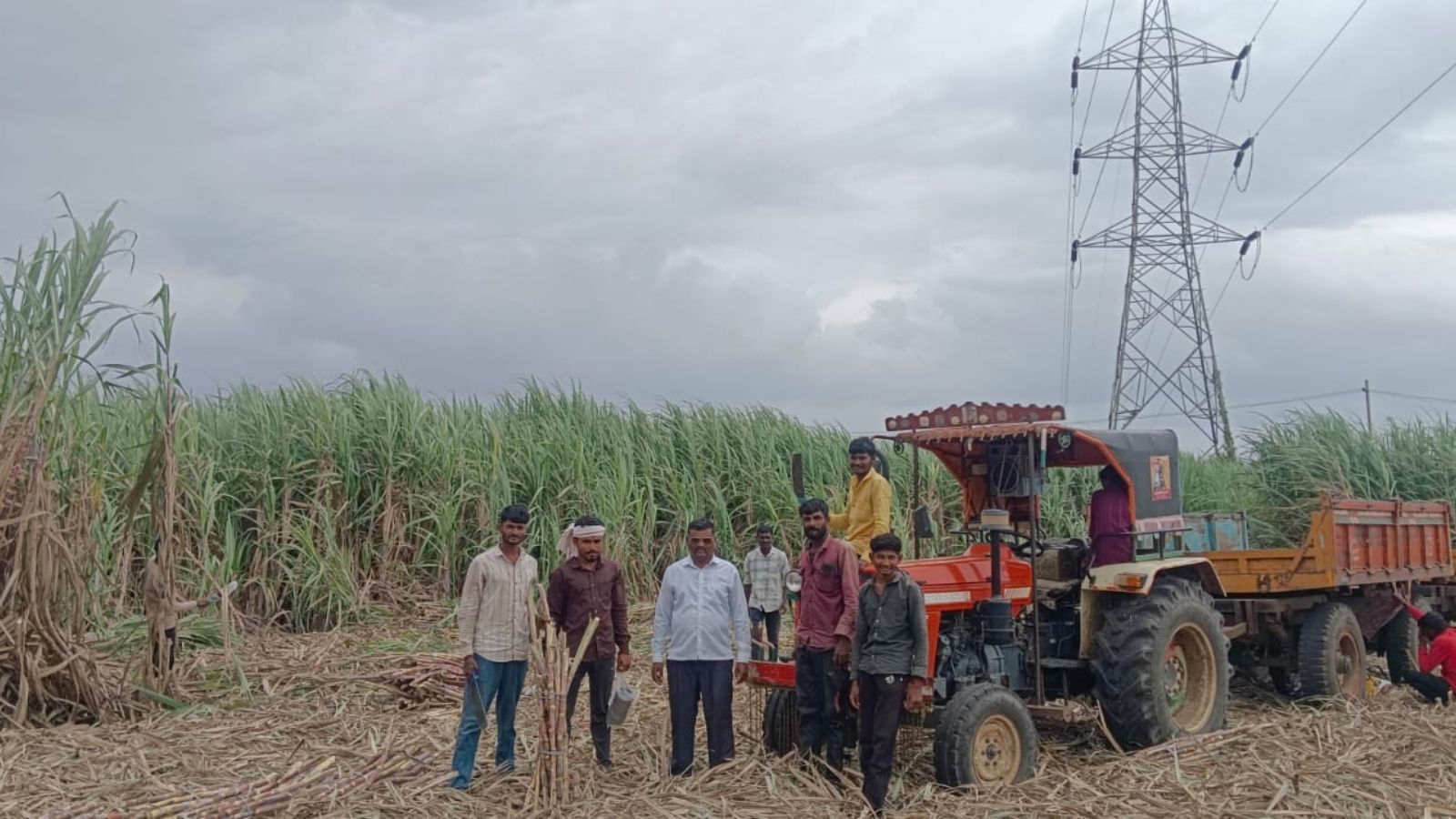
My son s textbook calls sugarcane a cash crop a nagdi peek. But tell me, what kind of cash crop leaves us cheated, in debt and wanting to die by suicide? asks 38-year-old Somnath Sonavane, a sugarcane transporter and farmer My son s textbook calls sugarcane a cash crop a nagdi peek. But tell me, what kind of cash crop leaves us cheated, in debt and wanting to die by suicide? asks 38-year-old Somnath Sonavane, a...
“My son’s textbook calls sugarcane a cash crop — a nagdi peek. But tell me, what kind of cash crop leaves us cheated, in debt and wanting to die by suicide?” asks 38-year-old Somnath Sonavane, a sugarcane transporter and farmer.
His question sums up an often uncomfortable reality of Maharashtra’s sugarcane heartland.
Between 2022 and 2025, Pune, Kolhapur, Solapur, Satara and Sangli districts recorded 1,953 criminal cases in which sugarcane transporters allegedly lost a total of Rs 257 crore to labour contractors, or mukadams, who took advances on the promise of supplying harvesting groups. Police have booked 3,162 labour contractors in these cases.
Kolhapur accounted for more than half the cases at 1,154, followed by Sangli (235), Solapur (216), Pune (175) and Satara (173).
For many sugarcane farmers, becoming a transporter is an extension of farming. Sugarcane cultivation alone may not provide enough income after cultivation, labour and loan costs. Owning a tractor, truck or other transport vehicle offers another source of income during the crushing season.
“We are sugarcane farmers first and transporters later. We entered this business because we thought the truck would give us another source of income. Instead, we are taking loans to keep the truck running and giving interest-free advances to labour contractors. When the contractor cheats, the debt remains ours,” said Sudhir Jadhav, a farmer-transporter from Shirur.
A police inspector who has investigated several such cheating cases in Kolhapur said the system depends heavily on mukadams, who mobilise groups of migrant sugarcane cutters, often couples or families travelling together. Transporters generally approach them through contacts in the sugar belt.
Most mukadams come from villages in Marathwada and Vidarbha and have established relationships with migrant families.
“Transporters cannot simply hire labourers directly. Cane harvesting depends heavily on organised groups of migrant cutters, making the mukadam a crucial link in the process,” said the inspector.
The crushing season therefore begins with trust and often a large advance.
Transporters pay mukadams lakhs of rupees on the promise that labourers will arrive when required. But some allege that contractors take advances from multiple transporters for the same group or disappear after receiving the money.
“We now know that many mukadams take advances from multiple people for the same group of labourers, while others disappear after taking the money. When the harvesting season begins, the transporter is left with a vehicle bought on loan, installments to pay, fuel and maintenance expenses, but no cane to transport,” said Ganpat Kale, a transporter and farmer from Pune district.
He said many transporters borrow or mortgage property to arrange the advance.
“If the group does not come, the entire season’s calculation collapses. The bank installments do not stop just because the labour contractor has disappeared,” Kale said.
Transporters also say bank loans arranged through sugar mills often do not cover the entire advance demanded by mukadams, forcing them to put in their own savings.
“When the contractor disappears, it is not just borrowed money that is lost. Our own savings go with it,” said Digambar Kolhe, a transporter-farmer from Sangli.
In Kolhapur, a sugarcane transporter died by suicide in November 2024 amid allegations of debt and financial losses linked to the labour-contracting system. The case involved an advance paid for harvesting and transport, part of which allegedly remained with a labour contractor when the promised group failed to arrive.
Farmer leader and former MP Raju Shetti said people earlier often treated such disputes as civil matters, but police have increasingly registered criminal cases of cheating since 2022.
“Registration of cases is just a small part of the solution. The accused mukadam gets bail and often returns to the same business, while the transporter is left chasing his money, sometimes facing threats and counter-cases,” Shetti said.
Shetti said he had made two representations to Chief Minister Devendra Fadnavis seeking action. He also said the government had discussed a proposal for a separate law dealing with such fraud, including provisions for recovery of money, during the tenure of the late Ajit Pawar as Deputy Chief Minister but it had not materialised.
“For the farmer, the problem is the pressure of debt recovery from banks, the loss of his own money and cheating by the labour mukadam. Many sugarcane farmer suicides are, in fact, transporters’ suicides linked to this problem,” Shetti said.
For transporters, the financial risk begins well before a single cane is cut.
“Mills enter into contracts with us for supplying cane and, in many cases, help us obtain bank finance against vehicles and other assets. We then use that money to pay the mukadam. The bank earns interest, the transporter assumes the risk and the labour contractor controls the crucial link to the harvesting group,” said a farmer from Kolhapur.
“If that link breaks, the loss settles on the transporter’s shoulders. The mills continue to put pressure on us, including by seizing our vehicles,” he added.
“The irony is difficult to miss. Sugarcane may be Maharashtra’s celebrated nagdi peek, or cash crop, but those who are the backbone of its movement from field to factory often face a defrauded advance, a stranded vehicle, mounting debt and despair,” said Shetti.
Sushant Kulkarni is a Special Correspondent with The Indian Express in Pune with 12+ years of experience covering issues related to Crime, Defence, Internal Security and Courts. He has been associated with the Indian Express since July 2010. Sushant has extensively reported on law and order issues of Pune and surrounding area, Cyber crime, narcotics trade and terrorism. His coverage in the Defence beat includes operational aspects of the three services, the defence research and development and issues related to key defence establishments. He has covered several sensitive cases in the courts at Pune. Sushant is an avid photographer, plays harmonica and loves cooking. ... Read More