Cant Deny Trespasser Calcutta High Court Orders Power Connection
I
Indian ExpressVerified Publisher
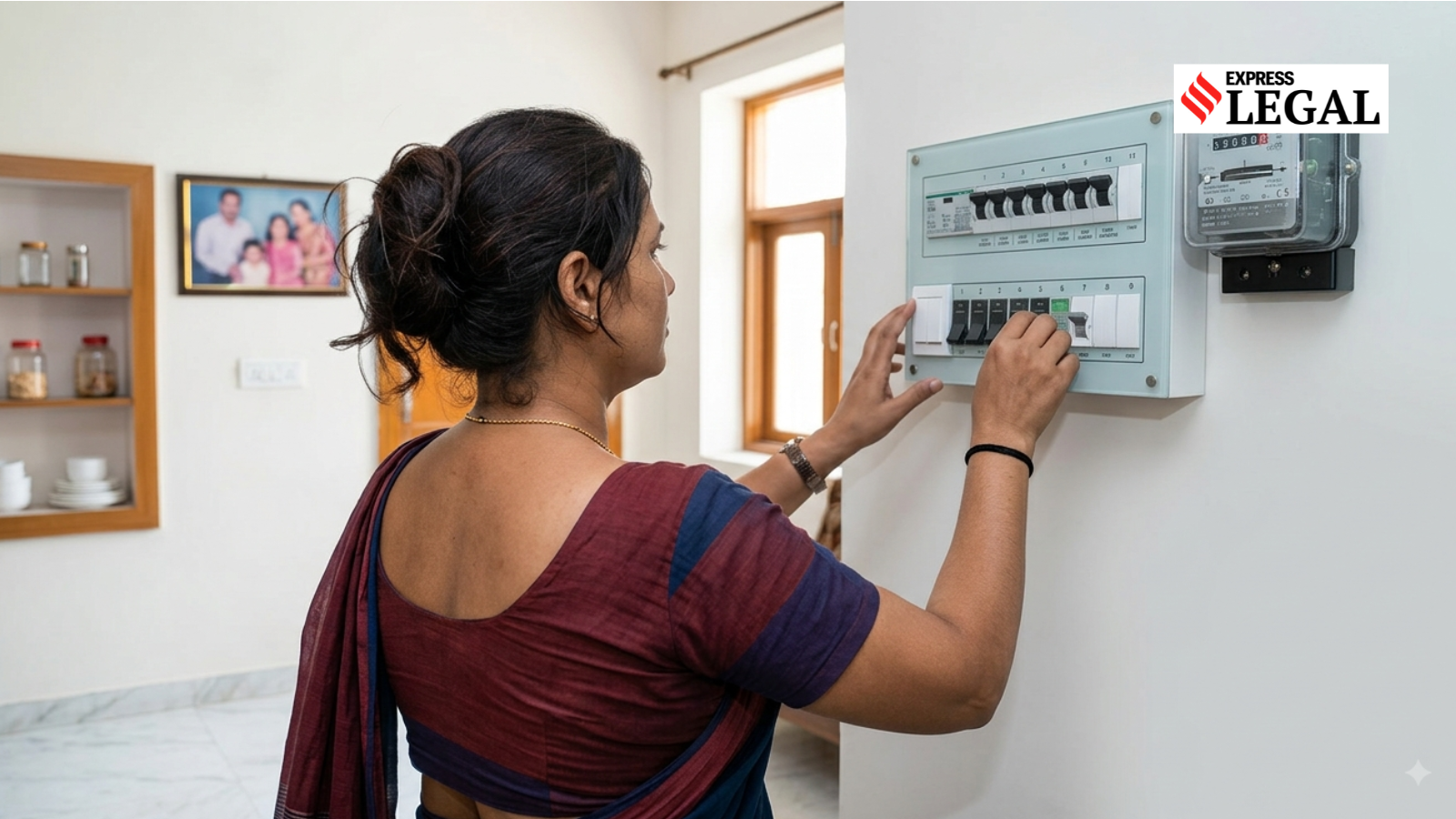
Observing that even a trespasser is entitled to electricity , the Calcutta High Court set aside a trial court s order and directed the Calcutta Electricity Supply Corporation (CESC) Ltd to grant an electricity connection to a woman within three weeks. The cour Observing that even a trespasser is entitled to electricity , the Calcutta High Court set aside a trial court s order and directed the Calcutta Electricity Supply Corporation (CESC) Ltd to grant an...
Observing that even a “trespasser is entitled to electricity”, the Calcutta High Court set aside a trial court’s order and directed the Calcutta Electricity Supply Corporation (CESC) Ltd to grant an electricity connection to a woman within three weeks. The court ruled that electricity is essential for a dignified life under Article 21 and even an occupant facing eviction cannot be denied supply, though it creates no title or equity.
A bench of Justices Shampa Sarkar and Arjun Ray Mukherjee was dealing with a plea of a woman against the June 2022 trial court order. She had approached the court after CESC refused to provide her a new electricity connection to the property due to objections from the private respondents/landlords.
“It is well-settled that even a trespasser is entitled to electricity, which is an essential commodity. It may be noted that the property is temporarily not being used. However, quite understandably, the use of the property without electricity is quite impossible,” the court said on August 10.
The bench continued, “Article 21 of the Constitution of India ensures a life of dignity and, as such, the grant of electricity is intrinsically connected with a dignified existence.”
The woman had approached the CESC seeking a new electricity connection for a property over which she claimed a right of possession. CESC did not process her application, citing resistance from the private respondents/landlords. The respondents disputed the woman’s claim, alleging that the agreement she relied on was legally invalid and a fabricated document. They also questioned her right, title and possession over the property and pointed to a pending eviction suit against her before the trial court.
The single judge disposed of her petition, allowing her to approach the district magistrate for a decision after hearing both sides. The woman challenged this order before the division bench. Appearing for the petitioner, advocates Tarak Nath Halder, Sagnik Chatterjee and Sayan Mukherjee submitted that the district magistrate had no jurisdiction to decide the dispute concerning her right to obtain an electricity connection.
The landlords argued that the agreement for transfer relied upon by the woman to claim the electricity connection was legally invalid and a manufactured document.
The high court observed that the district magistrate can decide a dispute only when an electricity licensing company needs to draw a power line over a third party’s property to provide a connection. That situation did not arise here, as the woman was claiming a right of possession over the property.
The court further held that the woman could not be denied an electricity connection merely because she was residing elsewhere. Until a competent civil court passes an appropriate eviction order, she could not be barred from receiving electricity supply. Referring to Article 21 of the Constitution, the court observed that the right to live with dignity is intrinsically connected with access to electricity.
However, the court clarified that providing electricity would not establish or recognise the woman’s ownership, title or interest in the property. The connection would remain subject to any subsequent order passed by a competent civil court.
Jagriti Rai works with The Indian Express (Digital), where she writes from the vital intersection of law, gender, and society. Working on a dedicated legal desk, she focuses on translating complex legal frameworks into relatable narratives, exploring how the judiciary and legislative shifts empower and shape the consciousness of citizens in their daily lives. Expertise Socio-Legal Specialization: Jagriti brings a critical, human-centric perspective to modern social debates. Her work focuses on how legal developments impact gender rights, marginalized communities, and individual liberties. Diverse Editorial Background: With over 4 years of experience in digital and mainstream media, she has developed a versatile reporting style. Her previous tenures at high-traffic platforms like The Lallantop and Dainik Bhaskar provided her with deep insights into the information needs of a diverse Indian audience. Academic Foundations: Post-Graduate in Journalism from the Indian Institute of Mass Communication (IIMC), India’s premier media training institute. Master of Arts in Ancient History from Banaras Hindu University (BHU), providing her with the historical and cultural context necessary to analyze long-standing social structures and legal evolutions. ... Read More