Bihar Education Reforms Ai Assessments Samrat Choudhary Exam Leaks
I
Indian ExpressVerified Publisher
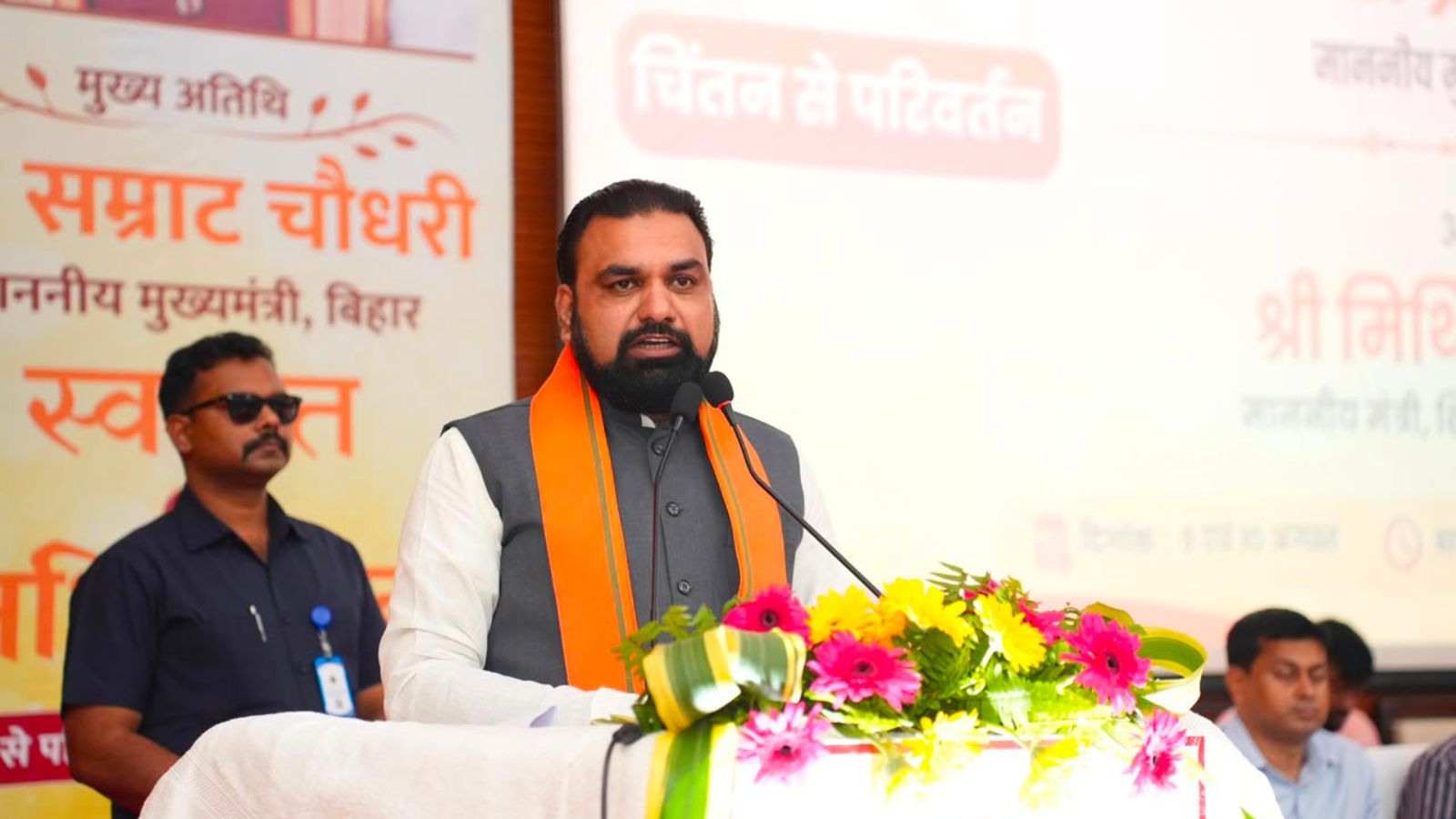
Use of AI to better assess students knowledge and abilities, a mechanism that allows them to call teachers even at 11 pm if needed, and camps where they would get to interact with Ministers, MPs and MLAs directly: These are some of the reforms that the Bihar g Use of AI to better assess students knowledge and abilities, a mechanism that allows them to call teachers even at 11 pm if needed, and camps where they would get to interact with Ministers, MPs and...
Use of AI to better assess students’ knowledge and abilities, a mechanism that allows them to call teachers even at 11 pm if needed, and camps where they would get to interact with Ministers, MPs and MLAs directly: These are some of the reforms that the Bihar government has promised in the backdrop of widespread protests over examination-related issues across the country.
Chief Minister Samrat Choudhary made the announcements at a two-day workshop-cum-chintan camp organised by the Education Department that kicked off on Sunday.
The measures include formation of two state-level committees – one on education quality and another for examination reforms, special cooperation camps, and dedicated directorates for student welfare.
Flagging the vulnerability of examination systems to leaks and individual wrongdoings, Choudhary said, “If one person sells his integrity, the question paper reaches the market. If even one person in the entire system fails, the whole system collapses.”
The examination reform committee will examine ways to make board, competitive and classroom-based assessments smoother, more transparent, fair and modern. It will also suggest ways of using technology and artificial intelligence (AI) to better assess students’ knowledge, understanding and analytical abilities.
Choudhary said strengthening the examination system was necessary to prevent young people from losing confidence in it. “The young generation should not feel that it is being cheated. This needs to be addressed,” the CM added.
While referring to the challenges involved in conducting matriculation, intermediate and college examinations, as well as teacher recruitment examinations and Bihar Public Service Commission examinations, he stressed the need to use technology.
Choudhary said the government had enacted a provision under which people found involved in such offences could be kept in jail for up to one year under the Goonda Act, or CCA (Bihar Control of Crimes Act). “No one is to be spared. A system must be established in which the rule of law prevails,” he said.
The government will also organise special cooperation camps, where ministers, MPs, MLAs and officials will interact with students in schools and colleges and seek their suggestions and grievances. Choudhary said the suggestions would be uploaded on a portal and if a grievance was not resolved within 30 days, he would hold a separate monthly cooperation camp for students at the Chief Minister’s level.
For student welfare, the government will create directorates in all departments concerned to improve coordination and implementation of schemes, and to facilitate direct interaction with students, Choudhary said.
He said Bihar needed to strengthen its education system as large numbers of students from the state go outside for studies. Referring to his experience as finance minister, Choudhary said an analysis had shown that around Rs 18,000 crore was being spent on education outside Bihar. Choudhary said an online system for one-to-one teaching was being prepared for launch on Independence Day. As part of this, students could seek help from teachers even at 11 pm. He said the system would use registration and OTP-based access and allow the government to track its usage.
The government, the CM said, would also expand its model-school programme, which would support preparation for examinations such as NEET and JEE. Choudhary said 551 model schools had already been identified, 143 more were being added and the government intended to take the total number of model schools to 1,001.
Choudhary also called for greater exposure to computer education and English while retaining Sanskrit, Urdu and Bihar’s regional languages. He said the education system needed to keep pace with technological changes without losing the state’s cultural and linguistic heritage.
Batting for greater exposure to computer education and English from an early stage, he said, “Our culture should remain. We must teach Sanskrit, and we must teach Urdu… but our children will be able to become capable at the global level only when they have computer knowledge and can speak English from the beginning.”
He also referred to the state’s historical educational institutions, including Nalanda and Vikramshila, while arguing that Bihar needed to rebuild its educational system for future generations.
“This future is in your hands,” Choudhary told officials and urged them to use the deliberations at the workshop to help strengthen Bihar’s education system.
Himanshu Harsh is a Correspondent with The Indian Express, currently leading on-the-ground coverage in Bihar. With a reporting career rooted in the complexities of the National Capital Region (NCR), Himanshu specializes in the critical intersection of law, crime, and civic governance. Professional Expertise & Credentials An alumnus of the prestigious Indian Institute of Mass Communication (IIMC), Delhi, Himanshu brings a rigorous academic foundation to his investigative work. His expertise is characterized by a "ground-up" reporting style, most notably demonstrated during his extensive coverage of the 2024 Lok Sabha elections, where he analyzed shifting political landscapes and grassroots sentiment. Specialized Beats Himanshu’s portfolio reflects versatility, allowing him to navigate diverse industries and social issues: Civic & Legal Affairs: Extensive experience covering the Delhi reporting beat, focusing on policy implementation and judicial impact. Automotive Industry: A technical background in reporting on India’s evolving transport and automotive sectors. Social Fabric & Human Interest: Beyond hard news, he is known for exploring the changing social dynamics of India’s urban and rural heartlands, bringing a human-centric lens to systemic issues. Personal Interests & Digital Literacy Outside the newsroom, Himanshu’s deep engagement with technology and gaming informs his understanding of digital trends and the modern information economy. A trained DJ with a passion for music, his diverse personal interests contribute to a well-rounded perspective that resonates across both traditional and digital media platforms. ... Read More