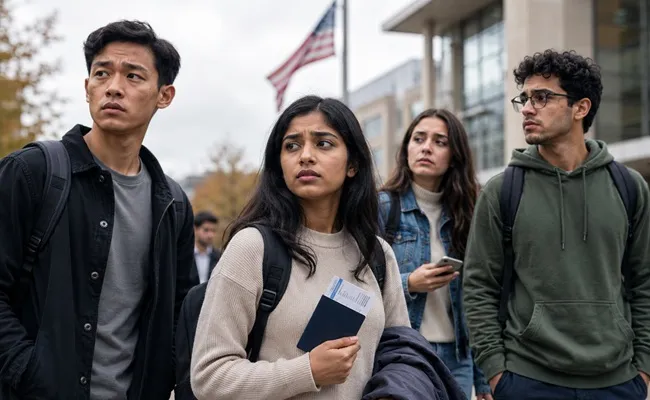
For Indian students in the United States, the American dream has traditionally followed a familiar path. Students arrive to study at universities, complete their degrees, and eventually look for internships that can give them valuable work experience For Indian students in the United States, the American dream has traditionally followed a familiar path. Students arrive to study at universities, complete their degrees, and eventually look for...
For Indian students in the United States, the American dream has traditionally followed a familiar path. Students arrive to study at universities, complete their degrees, and eventually look for internships that can give them valuable work experience.
For many, an internship is an important bridge between education and a professional career in the United States.
However, a growing sense of uncertainty around immigration is creating another challenge.
International students generally need authorization from their universities to undertake internships through Curricular Practical Training, or CPT. Universities play an important role in determining whether a particular internship qualifies under the applicable rules.
Now, concerns about increased immigration scrutiny are making some universities more cautious.
Universities are fearing that approving internships for international students could attract unwanted government attention or create the perception that they are helping foreign students enter the American workforce. So, many universities have already decided not to issue CPT for their foreign students, which is alarming.
This uncertainty could have serious consequences for Indian students. If universities become reluctant to authorize CPT, students may find it much harder to secure internships with American companies.
An internship is often more than just a temporary job. It can provide practical experience, professional connections and a pathway to future employment.
The situation resembles the growing caution among some American companies when hiring foreign workers on H1B, particularly amid heightened scrutiny of immigration programs.
If both employers and universities become increasingly hesitant, international students could find themselves caught in the middle, with almost nil opportunities despite having invested heavily in an American education.
In the short term, this environment may appear beneficial to some American workers because there could be less competition for internships and entry-level positions. But the broader economic impact deserves consideration.
International students contribute significantly to American universities and local economies through tuition, housing, living expenses and other spending.
Every semester, students from countries such as India send millions of dollars into the American higher education system.
If the United States develops a reputation as an increasingly hostile destination for international students, those students may begin choosing universities in other countries instead.
That would be a loss not only for Indian students but also for American universities and the wider economy.
The United States has long benefited from attracting talented students from around the world. A climate that discourages them could ultimately weaken one of America’s most valuable sources of global talent.
Parents applying for U.S. visas for their children must ensure that the child is physically present for the consular interview, even if the applicant is…
A long-time Indian-origin US resident and Green Card holder has been detained by Immigration and Customs Enforcement (ICE), triggering concern among her family and supporters.…
The immigration crackdown under US President Donald Trump is increasingly affecting Indians, including some long-term residents and green card holders. One recent case involves Venkata…