
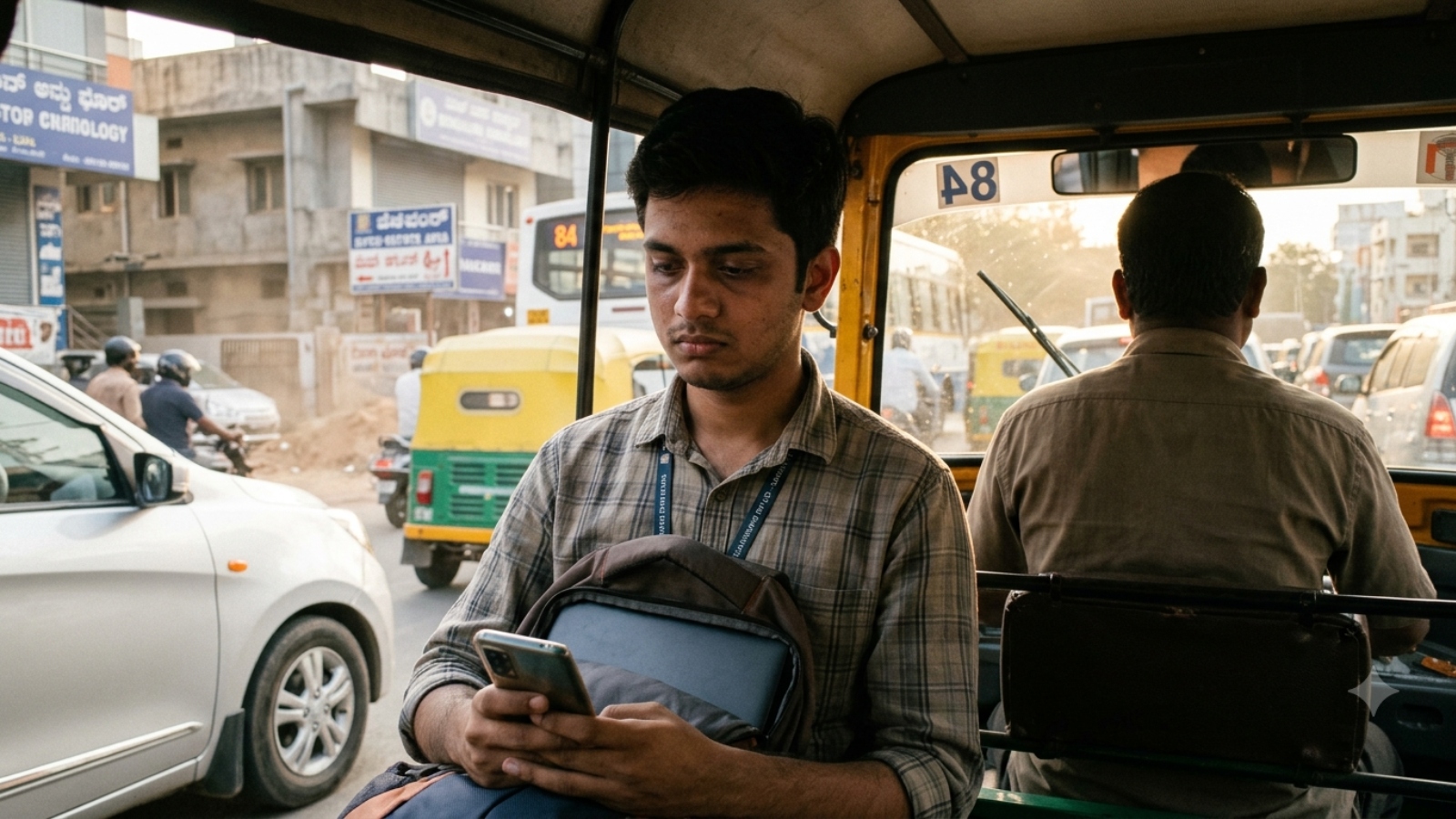
A LinkedIn post by a Bengaluru CEO has highlighted just how expensive daily commuting can be, especially for those in their first jobs.
Sanket Sheth recalled a conversation with a fresher after his company returned to office-based work in 2024. “Sir, office aane mein Rs 350 roz lag jaate hain (Sir, it costs Rs 350 just to get to the office),” he quoted the employee as saying.
The employee lived near Lalbagh, while the office was in HSR. His parents were hesitant to let him ride a scooter, given the city’s traffic and road conditions, so public transport meant a journey of almost two hours each way, with multiple changes and additional last-mile travel.
The alternative was to combine public transport and taking an auto-rickshaw, bringing the daily commute to around Rs 350. Over a typical working month, that could mean spending Rs 7,000 to Rs 8,000 just to get to and from the office — a significant amount for someone earning for the first time.
“Somewhere in this rapid growth, are we making Bangalore unaffordable for the very youngsters who built its energy?” Sheth asked.
According to him, a 22-year-old starting their career should not have to calculate whether they can afford to travel to work. Their first salary, he argued, should feel liberating — whether that means buying something without asking their parents or putting away their first Rs 1,000 in savings.
Sheth also raised concerns about what such costs could mean for Bengaluru’s workforce in the long run. Young employees may begin preferring remote roles, turn down jobs that require regular office attendance or consider moving to other cities where their salaries stretch further.
“Bangalore is Bangalore because every year thousands of 21, 22 and 23 year olds arrive here with ridiculous amounts of ambition,” he wrote.
These young workers, he said, bring energy, ideas and a willingness to take risks.
“If Bangalore wants to remain India’s city of opportunity, getting to that opportunity must remain affordable. Otherwise one day we’ll have the offices. We’ll have the valuations. But the young people who gave this city its soul will have gone somewhere else. And that would be a terrible way for Bangalore to become rich,” Sheth concluded.
Sheth’s post drew responses ranging from sympathy for cash-strapped freshers to criticism of Bengaluru-specific complaints and low salaries.
Some users agreed that rent, food, and commuting can leave freshers with very little disposable income, while others felt Bengaluru was being unfairly singled out when similar challenges exist in other cities.
“Yes if an fresher is coming from another city he has to pay almost half of what he earn to manage house rent, food and other expenses with starting salary of 25-30 k he will be left with nothing to save or buy anything so he thinks of going to any other city maybe at low wage at least he has his freedom,” one user wrote.
Another argued that commuting costs could be reduced with better planning, writing, “Can start early and leave early, if we looking for our own convenience and should not spent on money that doesn’t work. Even every city has same problem we are ranting more on Bangalore.”
One user’s particularly critical response targeted the broader salary issue. “The ‘macroeconomy’ needs to correct, but I’ll be paying people less than what a house help makes in that very same city.”