Air India Crash A Year Later Survivors Remember Their Miraculous Escape
I
Indian ExpressVerified Publisher
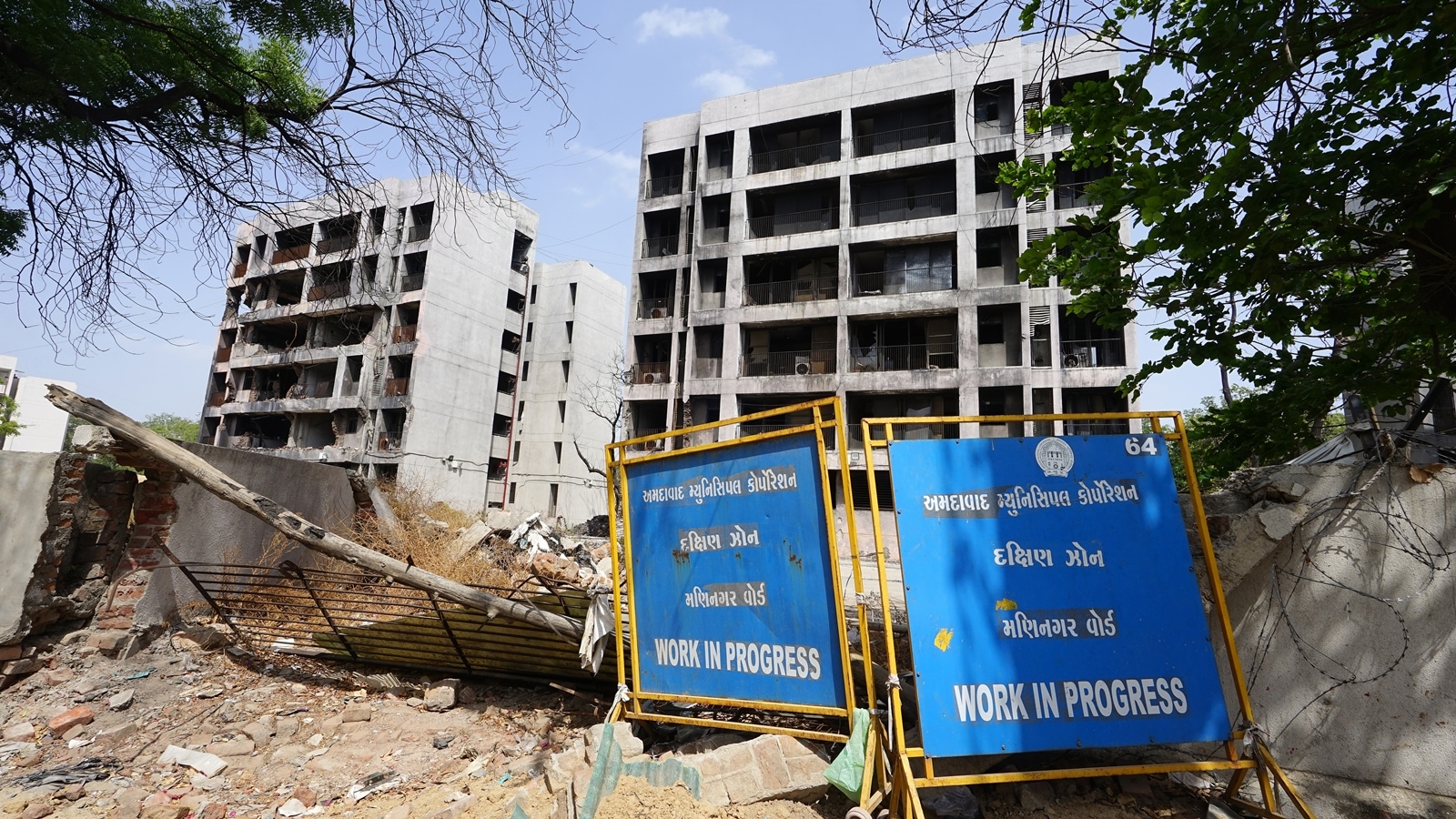
Naresh Karsan Patel believes Vishwas Kumar Ramesh cheating death when the Air India flight AI 171 crashed wasn’t the only “miracle” that happened on June 12, 2025. Patel, who is approaching his 60s, and his wife Daksha were on the ground floor of the mess building of B J Medical College that was struck by the Boeing Dreamliner as it came down. Both escaped, Daksha doing so with spinal injuries. For nearly 16 years, it is from this mess that Patel has been delivering tiffins to doctors and students at
Naresh Karsan Patel believes Vishwas Kumar Ramesh cheating death when the Air India flight AI 171 crashed wasn’t the only “miracle” that happened on June 12, 2025.
Patel, who is approaching his 60s, and his wife Daksha were on the ground floor of the mess building of B J Medical College that was struck by the Boeing Dreamliner as it came down. Both escaped, Daksha doing so with spinal injuries.
For nearly 16 years, it is from this mess that Patel has been delivering tiffins to doctors and students at Ahmedabad Civil Hospital attached to the college. “I had just returned from making a delivery to the mess, where Daksha and other women were making and serving lunch. Suddenly there was a huge explosion and dust everywhere. I saw something big stuck in the wall and liquid (fuel) spreading.”
Then, everyone started screaming and trying to escape from the building.
In Gujarat’s worst air disaster since 1988, 260 people lost their lives, including 241 passengers and crew aboard the airliner, and 19 people on the ground, when the plane bound for London Gatwick airport crashed within minutes of take-off from Ahmedabad. Kumar was the sole survivor on board.
After the aircraft hit the mess building, its tail end got embedded in the structure, even as the rest of the plane struck four hostel blocks beyond it.
A year later, little has changed on the spot, including the gaping hole in the mess wall where the plane came in, and an overhead tank bent at an unnatural angle due to the impact. Inside, with the concrete falling off, construction rods stand exposed and bent out of shape, electrical wires hang bare, and swarms of pigeons — the scourge of empty places — have settled in. The mess has come up in a row of hostel blocks that are located 500 metres from the destroyed one. “The women cooks rush out every time a large aircraft passes overhead,” Patel says.
Daksha suffered both physically and psychologically, he adds. “The women had jumped over a marble counter and out of the windows to escape. She hurt her L4 and L5 vertebrae. She was so scared that she went to live with her parents in Maharashtra for a month. It was only after her anxiety subsided that she returned and got treated for her injuries.” Air India paid for the treatment.
The Patni family that makes a living selling fruits and vegetables also count themselves as lucky. They live along a dirt path adjoining the medical college’s hostel compound, and two of its members who used to work in the mess had left the jobs days earlier when the accident happened.
The other shock was the death of 13-year-old boy Aakash Patni, the son of a teaseller sleeping on the pavement nearby, who was among the casualties on the ground. His mother Sita who was with him suffered extensive burns.
Jyotsna says she keeps thinking of Aakash. “He used to come and sit with us every day. He was taken away at such a young age.”
However, many have objected to this, demanding a memorial to those killed instead. Eighteen others besides Aakash died on the ground that day. Families of some have left Ahmedabad.
Like Ravi Thakore, whose entire family worked in the hostels. Thakore and wife Lalita were delivering tiffins when the plane crashed, killing their daughter Aadhya and Thakore’s mother Sarla. They had left Aadhya with Sarla as they did their rounds.
The bodies of Sarla and Aadhya were among the four people who died on the ground who could be identified only by DNA profiling. Their last rites were done seven days later, on June 19. The Thakores stopped working at the hostels after that.
Brendan Dabhi works with The Indian Express, focusing his comprehensive reporting primarily on Gujarat. He covers the region's most critical social, legal, and administrative sectors, notably specializing at the intersection of health, social justice, and disasters. Expertise Health and Public Policy: He has deep expertise in healthcare issues, including rare diseases, Antimicrobial Resistance (AMR), the complex logistics of organ transplants, and public health challenges like drug-resistant TB and heat health surveillance. His on-ground reporting during the COVID-19 pandemic and Mucormycosis was critical in exposing healthcare challenges faced by marginalized communities in Gujarat. Social Justice and Legal Administration: He reports on the functioning of the legal and police system, including the impact of judicial philosophy, forensics and crucial administrative reforms (. He covers major surveillance and crackdown exercises by the Gujarat police and security on the international border. Disaster and Crisis Management: His work closely tracks how government and civic bodies respond to large-scale crises, providing essential coverage on the human and administrative fallout of disasters including cyclones, floods, conflict, major fires and reported extensively on the AI 171 crash in Ahmedabad. Civic Infrastructure and Governance: Provides timely reports on critical civic failures, including large scale infrastructure projects by the railways and civic bodies, as well as the enforcement of municipal regulations and their impact on residents and heritage. ... Read More