Aap Mla Chaitar Vasava Acquittal Whatsapp Message Gujarat Challenge
I
Indian ExpressVerified Publisher
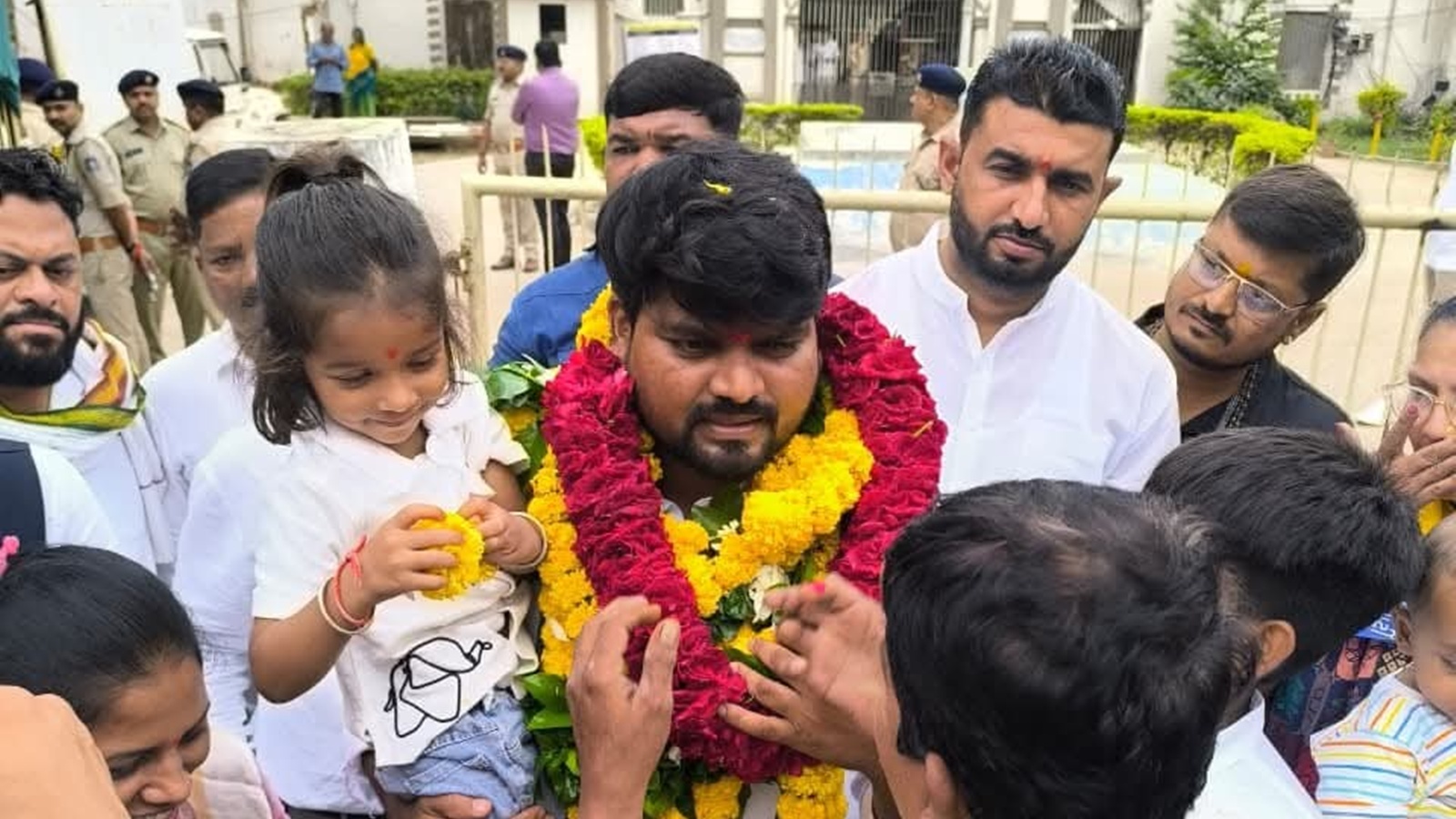
Seven years, a trial, and a major electoral victory later, the message has returned to trouble Vasava, now AAP s state working president and one of its most prominent tribal voices in Gujarat. The 38-year-old leader is currently in jail following a separate Ju Seven years, a trial, and a major electoral victory later, the message has returned to trouble Vasava, now AAP s state working president and one of its most prominent tribal voices in Gujarat. The...
Seven years, a trial, and a major electoral victory later, the message has returned to trouble Vasava, now AAP’s state working president and one of its most prominent tribal voices in Gujarat.
The 38-year-old leader is currently in jail following a separate June 2026 conviction for allegedly intimidating forest officials during an encroachment removal drive in his constituency.
On October 20, 2019, during a discussion over a village drainage issue, a message alleged to be sexually coloured was posted in the group of which the complainant’s husband was a part. The source of the message was claimed to be Chaitar Vasava’s mobile number.
The FIR was lodged only on December 8, 2019, around 49 days after the alleged incident. The case eventually went to trial before the Additional Chief Judicial Magistrate at Dediapada. On May 11, 2023, Vasava was acquitted, with the court giving him the benefit of the doubt. Gujarat government appealed in the same year, but on February 4, 2026, the Additional Sessions Judge at Rajpipla upheld the acquittal.
On August 4, the state government moved the Gujarat High Court after the latter condoned the delay in filing a criminal revision challenging Vasava’s acquittal, clearing the way for that challenge to be heard on merits.
The state had until May 7, 2026, to file a criminal revision application to challenge the acquittal before the High Court, but it filed only on July 14.
The oral order of Justice S V Pinto held that the explanation was “bona fide, the delay was not deliberate,” and refusal to condone it would deprive the state of its statutory remedy.
Among the issues was the absence of the certificate required under Section 65-B(4) of the Indian Evidence Act for the relevant secondary electronic evidence. The court also noted that questions remained about when and from which device the screenshot had been taken and when and from which computer the email had been sent.
Even the panch witnesses did not support the prosecution’s seizure proceedings. In the end, the sessions court found that the prosecution had not crossed the threshold of proving guilt beyond reasonable doubt.
The High Court will hear the appeal in September.
In June this year, an Additional Sessions Court in Rajpipla convicted Vasava and eight others, including his wife Shakuntala Vasava, in a 2023 case involving the alleged intimidation of forest officials using a firearm during an encroachment removal drive. He was sentenced to seven years’ rigorous imprisonment.
Vasava has challenged the conviction in the High Court, where the case is being heard, disputing the firearm evidence, pointing out that no weapon, cartridge or bullet was recovered and that there is no ballistic or gunshot-residue report. Vasava’s lawyers have also challenged the alleged payment and highlighted contradictions in witness accounts.
The state, meanwhile, has argued that Vasava’s status as an elected MLA makes his alleged conduct particularly serious and also mentioned the antecedents against him.
Since he was elected MLA in 2022, six FIRs have been lodged against him.
Aditi Raja is an Assistant Editor with The Indian Express, stationed in Vadodara, Gujarat, with over 20 years in the field. She has been reporting from the region of Central Gujarat and Narmada district for this newspaper since 2013, which establishes her as a highly Authoritative and Trustworthy source on regional politics, administration, and critical socio-economic and environmental issues. Expertise: Core Authority & Specialization: Her reporting is characterized by a comprehensive grasp of the complex factors shaping Central Gujarat, which comprises a vast tribal population, including: Politics and Administration: In-depth analysis of dynamics within factions of political parties and how it affects the affairs in the region, visits of national leaders making prominent statements, and government policy decisions impacting the population on ground. Crucial Regional Projects: She consistently reports on the socio-economic and political impact of infrastructure projects in the region, especially the Statue of Unity, the Sardar Sarovar Project on the Narmada River, the Mumbai-Ahmedabad High Speed Rail bullet train project as well as the National Highway infrastructure. Social Justice and Human Rights: Her reporting offers deep coverage of sensitive human-interest topics, including gender, crime, and tribal issues. Her reports cover legal proceedings from various district courts as well as the Gujarat High Court (e.g., the Bilkis Bano case remission, POCSO court orders, Public Interest Litigations), the plight of tribal communities, and broader social conflicts (e.g., Kheda flogging case). Local Impact & Disaster Reporting: Excels in documenting the immediate impact of events on communities, such as the political and civic fallout of the Vadodara floods, the subsequent public anger, and the long-delayed river redevelopment projects, Harni Boat Tragedy, Air India crash, bringing out a blend of stories from the investigations as well as human emotions. Special Interest Beat: She tracks incidents concerning Non-Resident Gujaratis (NRIs) including crime and legal battles abroad, issues of illegal immigration and deportations, as well as social events connecting the local Gujarati experience to the global diaspora. ... Read More