A Boy Killed By A Falling Tree Mumbai Civic Panel Now Wants Contractors Held Liable For Root Damage
I
Indian ExpressVerified Publisher
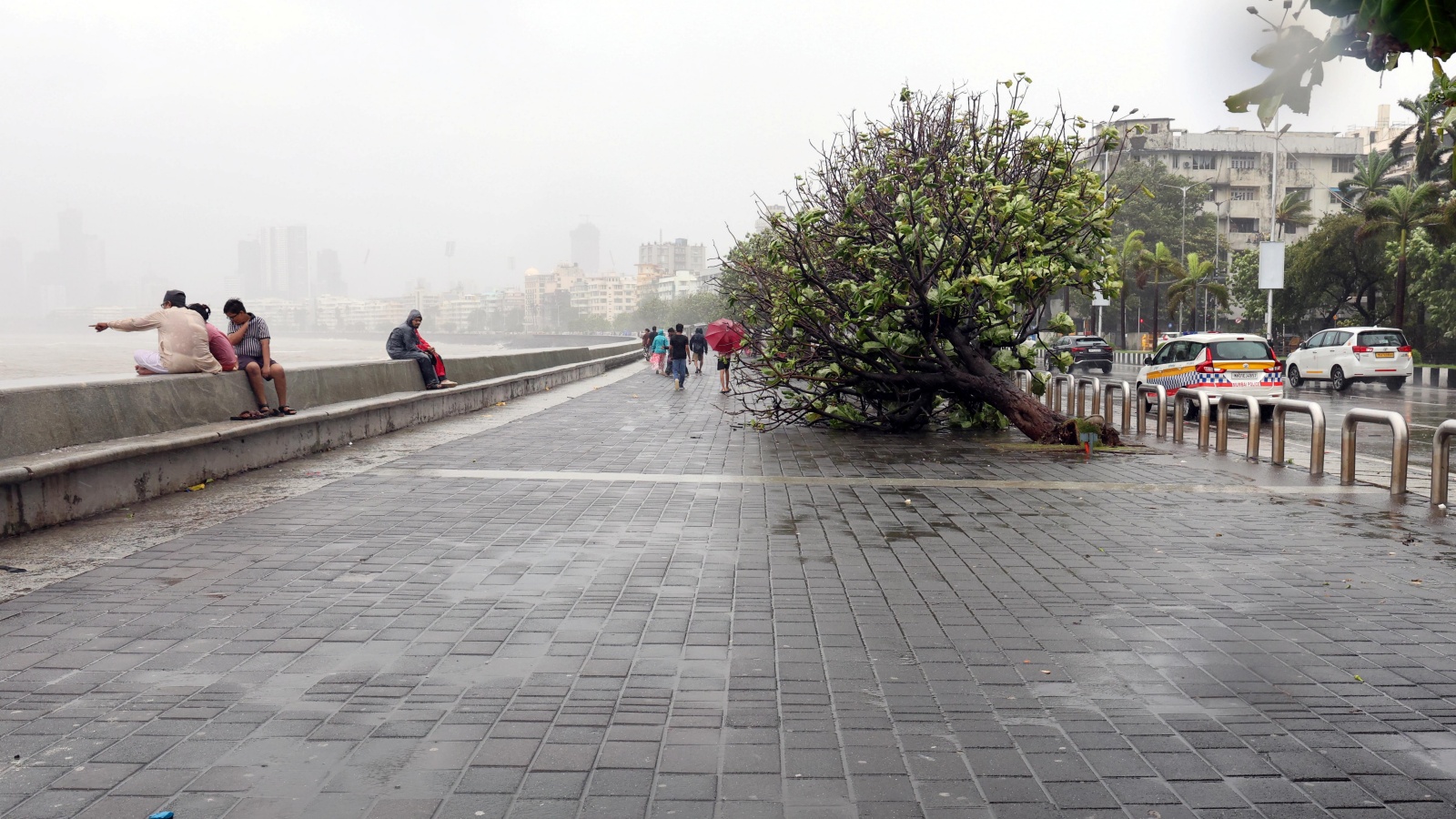
In the wake of the fatal Chembur tree collapse that killed 11-year-old Vihaan Srivastava, an internal committee appointed by Mumbai Municipal Commissioner Ashwini Bhide has proposed sweeping reforms to strengthen the protection of the city s trees, including m In the wake of the fatal Chembur tree collapse that killed 11-year-old Vihaan Srivastava, an internal committee appointed by Mumbai Municipal Commissioner Ashwini Bhide has proposed sweeping reforms...
In the wake of the fatal Chembur tree collapse that killed 11-year-old Vihaan Srivastava, an internal committee appointed by Mumbai Municipal Commissioner Ashwini Bhide has proposed sweeping reforms to strengthen the protection of the city’s trees, including making contractors and civic departments responsible for safeguarding trees affected by infrastructure projects.
“The roots of trees often get damaged while executing civic infrastructure works, leading to its collapse. Therefore, as part of the recommendations, the committee has proposed that clauses should be included in the tender to make both the contractor and civic department responsible for the upkeep and protection of tree roots falling in alignment of any civic project,” a civic source told The Indian Express.
The committee was constituted after a series of tree collapses across the city, including the June 30 incident in Chembur in which a tree fell on a school bus, killing Vihaan Srivastava. It was asked to submit recommendations within eight days to prevent similar incidents.
“So far, such clauses were not included in civic tenders,” a civic official said.
‘Vriksha Mitra’ programme The report also proposes launching a ‘Vriksha Mitra’ (Friends of Trees) programme, under which non-profit organisations, citizen groups and community volunteers would be encouraged to participate in monitoring, conserving and protecting Mumbai’s urban trees.
“The basic idea is to make tree conservation a joint initiative of citizens and the administration. Also, a large number of these large trees are located in housing societies and citizens have a clear understanding about the health of trees in their neighbourhood,” the source said.
According to civic officials, similar citizen-led conservation initiatives are active in cities such as Delhi and Hyderabad, while comparable models are followed internationally in Toronto, Singapore, Portland and New York.
Roadworks under scanner The recommendations come amid growing concern over the impact of road excavation and utility works on Mumbai’s trees.
Between October 2023 and March 2026, the BMC’s Tree Authority issued 428 notices to the Roads Department and utility agencies for damaging tree roots during infrastructure works. During the same period, the roots of 2,615 trees were found to have been damaged during road concretisation and related excavation.
Following the Chembur incident, a preliminary inspection of the site found that while the side roots of the tree remained intact, its core roots had weakened and given way. Civic records also show that in April this year, the M/West ward’s garden department had flagged concerns over unscientific road digging around trees along Road No. 11, where the fatal collapse occurred.
Mumbai has witnessed an unprecedented rise in tree collapses this monsoon. In the first week of July alone, nearly 1,200 trees fell across the city—already 30 per cent more than the 855 tree-fall incidents reported during the entire 2025 monsoon. Between July 5 and 6 alone, heavy rain and strong winds brought down 523 trees. Three people have died in tree-collapse incidents this year, while several others have been injured.
BMC data shows tree-fall incidents have remained consistently high since the civic body’s large-scale road concretisation project began, with 687 incidents recorded in 2023, 653 in 2024 and 855 in 2025. Between 2023 and July 5, 2026, at least 11 people have died in tree-collapse incidents, compared with four deaths between 2020 and 2022.
Environmentalists have long argued that excessive concretisation around tree bases has weakened their root systems.
“These kinds of incidents happen only in Mumbai because no other city concretises tree bases. As a result, trees are left with barely two square metres of exposed soil and their base gradually weakens. The roots cannot expand, soil moisture reduces and the trees become dehydrated internally. They lose their structural balance and collapse at the first spell of heavy rain,” said Stalin D, environmentalist and director of NGO Vanashakti.
Pratip Acharya is a seasoned journalist based in Mumbai reporting for The Indian Express. With a career spanning over a decade, his work demonstrates strong Expertise and Authority in critical urban issues, civic affairs, and electoral politics across Eastern and Western India. Expertise & Authority Current Role: Journalist, The Indian Express (IE), reporting from Mumbai. Core Authority: Pratip's reporting focuses sharply on local democracy and development, specializing in: Urban Governance and Civic Affairs: Providing in-depth analysis of municipal decision-making, city planning, and local infrastructure, essential for informed urban reporting. City Politics and Environment: Covering the political dynamics of Mumbai and surrounding areas, alongside critical environmental challenges impacting the metro region. Electoral Coverage (High-Stakes Experience): He has extensive experience in high-stakes political reporting, having covered major elections, establishing his Trustworthiness in political analysis: National: Lok Sabha elections in 2014 and 2019. State: West Bengal Assembly elections in 2016 and Maharashtra Assembly elections in 2019. Major Assignments (Ground Reporting): Pratip demonstrated commitment during crises by conducting ground reporting throughout the Covid-19 pandemic since its breakout in 2020, offering first-hand accounts and analysis of the public health crisis. Experience Extensive Experience: Starting his career in 2014, Pratip has built his foundation across multiple prominent English dailies: Started at The Times of India in Kolkata (2014). Relocated to Mumbai (2016) and worked with The Free Press Journal and Hindustan Times before joining The Indian Express. Pratip Acharya's diverse experience across major publications, coupled with his specialized focus on the intricate details of urban governance and a track record of covering major electoral and health crises, establishes him as a trusted and authoritative source for news from India's critical metropolitan centres. ... Read More