8 Places In India Where You Might Spot Rare White Wild Animals
I
Indian ExpressVerified Publisher
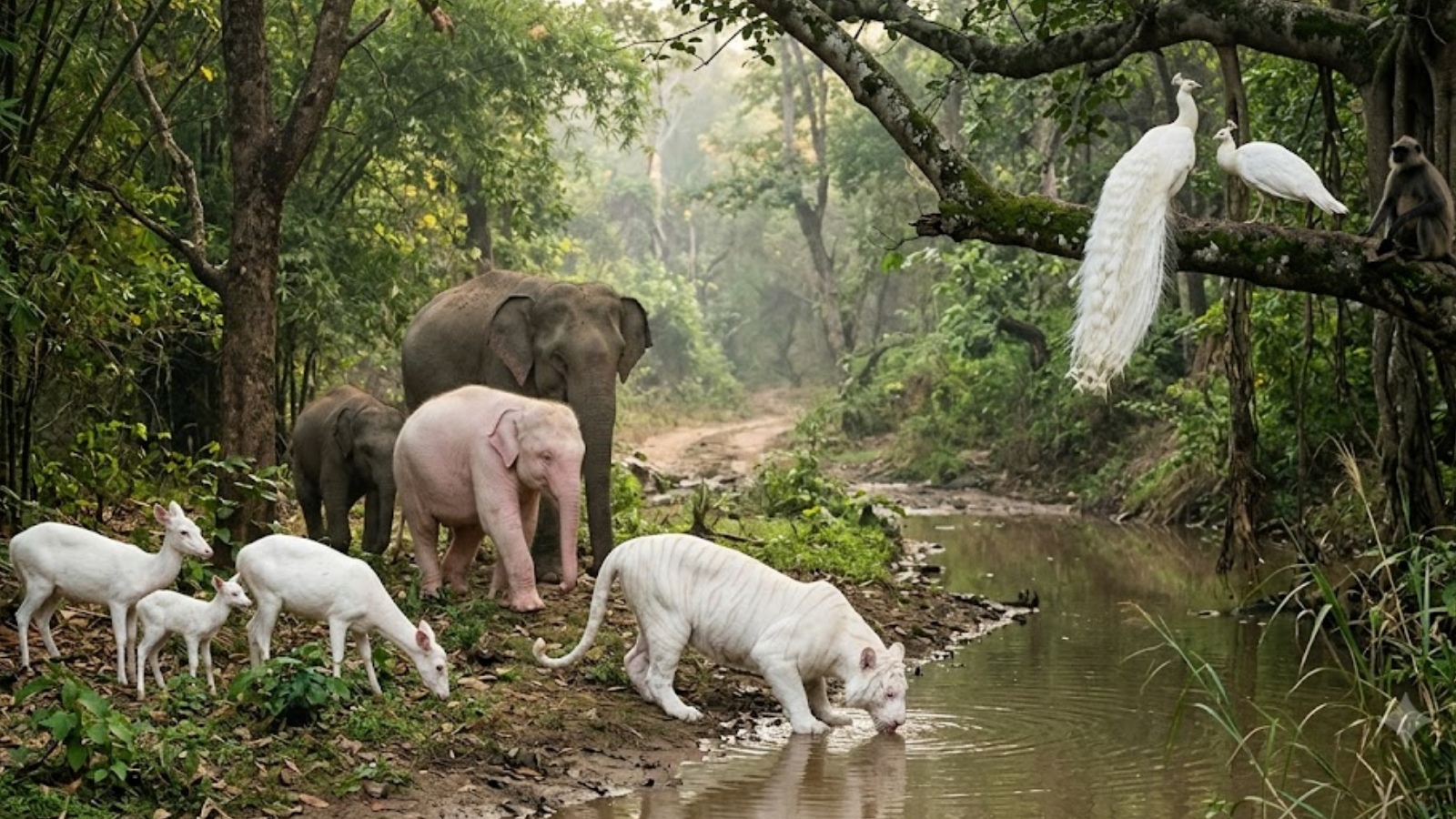
Albino animals are among nature’s rarest marvels. Albinism is a genetic condition caused by a lack of melanin, the pigment responsible for skin, fur, feathers, and eye colour. Some animals that appear white may instead be leucistic, a condition that results in reduced pigmentation while retaining normal eye colour. Although sightings are uncommon and never guaranteed, several forests and wildlife reserves across India have become known for occasional appearances of these extraordinary creatures. Kabini has earned global attention for sightings of an unusually pale gaur (Indian bison) nicknamed the “Golden
Albino animals are among nature’s rarest marvels. Albinism is a genetic condition caused by a lack of melanin, the pigment responsible for skin, fur, feathers, and eye colour. Some animals that appear white may instead be leucistic, a condition that results in reduced pigmentation while retaining normal eye colour.
Although sightings are uncommon and never guaranteed, several forests and wildlife reserves across India have become known for occasional appearances of these extraordinary creatures.
Kabini has earned global attention for sightings of an unusually pale gaur (Indian bison) nicknamed the “Golden Bull.” While not a true albino, its rare pigmentation has made it one of India’s most photographed wild bovines. Besides this rare animal, Kabini is renowned for elephants, leopards, tigers, and rich birdlife.
Sharing its landscape with Kabini, Nagarhole has also reported sightings of unusually pale gaurs and deer over the years. Dense forests and open grasslands provide excellent opportunities for wildlife safaris throughout much of the year.
Periyar has documented rare white gaurs believed to be affected by leucism. These striking animals stand out dramatically against the lush evergreen forests of the Western Ghats. Boat safaris on Periyar Lake also offer chances to observe elephants, sambar deer, and numerous bird species.
Kaziranga has occasionally recorded unusually pale hog deer and other mammals with pigmentation disorders. While famous for the one-horned rhinoceros, the park remains one of India’s richest wildlife habitats.
Birdwatchers have occasionally reported white peafowl and unusually pale waterbirds in and around Keoladeo. Not all white birds are albino, many are leucistic or selectively bred, but such sightings continue to fascinate visitors.
This mangrove ecosystem has witnessed sightings of pale or partially albino turtles and other reptiles. The park is also famous for saltwater crocodiles, migratory birds, and rich coastal biodiversity.
Though extremely rare, pale sambar deer and other unusually pigmented mammals have occasionally been photographed in the reserve. Ranthambore remains one of India’s best-known tiger reserves and offers exceptional wildlife photography opportunities.
India’s oldest national park has recorded sporadic sightings of unusually pale deer and birds over the years. Its diverse habitats support tigers, elephants, leopards, crocodiles, and over 600 bird species.