
If you have ever watched a snake repeatedly flick its forked tongue in and out, you may have wondered what it is doing. It isn’t trying to scare you. The snake is actually sampling chemical cues from its surroundings.
The tongue picks up tiny chemical particles from the air, ground or nearby surfaces. When it retracts, these cues reach the vomeronasal organ, or Jacobson’s organ, in the roof of the mouth, where they are detected and relayed to the brain. The forked tongue also lets the animal sample from slightly different directions, helping it figure out where a chemical cue is coming from.
Here are five Indian animals that use this unusual sensory system.
The Indian cobra ( Naja naja ) uses its forked tongue to collect chemical information while moving through its surroundings. These cues can help it detect and investigate prey, predators and other snakes.
Its two tongue tips sample slightly different areas, giving the cobra directional information about chemical trails.
A post shared by Arunangshu Das (@roni_wild_frames)
The common krait ( Bungarus caeruleus ) also uses tongue-flicking to gather chemical cues from its environment.
As the tongue moves in and out, it collects particles that the vomeronasal system detects, helping the snake investigate its surroundings.
Russell’s viper also uses tongue-flicking as part of its chemical-sensing system. Research on vipers has shown that tongue-flicking helps them detect and follow chemical cues associated with prey.
So, that repeated flick isn’t simply a reflex — it can provide useful information while the snake is hunting and exploring.
A post shared by Benhail Antao (@benhailantao)
The Indian rock python (Python molurus) also has a well-developed vomeronasal system and uses its forked tongue to collect environmental chemical cues.
This gives the python another source of information while it searches for prey, even when the animal it is tracking isn’t immediately visible.
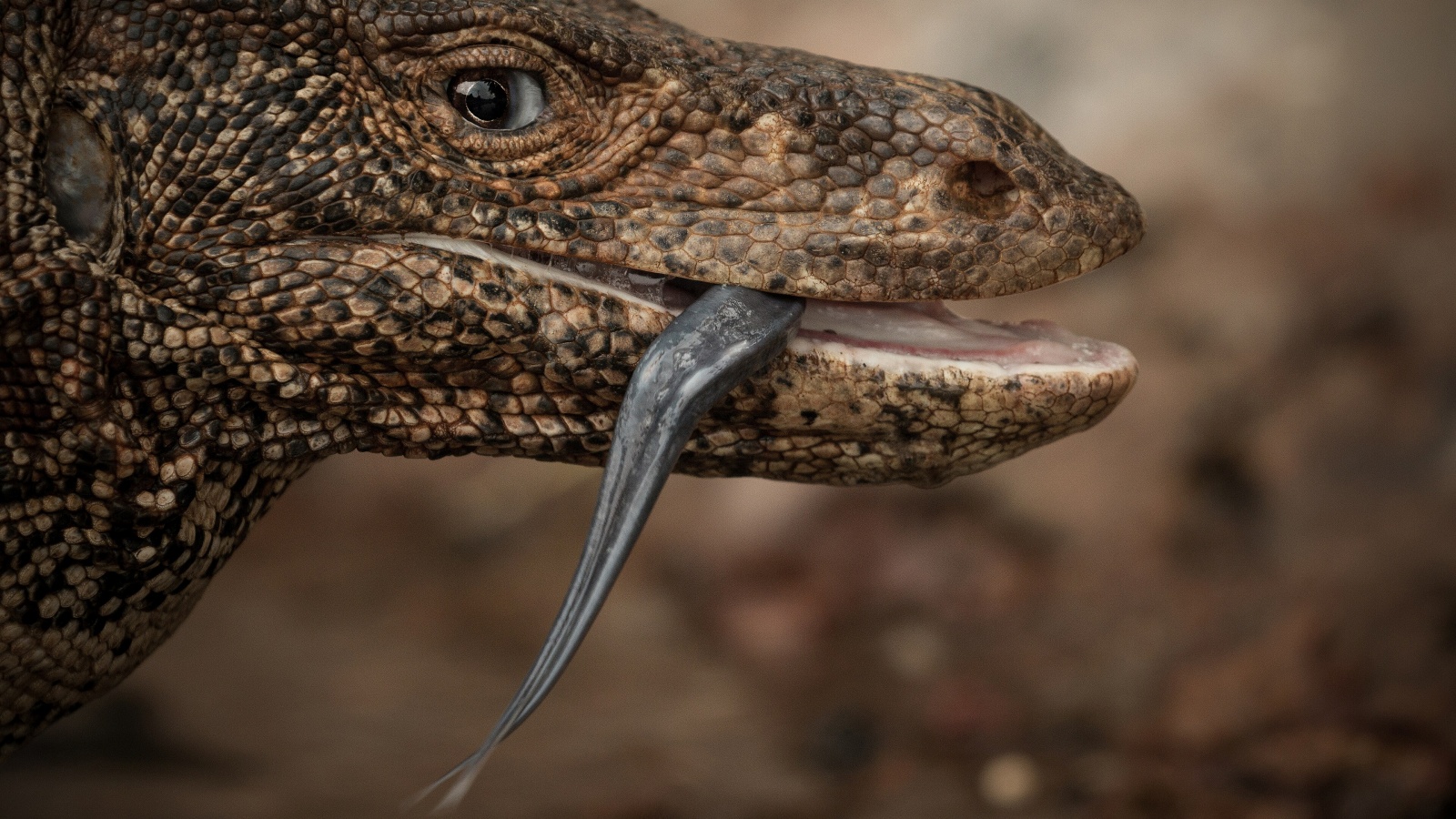
Snakes aren’t the only Indian reptiles with this ability. The Bengal monitor ( Varanus bengalensis ) has a long, forked tongue that it repeatedly flicks while exploring and foraging.
Studies have found that tongue-flicking helps these lizards detect chemical cues associated with prey. Like snakes, monitor lizards use the tongue as a chemical sampling tool, with the vomeronasal organ doing the actual detection.